

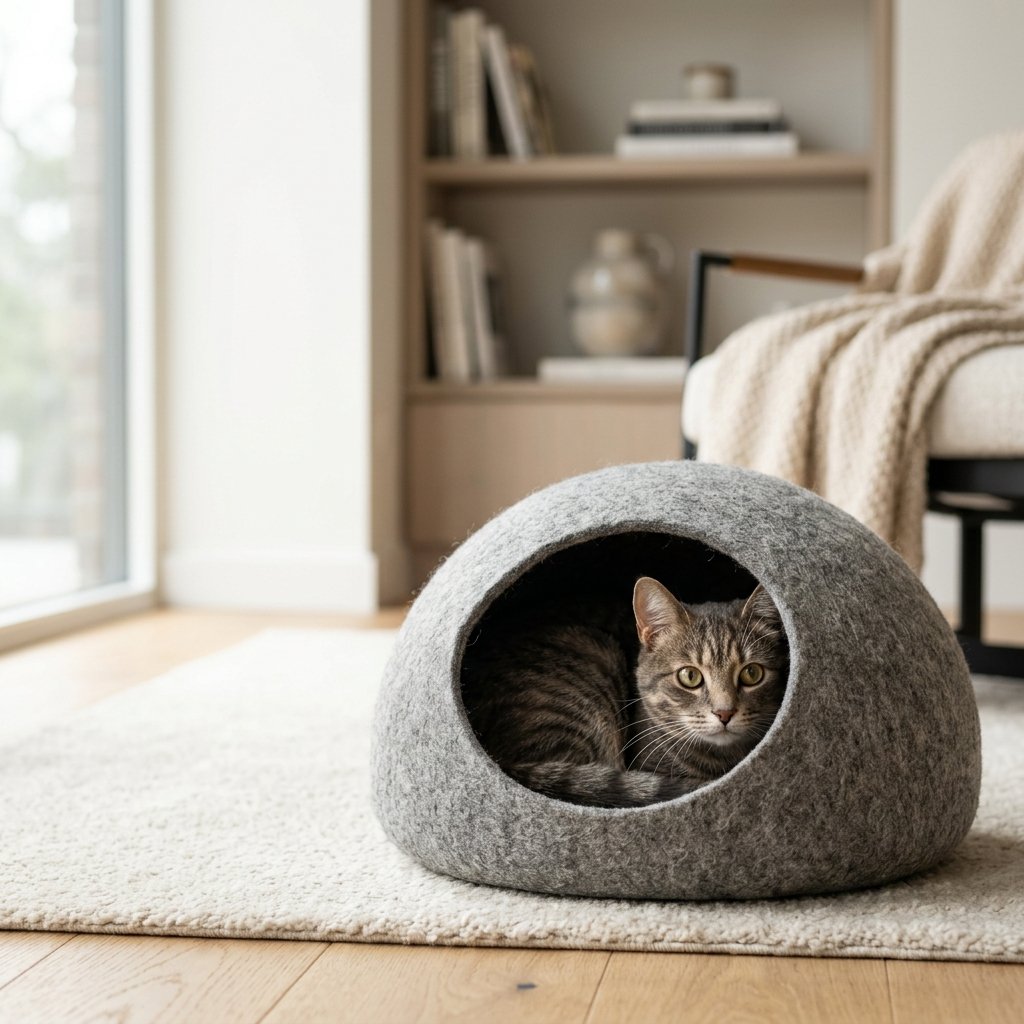
If your cat suddenly disappears under the bed, behind the sofa, or into a quiet corner, your first thought may be, “Why is my cat hiding?”
Often hiding is normal in many cases. Cats will often look for small, quiet spaces to sleep, or when they want to get away from noise or just be alone. But hiding can also be a sign a cat is scared, stressed, in pain, or sick.
The thing is not to judge the behavior in itself. Instead, consider how often your cat is hiding, if the behavior is new, and what else is changing at the same time.
Here’s an explanation of cat hiding behavior, the common reasons cats hide, how to tell the difference between normal hiding and a potential health issue, and what you can do to help your cat feel safe.
Is Cat Hiding Behavior Normal?
Yes. Hiding is a normal part of feline behavior.
Cats are innately drawn to locations where they can feel safe. A quiet box, closet, a covered bed, or under furniture can provide a safe place for a cat to sleep without being disturbed.
Sometimes a cat just needs to hide and sleep in peace.
But normal hiding usually falls into your cat’s normal routine. If your cat has always been sleeping under the bed for a few hours each afternoon, and otherwise eats, plays, grooms, and interacts normally, there may be little reason for concern.
But when a normally social cat suddenly starts to hide most of the day, that’s a different story.
Repeatedly running away and hiding, especially when associated with lethargy or other changes in health, can be a reason to have a cat evaluated, Cornell University College of Veterinary Medicine says.
Why Do Cats Hide?
There is no single explanation for cat hiding behavior. Cats hide for several different reasons, and the context matters.
Common causes include:
- Feeling frightened
- Stress or anxiety
- Changes in the home
- New people or animals
- Loud noises
- Wanting privacy
- Feeling cold or uncomfortable
- Pain or illness
- Adjusting to a new environment
- Previous negative experiences
Let’s look at each possibility more closely.
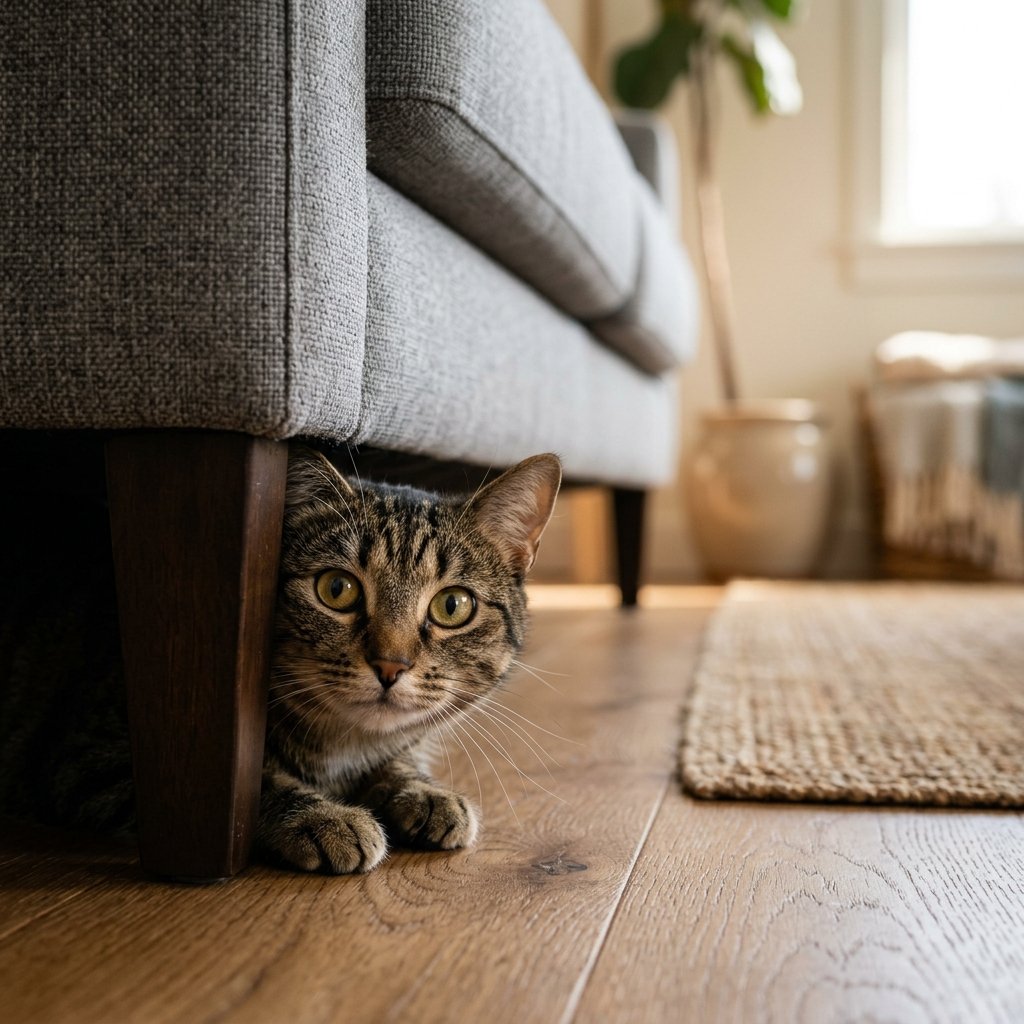
1. Your Cat Is Looking for a Safe Place
Sometimes, your cat is not sick or overly stressed. She only needed a quiet place.
Cats often seek out enclosed spaces because they offer physical and visual security. A covered bed, a cardboard box, or a quiet room may be safer than an open area.
This is especially common when a kitty is sleeping.
A cat that hides sometimes but otherwise acts normal when awake, eating, drinking, using the litter box, and grooming herself is typically less worrisome.
2. Fear Can Cause a Cat to Hide
A frightened cat may immediately look for somewhere to escape.
Common triggers include:
- Thunderstorms
- Fireworks
- Vacuum cleaners
- Construction noise
- Visitors
- Dogs
- Other cats
- Children chasing or grabbing the cat
- Unfamiliar smells
- Travel
- Veterinary visits
Hiding is one way a cat creates distance from something it perceives as threatening.
International Cat Care identifies several common feline stressors, including unfamiliar environments, loud noises, changes in routine, unpleasant handling, and situations where the cat cannot escape. Hiding can be one of the behavioral signs of ongoing distress.
3. Stress and Anxiety Can Lead to Hiding
A cat does not need to experience an obvious frightening event to become stressed.
Even relatively ordinary household changes can affect some cats.
For example, your cat may begin hiding after:
- Moving to a new home
- Rearranging furniture
- Introducing another pet
- Having guests stay overnight
- Changing feeding schedules
- Changing litter or litter-box locations
- Renovating a room
- Losing a companion animal
- Spending more time alone
A stressed cat may not simply hide. You may also notice reduced play, changes in grooming, altered appetite, or changes in litter-box habits.
International Cat Care lists hiding, withdrawal, reduced play, altered grooming, and changes in food or water intake among possible signs of longer-term feline distress.
4. Your Cat May Be Sick or in Pain
This is the reason you should pay close attention to sudden cat hiding behavior.
Cats are very good at concealing weakness. In the wild, appearing vulnerable could make an animal an easier target, so illness may initially produce subtle behavioral changes rather than dramatic symptoms.
Cornell notes that cats can hide signs of illness and that behavioral changes may sometimes be an early indication that something is wrong.
A cat that suddenly starts hiding may also:
- Eat less
- Drink less or more than usual
- Sleep much more
- Stop playing
- Groom less
- Over-groom
- Lose weight
- Vomit
- Have diarrhea
- Urinate differently
- Avoid the litter box
- Move differently
- Become unusually quiet
- Become irritable when touched
The combination is more important than hiding alone.
For example, cat hiding and not eating deserves considerably more attention than a cat that occasionally naps under the bed but otherwise behaves normally.
5. Your Cat Is Adjusting to a New Home
A new home can be overwhelming for a cat.
Different smells, unfamiliar sounds, new rooms, and new people can make a cat feel exposed.
It is therefore common for a newly adopted cat to spend significant time hiding during the adjustment period.
Instead of forcing the cat to explore the entire house immediately, provide a quiet room containing:
- Food
- Fresh water
- A litter box
- A comfortable bed
- A hiding place
- A scratching surface
- A few familiar toys
Allow the cat to explore at her own pace.
Trying to drag a frightened cat out of hiding can make the experience more stressful and may teach her that her safe space is not actually safe.
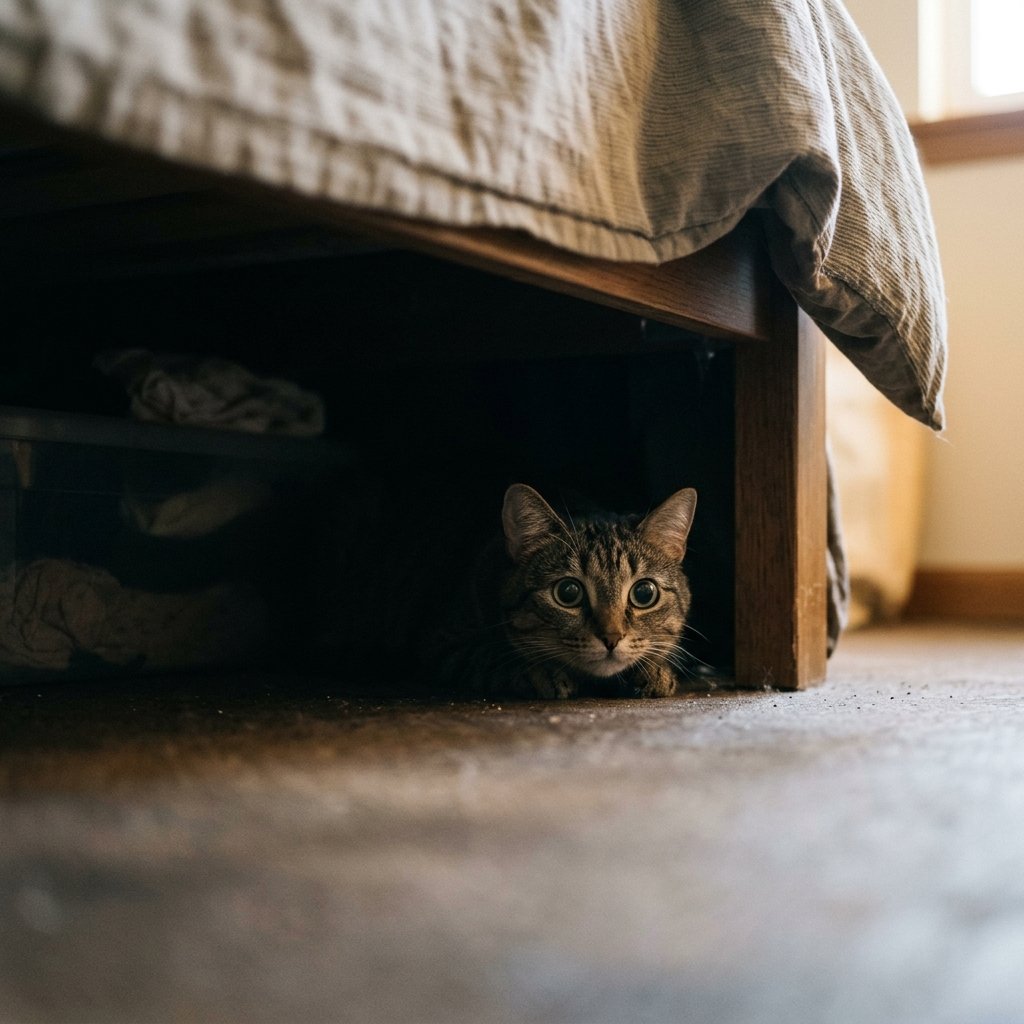
Why Is My Cat Hiding Under the Bed?
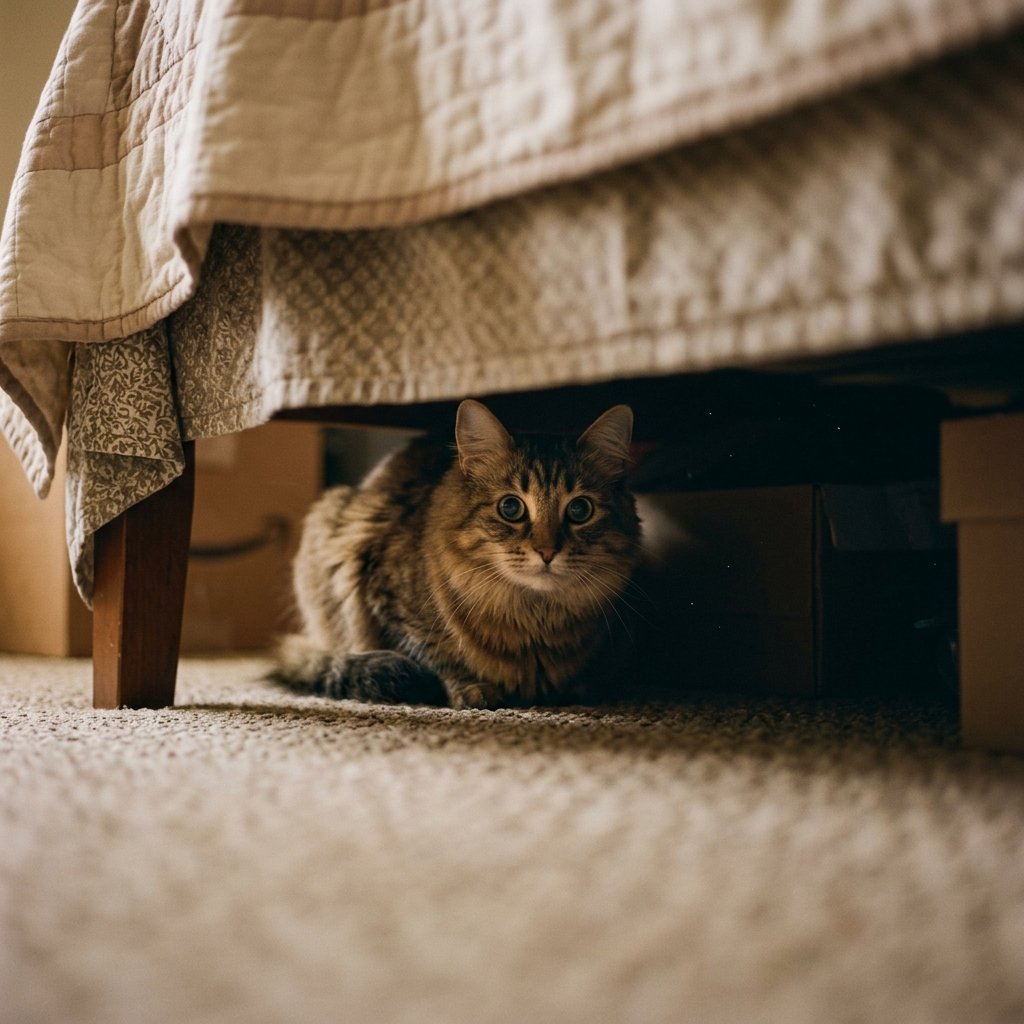
Cat hiding under the bed is one of the most common forms of feline hiding behavior.
Under a bed is dark, enclosed, and pretty hard for people or other animals to get to. From your cat’s point of view, it can be a handy hiding place.
If your cat likes the bed but still eats, drinks, uses the litter box, and plays normally, this behavior may just be her preference for a safe place to rest.
But if she suddenly starts spending most of her time under the bed and stops engaging in normal activities, look for other signs of stress or illness.
Why Is My Cat Suddenly Hiding?
A sudden change is more important than the location of the hiding place.
Ask yourself:
What changed recently?
Was there a new animal? Visitor? A loud thing? One move. New furniture, A change of food? A fight with another cat?
If no obvious environmental cause exists, consider that your cat may be experiencing discomfort or pain.
Don’t automatically dismiss a sudden change in behavior as “just being a cat.” Cornell advises paying special attention to changes in behavior and physical condition, as sometimes illness can reveal itself through subtle behavioral signs..
Cat Hiding Behavior at Night
Some cats naturally become more active around dawn and dusk. Others may spend much of the night exploring and then choose a secluded location to sleep during the day.
Therefore, hiding at night is not automatically abnormal.
The key questions are:
- Is this normal for your cat?
- Is she eating normally?
- Is she using the litter box?
- Is she active at other times?
- Does she respond normally when you interact with her?
A change from your cat’s normal nighttime routine is more meaningful than the fact that she prefers a hidden sleeping place.
Cat Hiding and Not Eating: Should You Worry?
This combination deserves attention.
A cat that hides occasionally but continues eating normally may simply prefer privacy.
A cat that hides, refuses food, becomes lethargic, or shows other physical changes may be sick.
Cornell lists reduced appetite and lethargy among signs that can accompany feline illness, while some conditions can produce only vague behavioral changes at first.
If your cat is not eating or drinking normally, especially when the change is sudden or accompanied by vomiting, breathing problems, weakness, pain, or other concerning symptoms, contact a veterinarian.
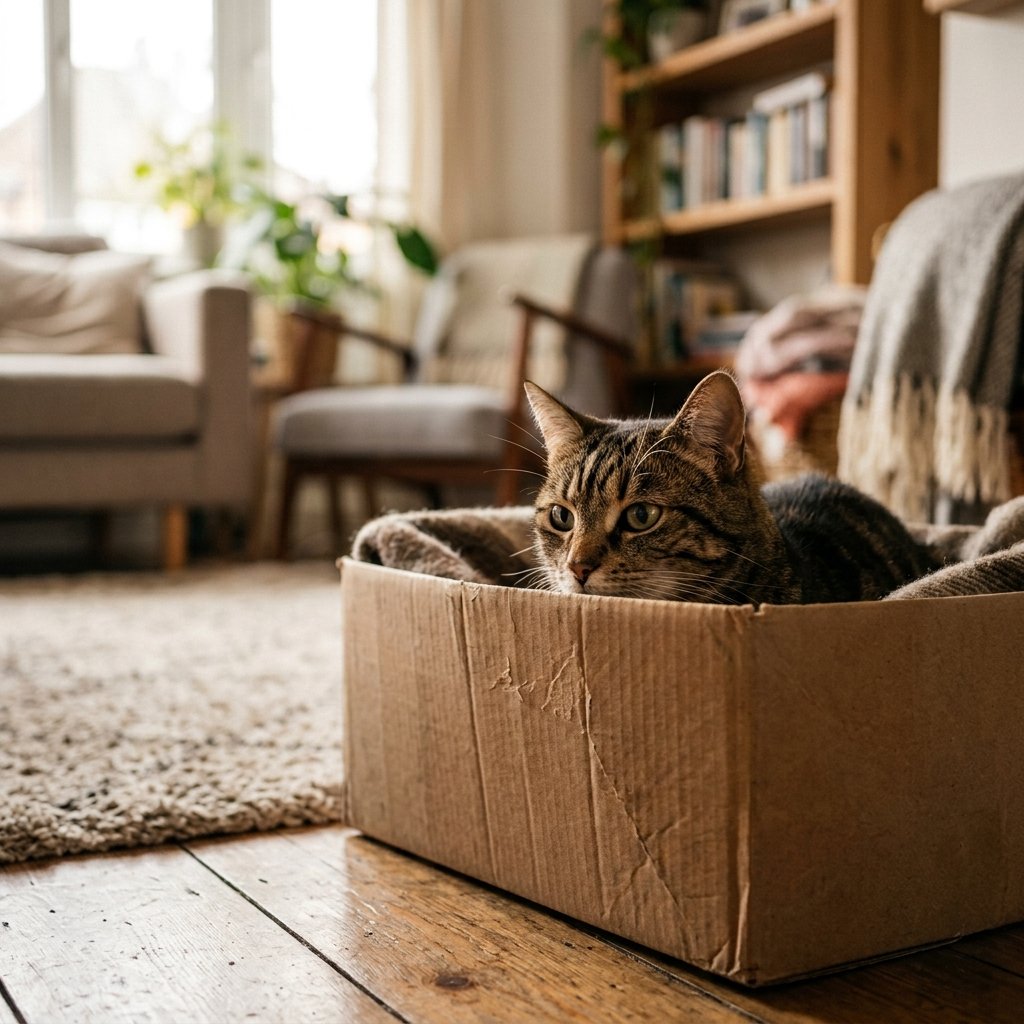
How Can You Tell If a Hiding Cat Is Sick?
There is no single behavior that can diagnose illness at home. Instead, compare your cat’s current behavior with her normal baseline.
Pay attention to:
Appetite
Has your cat stopped eating or is she eating substantially less?
Activity
Is she sleeping much more than usual or avoiding movement?
Grooming
Does her coat look unkempt, greasy, or different?
Litter Box Habits
Is she urinating or defecating more or less frequently? Is she straining or avoiding the litter box?
Body Language
Does she crouch, move stiffly, keep her ears back, or react when you touch a particular area?
Social Behavior
Has a normally friendly cat suddenly stopped interacting?
Weight
Has she noticeably lost or gained weight?
A pattern of several changes is more concerning than occasional hiding by itself.
Signs That Your Cat May Be Hiding Because of Pain
Cats do not always cry or visibly limp when they are in pain.
Pain may instead show up as subtle changes in behavior.
Possible signs include:
- Hiding more than usual
- Reduced movement
- Reluctance to jump
- Sleeping more
- Reduced grooming
- Changes in appetite
- Irritability
- Avoiding touch
- Changes in litter-box behavior
- An unusual body posture
Cornell explains that reclusive behavior can occur in cats experiencing pain, including joint problems, and that some signs can be subtle.
If your cat’s hiding behavior appears together with these changes, a veterinary examination is appropriate.
How to Help a Hiding Cat
If your cat is hiding because of fear or stress, your goal should not be to force her out.
Instead, make the environment feel safer.
Give Her a Safe Hiding Place
Provide a covered bed, cardboard box, cat tunnel, or another quiet retreat.
Keep the Environment Calm
Reduce loud noises and avoid unnecessary handling while your cat is frightened.
Maintain a Routine
Regular feeding, play, and sleep routines can make the environment more predictable.
Let Your Cat Approach You
Sit quietly nearby rather than reaching into her hiding place.
You can speak softly and allow her to decide when to come out.
Provide Resources
Make sure food, water, litter boxes, scratching areas, and resting spaces are accessible.
Use Positive Associations
Treats, calm play, and familiar bedding can help create positive associations with a new environment.
Should You Pull a Cat Out of Hiding?
Usually, no.
If your cat is hiding because she feels frightened, physically removing her can increase stress.
There are exceptions, particularly when you need to provide urgent medical care or prevent immediate danger.
Otherwise, give her a secure alternative and allow her to emerge voluntarily.
The goal is not simply to make the cat stop hiding. The goal is to understand why she is hiding.
When Should I Worry About Cat Hiding Behavior?
Occasional hiding is usually less concerning when your cat otherwise behaves normally.
You should pay closer attention when the behavior is:
- Sudden
- Persistent
- Increasing
- Accompanied by appetite changes
- Accompanied by lethargy
- Associated with vomiting or diarrhea
- Associated with breathing difficulties
- Associated with changes in urination
- Associated with weight loss
- Associated with obvious pain
- Accompanied by major personality changes
Cornell recommends veterinary attention when behavioral or physical changes suggest that a cat may be unwell.
If your cat has severe breathing difficulty, is unresponsive, is bleeding, or appears critically ill, seek emergency veterinary care rather than waiting to see whether the hiding stops.
Cat Hiding Behavior After a Move
Cats are very scent-driven and territorial. Relocating can be very stressful for them.
Once you move, allow your cat to have a quiet “base camp” before letting them roam the whole house.
Leave their familiar bedding, food, water, litter, and toys in the room. When your cat is relaxed, she can start to slowly explore other parts.
Don’t judge progress by the amount of time she spends outside her hiding place.
A better sign is that she is slowly becoming more comfortable, eating normally, grooming, playing, exploring, and interacting when she feels ready.
Cat Hiding From Owner
Sometimes owners worry that a cat hiding from them means the cat no longer likes them.
That conclusion is usually too simplistic.
A cat may avoid a person because of fear, stress, unfamiliar handling, a recent negative experience, or simply because she wants quiet time.
Avoid chasing, cornering, or repeatedly pulling the cat from her hiding place.
Instead, allow the cat to control the interaction. Calm behavior, predictable routines, food rewards, and play can help rebuild trust.
How Long Is It Normal for a Cat to Hide?
There is no universal number of hours that applies to every cat.
A naturally shy cat might spend more time hiding than a confident cat. A new cat might hide during the transition period. Following a stressful event, a scared cat may run away for a short period of time.
It’s the trend and the rest of the cat’s behavior that matter.
Generally, it’s more reassuring if your cat is slowly gaining confidence and maintaining normal eating, drinking, grooming, activity, and litter box habits.
If hiding is more frequent or if there are other physical or behavioral changes, then veterinary advice is appropriate.
Common Mistakes When a Cat Hides
Forcing the Cat Out
This can increase fear and make the hiding place more important to the cat.
Punishing the Cat
Punishment does not address the reason for hiding and can damage trust.
Ignoring Sudden Changes
A new hiding pattern can sometimes be an early sign of illness.
Assuming Every Hiding Cat Is Sick
The opposite mistake is also possible. Hiding is normal feline behavior, so occasional hiding should not automatically be treated as a medical emergency.
Changing Everything at Once
If your cat is stressed, constant changes to food, litter, furniture, and routine can make the environment even less predictable.
Frequently Asked Questions About Cat Hiding Behavior
Why is my cat suddenly hiding?
A cat may suddenly hide because of fear, stress, environmental changes, or illness. Look for recent changes in the home and monitor appetite, activity, grooming, litter-box use, and other behaviors.
Why do cats hide when they are sick?
Cats may hide when they are sick because illness or pain can make them feel vulnerable. Cats are also known for concealing signs of illness, so a sudden increase in hiding can be worth investigating.
Why is my cat hiding under the bed?
Under the bed provides a dark, enclosed, quiet space where a cat can feel protected. If your cat otherwise behaves normally, this may simply be her preferred hiding or sleeping area.
Why is my cat hiding and not eating?
Hiding combined with a significant loss of appetite can indicate stress or a health problem. If your cat is refusing food or has additional symptoms such as lethargy, vomiting, diarrhea, pain, or breathing problems, contact your veterinarian.
How do I get my hiding cat to come out?
Do not force your cat out unless there is an immediate safety or medical reason. Provide a quiet environment, keep food and water accessible, maintain a predictable routine, and allow your cat to approach you at her own pace.
Is cat hiding behavior a sign of anxiety?
It can be. Hiding is one possible sign of feline stress or anxiety, particularly when it appears with reduced play, withdrawal, grooming changes, or changes in eating and drinking.
Should I worry if my cat hides all day?
If hiding all day is normal for your cat and she otherwise eats, drinks, grooms, plays, and uses the litter box normally, it may be part of her personality. If this is a new or increasing behavior, investigate possible stressors and consider contacting your veterinarian.
Final Thoughts
It is not always a problem when cats hide. Cats hide because they feel secure in an enclosed space, want to rest undisturbed, or need distance from something stressful.
The important difference is normal hiding vs. a change in your cat’s normal behavior.
Sometimes a cat who sleeps under the bed but otherwise acts normally simply has a favorite hiding place. Any obvious signs of pain, a change in the way she grooms, a sudden loss of appetite, sluggishness, or if she just suddenly vanishes, she deserves some closer attention.
Think of the hiding as information, not as a diagnosis. Look at the whole picture, pay attention to any recent changes in the environment, and if something seems significantly different from your cat’s usual routine, talk to your veterinarian.
The earlier a significant change in health or behavior is observed, the more easily it can be investigated and treated.


Discussion 0 comments
Share your thoughts — every perspective adds value.