

You’re petting your cat, everything is peaceful, and then, without warning, teeth sink into your hand. Or maybe your kitten treats your ankles like prey every time you walk past. Cat bites can be painful, surprising and more than a little upsetting, especially when you thought you and your cat were getting along perfectly.
If you’re looking for how to stop a cat from biting, here’s the good news: it’s almost never because your cat “hates” you. Biting is communication, instinct or both. Once you understand the reason behind it, you can teach your cat better habits and keep your hands (and your relationship) in one piece.
Why Do Cats Bite?
Not all bites mean the same thing. Cats bite for several different reasons, and the right fix depends on the cause.
1. Play biting
This is the most common reason, especially in kittens and young cats. Cats learn to hunt and play by pouncing, grabbing and biting. If a kitten learned that hands and feet are fun toys, they’ll keep treating them that way. It often looks like ambushing ankles, grabbing hands during petting or biting when you wiggle your fingers.
2. Overstimulation
Some cats enjoy petting up to a point, then suddenly bite. This is sometimes called “petting-induced aggression,” and it’s a way of saying “enough.” Warning signs include a twitching or thumping tail, flattened ears, skin rippling on the back, dilated pupils and suddenly stopping purring.
3. Fear or defensive biting
A scared or cornered cat may bite as a last resort. This can happen during vet visits, nail trims, when picked up or when a stranger approaches. Our guide to the signs your cat is stressed can help you spot early warning signs.
4. Redirected aggression
If your cat is agitated by something they can’t reach, like a cat outside the window or a loud noise, they may lash out at the nearest target, which could be you or another pet. It can seem like an unprovoked attack, but it’s triggered by something else.
5. Pain or illness
A cat in pain may bite when touched in a sore spot. Dental problems, arthritis, injuries and many other conditions can cause sudden biting. If your cat’s biting is new or unusual, a vet visit is the first step.
6. Teething (in kittens)
Kittens lose their baby teeth around three to six months old, and chewing on fingers can ease the discomfort. Provide appropriate chew toys and redirect gently.
7. Attention-seeking
Cats are smart. If a nip gets you to look at them, feed them or play, they may repeat it. Even a startled “ow!” can be rewarding.
8. Love bites
Some cats give gentle nibbles during grooming or cuddling. These “love bites” aren’t aggressive, though it’s worth discouraging them, especially around children.
9. Boredom and pent-up energy
Indoor cats with little to do may use you as entertainment. A bored cat is more likely to ambush, chase and bite. If your cat has been following you around and getting into trouble, see our post on why your cat follows you everywhere.
Reading the Warning Signs Before a Bite
Most cats give signals before they bite. Learning to read them is one of the best ways to prevent bites.
- Tail swishing, lashing or thumping
- Ears turning sideways or flattening
- Pupils suddenly dilating
- Skin rippling along the back
- Body stiffening, or head turning toward your hand
- A fixed stare, or growling and hissing
- Stopping purring
If you see any of these, stop what you’re doing, calmly stand up or move away and let your cat settle. Respecting these signals teaches your cat they don’t have to bite to be heard.
How to Stop a Cat From Biting: Step by Step
1. Never use your hands as toys
This is the most important rule. Don’t wiggle your fingers in front of a kitten or let them chew on your hands, even if it seems cute. They learn that skin is fair game, and when they’re bigger, those bites hurt a lot more. Always use toys instead.
2. Redirect to appropriate toys

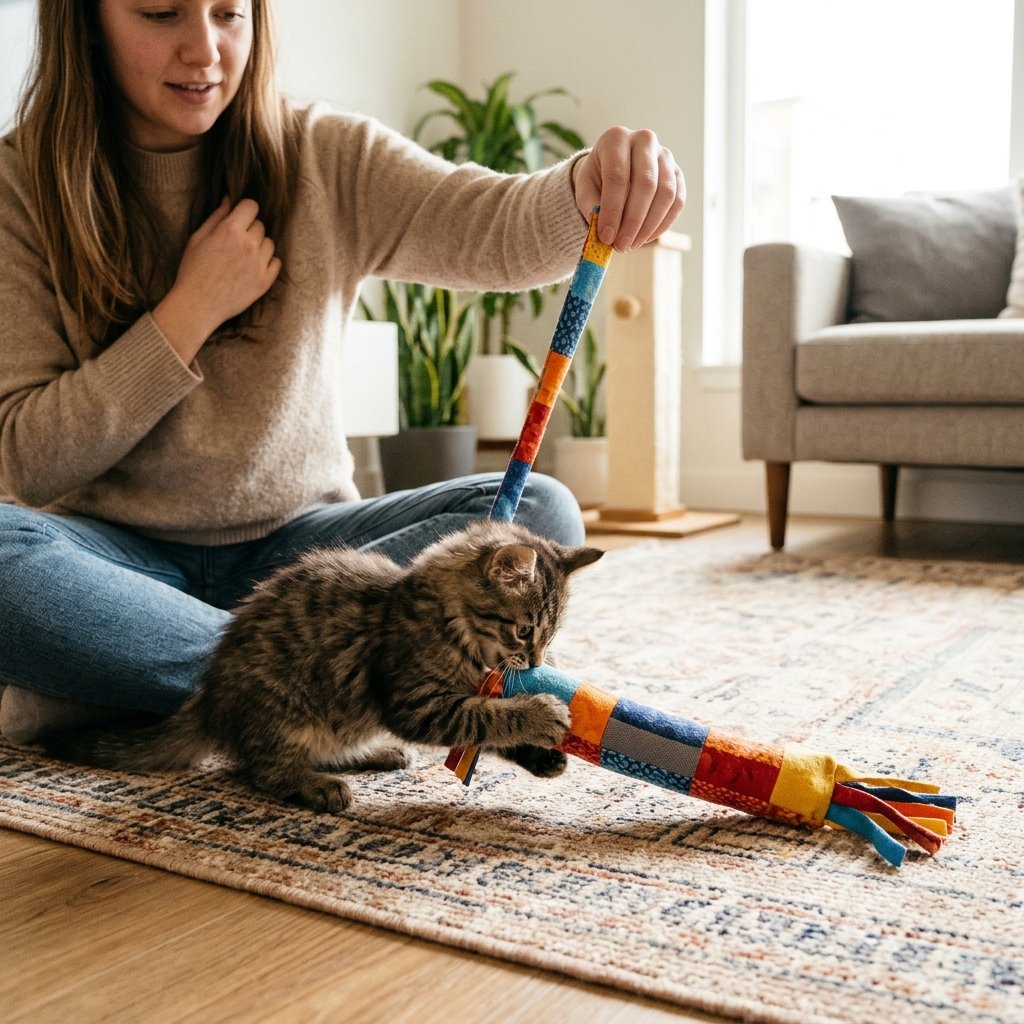
When your cat grabs your hand or ankle, calmly stop moving, gently remove yourself and offer a toy. Wand toys, feather teasers, small plush toys and kicker toys all let your cat practice biting and kicking on the right target. Keep toys near the places where biting usually happens.
3. Play every day, on a schedule

A cat who gets plenty of hunting-style play is less likely to ambush you. Aim for two or three sessions a day of 10 to 15 minutes, especially in the evening when cats are most active. End each session by letting your cat “catch” the toy, then offer a small meal or treat. Our guide to healthy habits for pets shows how to build play into your routine.
4. Stay calm and end the game when it gets too rough
If your cat bites during play, don’t yell, pull away dramatically or hit. Instead, freeze for a moment, then calmly stand up and walk away, ending the play. This teaches your cat that biting makes the fun stop. After a short break, you can resume with a toy.
5. Reward gentle behavior

Catch your cat being gentle and reward it with a treat, praise or a favorite game. Cats learn quickly when good behavior is worth their while. Quiet, calm touches deserve a payoff, too.
6. Keep petting short and watch for signals
If your cat gets overstimulated, stop petting before the bite. Pet in short sessions, focus on areas most cats like (cheeks, chin and the base of the ears) and avoid the belly and base of the tail unless your cat clearly enjoys it. When you see the warning signs, stop and let your cat decide whether to continue.
7. Give your cat space when they’re scared
If fear is behind the biting, don’t force handling. Let your cat retreat to a quiet place, and work with your vet on gentle ways to make nail trims, brushing and carrier training less stressful. Cat Friendly Practices are trained to handle cats gently. You can find one at catfriendly.com.
8. Provide enrichment
Cat trees, window perches, puzzle feeders, scratching posts and safe hiding spots give your cat outlets for energy and reduce stress. Rotate toys to keep things interesting. See our guide on how to stop a cat from scratching for ideas on channeling natural behaviors.
9. Rule out medical problems
If biting is new, sudden or happens when you touch a specific spot, see your vet. Pain is a common hidden cause. The Cornell Feline Health Center has reliable information on feline health.
10. Consider a second kitten or cat, carefully
In some cases, a playmate can help burn off energy, but it’s not for every home and it needs careful introductions. Ask your vet or a cat behavior professional before adding another pet. Our pet care tips for beginners includes advice on settling a new pet in.
What Not to Do
- Don’t hit, flick or shout at your cat. It increases fear and can make biting worse.
- Don’t spray water or use scare tactics. It damages trust and doesn’t teach your cat what to do instead.
- Don’t encourage rough play with your hands.
- Don’t pull your hand away quickly when bitten. It can trigger more chasing. Freeze, then calmly withdraw.
- Don’t ignore warning signs. Your cat is telling you something.
What If My Cat Draws Blood?
Cat bites may look small, but they can be serious. Cats have sharp, narrow teeth that inject bacteria deep into tissue, and puncture wounds can become infected quickly.
- Wash the wound with soap and warm water for several minutes.
- Apply an antiseptic and cover it with a clean bandage.
- Seek medical attention if the bite breaks the skin, especially on the hand, or if it becomes red, swollen, warm or painful, or you develop a fever.
- Seek urgent care if you have a weakened immune system or other health conditions.
The CDC’s healthy pets page has more on staying safe around pets.
Biting and Children
Teach children to avoid rough play, never to grab or chase the cat and to stop petting when the cat shows signs of overstimulation. Always supervise young children with cats, and give your cat a safe place to retreat that children can’t reach.
Kittens vs. Adult Cats
Kittens bite mostly out of play and teething. With consistent redirection and plenty of play, most outgrow it. Start early, because habits formed now can last a lifetime.
Adult cats usually bite for a reason: overstimulation, fear, pain or redirected aggression. Work on identifying the trigger, and get a vet check. Habits can change with patience, but it may take weeks.
When to Seek Professional Help
Talk to your vet, and consider a certified cat behavior consultant or veterinary behaviorist, if your cat:
- Bites hard or breaks skin regularly
- Attacks without warning
- Shows sudden aggression that’s out of character
- Seems fearful, in pain or very stressed
- Is aggressive toward other pets or family members
- Doesn’t improve after several weeks of consistent training
For more reading on cat behavior, International Cat Care, the ASPCA’s cat care pages and the AVMA’s pet owner resources are trustworthy resources. And if you share your home with a dog too, our guide to how to stop a dog from biting covers the same issue from the dog’s side.
Quick Answers
Why does my cat bite me for no reason?
There’s almost always a reason, though it can be subtle: overstimulation, play, boredom, fear or pain. Watch for the warning signs before the bite.
Why does my cat bite me gently?
Gentle nibbles can be “love bites,” grooming behavior or play. They’re usually affectionate, but you can redirect them if you’d prefer.
How do I stop my kitten from biting?
Never use hands as toys, redirect to appropriate toys, play often and end the game calmly when biting starts.
Should I punish my cat for biting?
No. Punishment increases fear and stress. Redirect and reward gentle behavior instead.
Why does my cat bite me after petting?
Probably overstimulation. Pet in shorter sessions and stop when your cat shows warning signs.
Are cat bites dangerous?
They can be. Wash the wound thoroughly, and see a doctor if the skin is broken, especially on the hands.
The Bottom Line
Learning how to stop a cat from biting starts with understanding why your cat is doing it. Use toys instead of hands, play regularly, watch for warning signs, reward gentle behavior and never punish. If biting is sudden, aggressive or out of character, see your vet. With patience and consistency, most cats learn to play and cuddle without teeth, and you can enjoy your cat without worrying about your hands.
If your cat bites and breaks the skin, wash the wound and seek medical advice. If your cat’s biting is sudden or aggressive, speak with your veterinarian.




Discussion 0 comments
Share your thoughts — every perspective adds value.