

It’s 7 p.m. You’ve had a long day, you finally sit down and then it begins. Your sweet, sleepy puppy transforms into a tiny, furry tornado. They sprint around the living room, attack your socks, launch themselves at the sofa and look at you with wild eyes as if to say, “Why aren’t you joining in?”
If you’re searching for how to calm a hyper puppy, take heart. This kind of wild energy is completely normal, and it’s one of the most common challenges of puppyhood. The good news is that with the right routine, a little patience and a few simple tricks, you can teach your puppy how to settle, and enjoy some peaceful evenings again.

Why Is My Puppy So Hyper?
Before looking at solutions, it helps to understand what’s going on. Puppies are hyper for a few main reasons:
- They’re young. Puppies are bursting with energy and have very little impulse control. Their brains are still developing, and learning to “switch off” is a skill that takes time.
- They’re overtired. Surprisingly, an overtired puppy often looks hyper, not sleepy. Just like a toddler, they can become wired, nippy and wild when they need a nap.
- They’re overstimulated. Lots of excitement, visitors, rough play or noisy surroundings can push a puppy past their limit.
- They need more exercise or mental work. Pent-up energy comes out as zoomies, chewing and mischief.
- Zoomies are normal. Sudden bursts of running, often in the evening, are a natural way for puppies to release energy.
- Breed and personality. Working, herding and sporting breeds, such as border collies, retrievers and terriers, tend to have higher energy levels.
The “puppy witching hour” is common in the early evening, and many puppies get extra wild around then. It tends to ease as they grow, usually after the first few months, although adolescence brings its own energy bursts.
How to Calm a Hyper Puppy: 10 Practical Steps
1. Make sure they’re getting enough sleep

This is the single most effective trick, and the one people forget. Young puppies need around 18 to 20 hours of sleep a day. If your puppy is getting wild, it may be time for a nap, even if they don’t look tired.
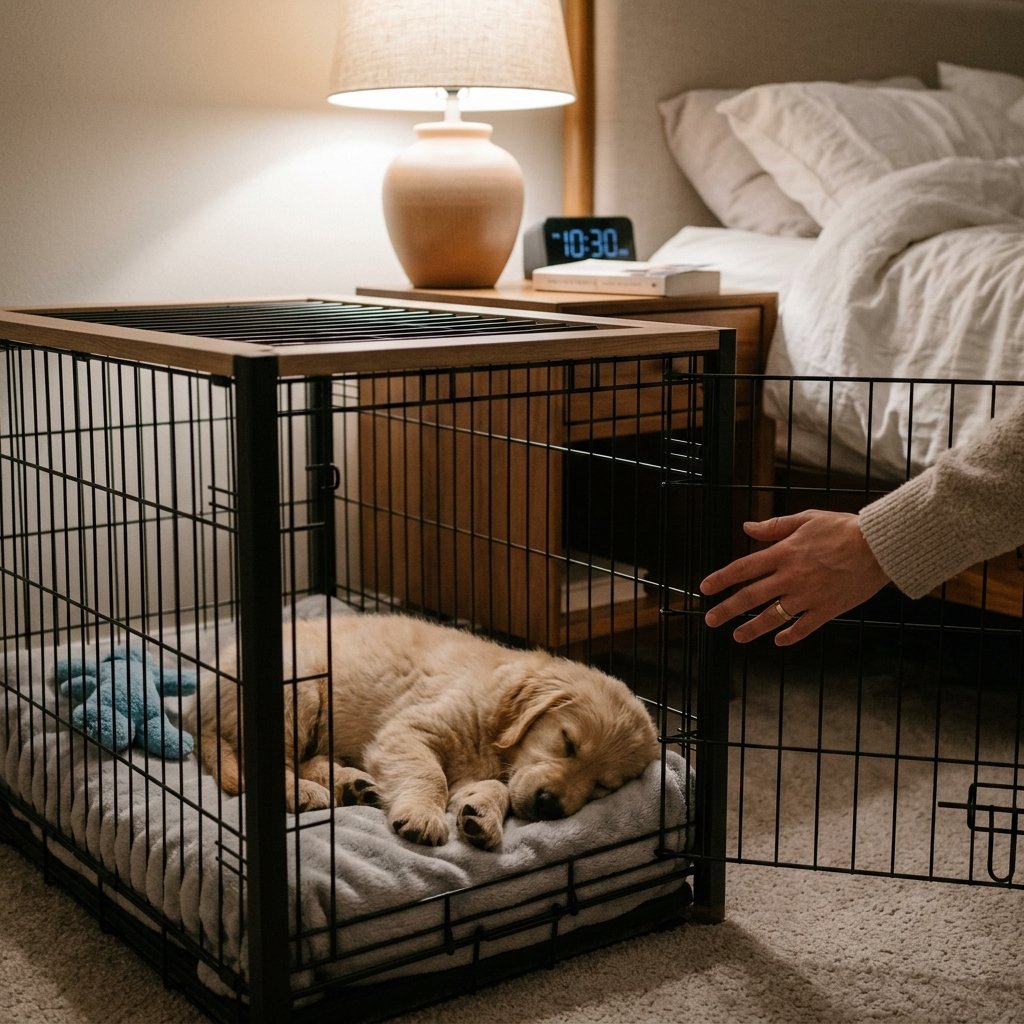
- Set up a quiet, comfortable spot, such as a crate or playpen, away from the busiest part of the house.
- Put your puppy down for a nap after meals, play sessions and every couple of hours during the day.
- Don’t wait until they’re exhausted. If your puppy starts nipping, zooming or being “extra” about 1 to 2 hours after waking, it’s probably nap time.
Many puppies protest at first, but after a few minutes of settling, they drop off. Our guide to crate training an 8-week-old puppy covers how to make this a positive routine, and dog crate training games helps puppies love their crate.
2. Give them the right kind of exercise
Puppies need exercise, but it needs to be age-appropriate. Their joints are still developing, so avoid long runs, forced jogging or repetitive jumping. Short, gentle walks and play sessions are best. Ask your vet how much exercise is right for your puppy’s age and breed.
3. Don’t forget mental exercise
Brain work tires a puppy out more effectively than a lot of physical play. Try:
- Sniffing walks, where you let your puppy stop and explore smells
- Scatter feeding: toss kibble across the grass or a snuffle mat
- Puzzle feeders and treat-dispensing toys
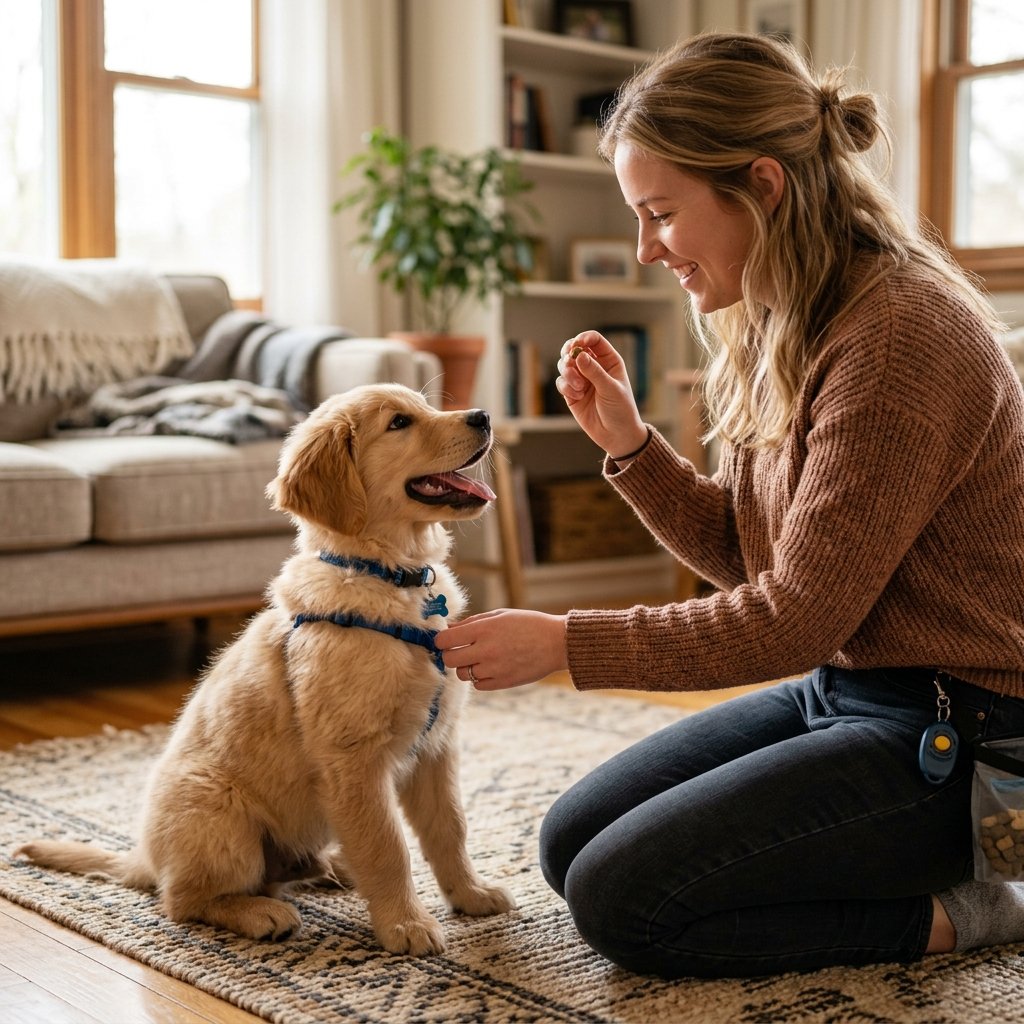
- Short training sessions of two to five minutes
- Hide-and-seek games with treats or toys
Our guides to how to train a puppy and positive reinforcement dog training have easy, reward-based activities to try.
4. Offer something to lick or chew

Licking and chewing release calming chemicals in a dog’s brain. A stuffed rubber toy, a lick mat spread with a little plain yogurt, canned puppy food or xylitol-free peanut butter, or a safe chew can help your puppy settle. Always check labels carefully, because xylitol is extremely toxic to dogs. For more on safe chewing, see our post on why your dog chews everything and our puppy teething symptoms guide.
5. Teach your puppy to settle on a mat
Settling is a skill, and you can teach it. Put a mat or blanket on the floor. Whenever your puppy steps on it or lies down, calmly reward them with a treat. Gradually reward longer periods of lying quietly. Over time, the mat becomes a signal for “relax now.” Practice when your puppy is already a bit tired, then build up to more exciting moments.
6. Reward calm behavior
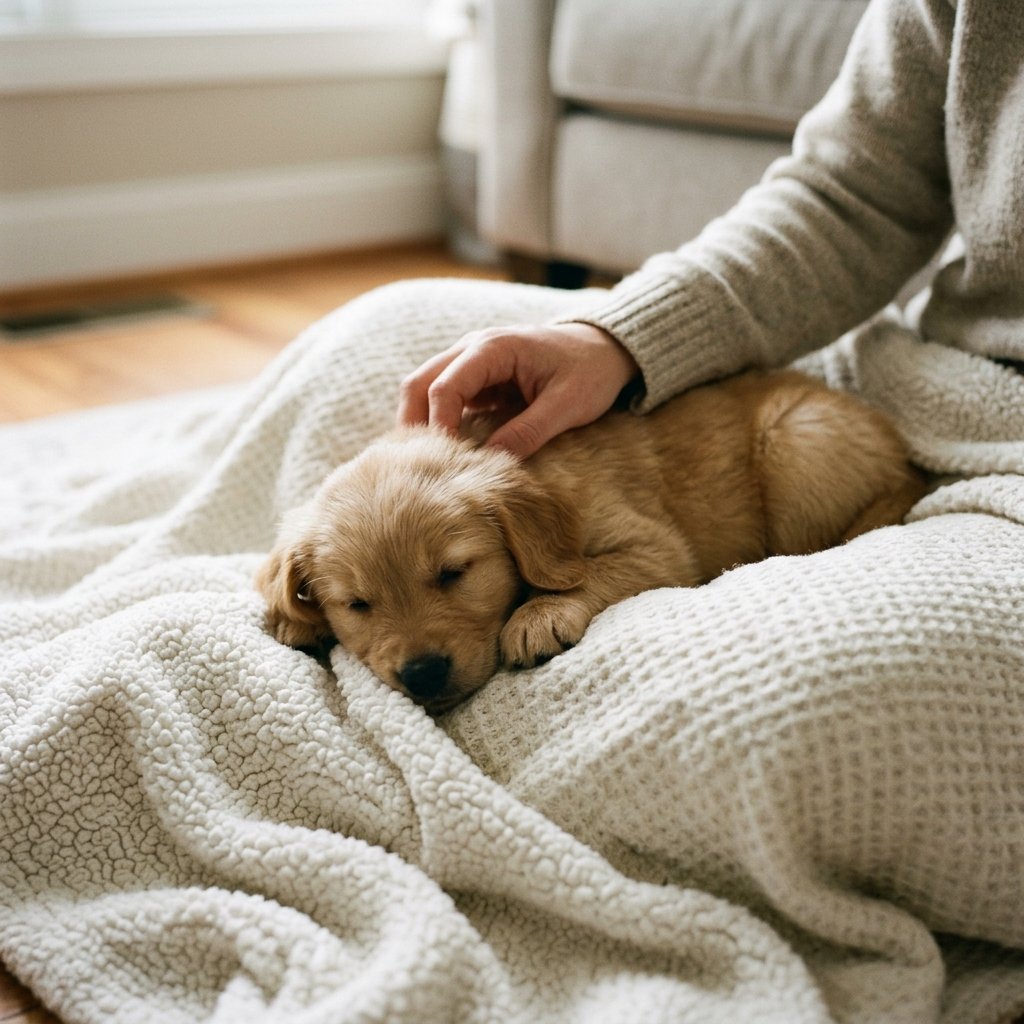
We tend to notice our puppy only when they’re wild. Flip that around. When your puppy is lying quietly, give calm praise, a gentle stroke or a small treat. You’re teaching them that quiet behavior earns attention.
7. Keep greetings and play calm
Excited play, chasing and wrestling can wind a puppy up. When your puppy starts getting too wild, stop the game, stand still and wait for a few calm seconds before resuming. For jumping problems, our guide on how to train a dog not to jump shows how to teach polite greetings. If your puppy gets nippy when overexcited, see how to stop a dog from biting.
8. Use short, gentle “time-outs” when they’re overstimulated
This isn’t punishment. When your puppy is overexcited, calmly move them to a quiet, safe space, such as a playpen or crate with a chew, for a few minutes of settling time. It gives their brain a chance to calm down. Keep it matter-of-fact, never angry.
9. Stick to a predictable routine
Puppies relax when they know what comes next. Regular feeding, potty, play, training and nap times help them feel secure and teach them when it’s time to be active and when it’s time to rest. Our guide to puppy care tips for beginners includes a sample daily schedule.
10. Practice basic skills
Impulse control exercises like sit, wait and stay give your puppy a way to channel their energy. Our basic dog commands training plan and how to teach a dog to stay are great starting points.
How to Handle Zoomies
Zoomies, or “frapping,” are those sudden bursts of frantic running. They’re normal, funny and a healthy way to release energy. Here’s how to handle them:
- Make sure the area is safe: clear obstacles and close off stairs.
- Let your puppy run it out. Don’t chase them, which turns it into a game.
- Call your puppy to you in a happy voice if you need them, and reward when they come.
- Think about timing. If zoomies happen at the same time every evening, schedule a play or sniff session beforehand.
What Not to Do
- Don’t punish or yell. Hyper behavior isn’t naughtiness, and punishment can make a puppy more anxious or excited.
- Don’t over-exercise. More running doesn’t always mean a calmer dog. It can create a puppy who needs even more to burn off energy, and it can strain growing joints.
- Don’t encourage rough play with hands or feet. It teaches your puppy that wild behavior is fun.
- Don’t give calming supplements or medications without checking with your vet.
- Don’t expect calm overnight. Learning to settle takes time and repetition.
The American Veterinary Society of Animal Behavior explains why reward-based methods are preferred over punishment in its position statements.
When Is It More Than Normal Puppy Energy?
True hyperactivity (sometimes called hyperkinesis) is rare in dogs. In most cases, “hyper” puppies are just young, under-rested or under-stimulated. But talk to your vet if your puppy:
- Seems unable to settle at all, even when tired
- Has sudden changes in behavior or energy
- Is losing weight, has diarrhea or other symptoms
- Seems anxious, panicky or distressed
- Doesn’t improve after several weeks of consistent routine and enrichment
Your vet can check for medical causes and, if needed, refer you to a qualified trainer or veterinary behaviorist. The AVMA’s pet owner resources, the AKC’s training library and the ASPCA’s dog care pages are useful for further reading. Fear Free also shares tips on low-stress handling.
Quick Answers
How do I calm a hyper puppy at night?
Keep the last hour calm. Offer a final potty trip, a quiet chew or lick mat, dim the lights and settle your puppy in their crate or bed. Avoid rough play in the evening.
At what age do puppies calm down?
Many puppies become noticeably calmer around 6 to 12 months, although adolescence can bring energy spikes, and some breeds stay energetic into adulthood.
Is my puppy hyper or overtired?
Often both. A puppy who’s wild, nippy and can’t settle, especially an hour or two after waking, is often overtired. Try a nap in a quiet space.
Do hyper puppies need more exercise?
Sometimes, but often they need more rest and mental stimulation rather than more running.
Can food make my puppy hyper?
There’s no strong evidence that food causes hyperactivity in puppies. If you’re concerned about their diet, talk to your vet. Our pet nutrition guide explains how to choose a balanced food.
How long do zoomies last?
Usually just a few minutes. They’re normal and typically fade as your puppy matures.
The Bottom Line
Learning how to calm a hyper puppy is mostly about giving them what they need: plenty of sleep, the right kind of exercise, mental stimulation, calm routines and rewards for settling down. Be patient, avoid punishment and remember that this wild phase won’t last forever. Before you know it, that tiny tornado will be a calm, snoring companion curled up at your feet. For now, keep the treats handy, and enjoy the zoomies when you can.
If your puppy seems unwell, extremely anxious or unable to settle despite your efforts, speak with your veterinarian.


Discussion 0 comments
Share your thoughts — every perspective adds value.