

A cat who hides for an hour is a cat having a quiet moment. A cat who hides for a day is worth a second look. And a cat who is hiding for days, barely eating, barely moving and not using the litter box, may be telling you something is seriously wrong.
Cats are masters at hiding illness and pain. In the wild, showing weakness can be dangerous, so they retreat and say nothing. That’s why it’s so important to know when hiding is just a mood and when it’s an emergency. This guide focuses on that line: how long is too long, which signs mean you should call a vet right away and what to do, step by step, while you wait.
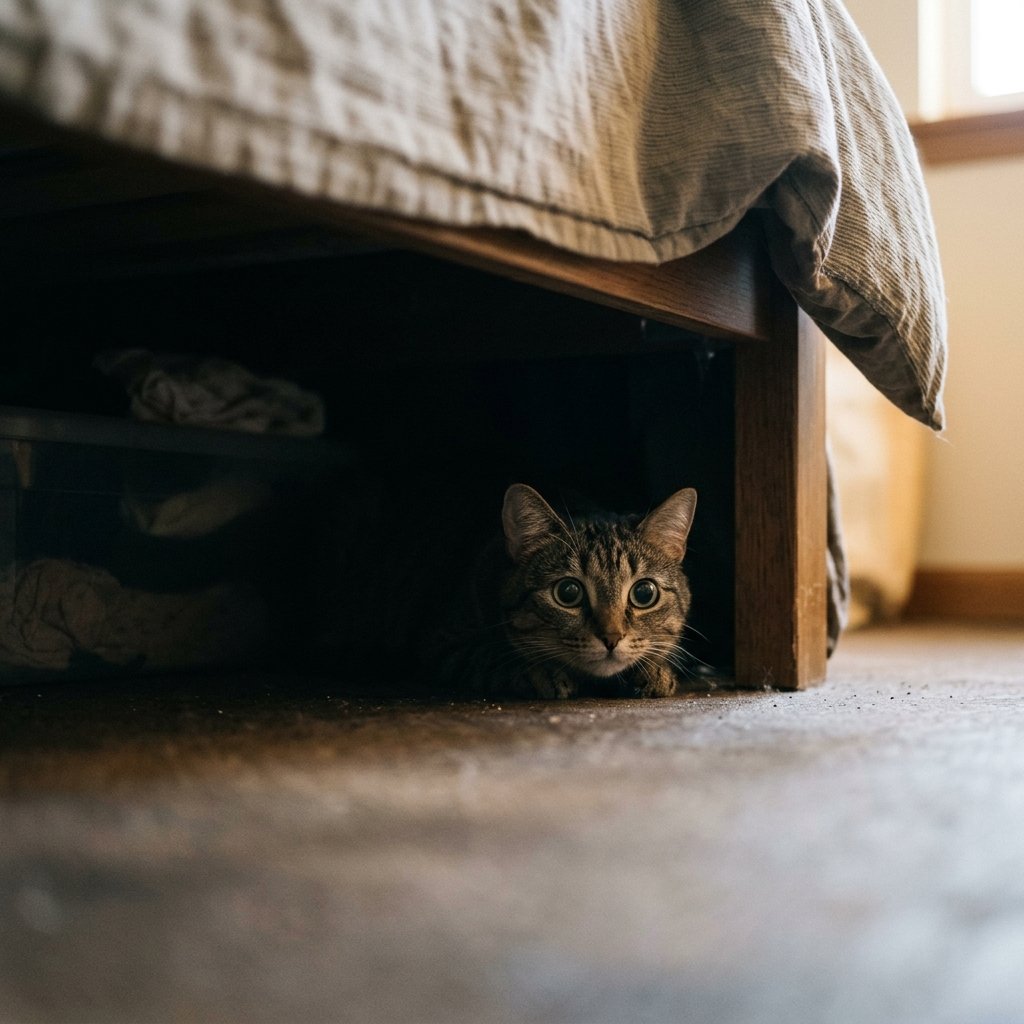
How Long Is Too Long for a Cat to Hide?
There’s no single rule that fits every cat, but these rough guidelines can help:
- A new cat in a new home: hiding for several days, and sometimes a couple of weeks, can be normal, as long as the cat is still eating, drinking and using the litter box.
- An established cat who suddenly hides: more than 24 hours is unusual, especially if it’s a big change from their normal behavior.
- A cat who hides and isn’t eating: don’t wait. More than 24 hours without eating needs a vet’s attention.
- A cat who hides and isn’t peeing: treat as an emergency. We’ll explain why below.
- Kittens, seniors and cats with health conditions: can get sick faster, so act sooner.
The length of time matters, but the other signs matter more. A cat who hides in a cardboard box, but comes out for meals, uses the litter box and acts normally is much less worrying than a cat who’s lying flat in a corner and ignoring food.
Cat Hiding for Days: Emergency Signs That Mean “Go Now”
If your cat is hiding and shows any of the following, contact a vet or emergency clinic immediately. Don’t wait to see if it passes.
- Not peeing, or straining and crying in the litter box. A urinary blockage is a life-threatening emergency, especially in male cats, and can become fatal within a day or two. Our article on why a cat pees outside the litter box explains the warning signs.
- Difficulty breathing: open-mouth breathing, panting, wheezing, very fast or labored breaths, or a noticeable effort in the belly.
- Collapse, seizures or being unable to stand.
- Sudden paralysis or cold, painful back legs. This can signal a blood clot and needs immediate care.
- Repeated vomiting, or vomiting with lethargy.
- Pale, white, blue or very yellow gums.
- Known or suspected poisoning, such as exposure to lilies, antifreeze, medications or toxic foods. Lilies are especially dangerous to cats.
- Possible injury, such as a fall, a fight or a car accident.
- Swallowing string, thread or other foreign objects.
- No eating or drinking for more than 24 hours, or sooner for kittens and sick cats.
The ASPCA Animal Poison Control Center and the Pet Poison Helpline can advise if you think your cat has eaten something toxic. Both are paid services, so check the details first.
A Day-by-Day Guide: What to Do When Your Cat Is Hiding
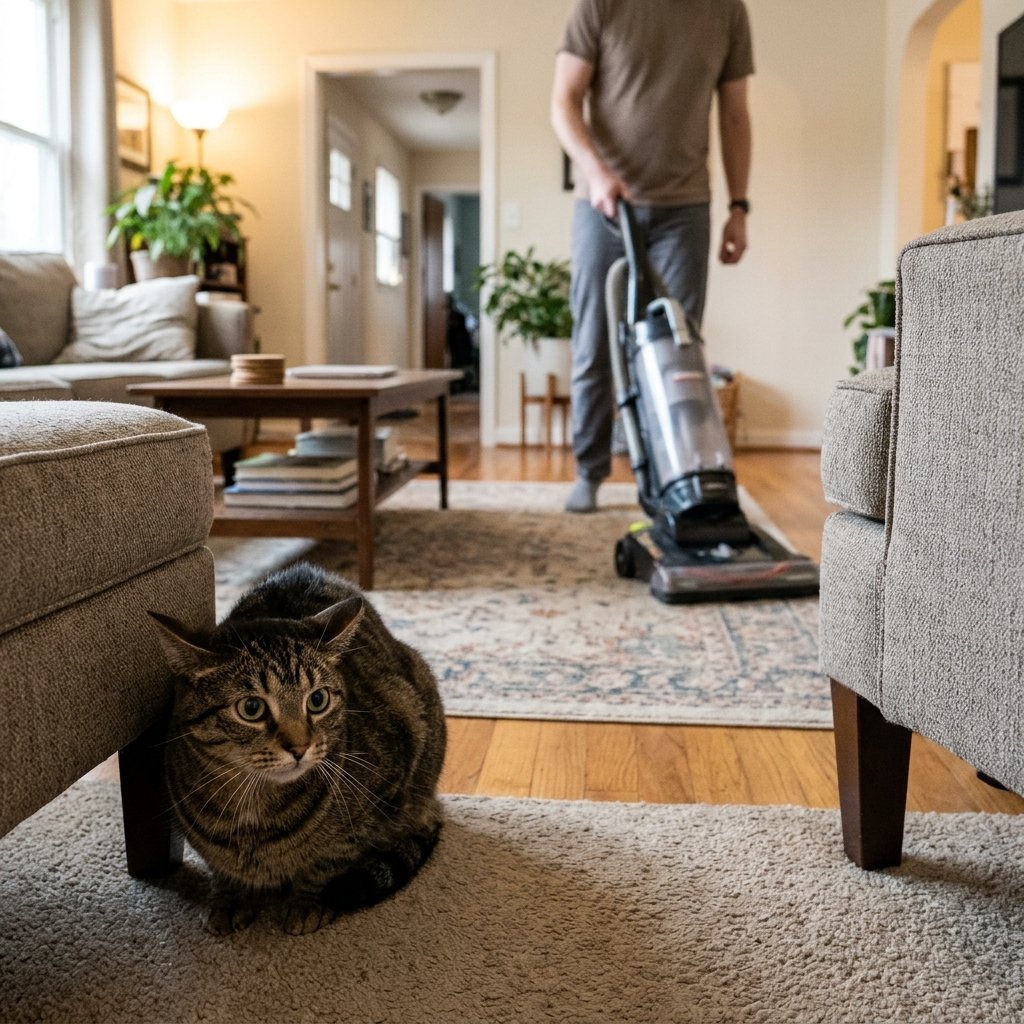
The first few hours
Check whether something obvious triggered it, like visitors, loud noises, a new pet or a recent move. Make sure your cat has access to a quiet space with food, water and a litter box nearby. Stay calm, keep the environment quiet and observe from a distance.
Within 24 hours
If your cat is still hiding, look for other changes. Are they eating and drinking? Have you seen them use the litter box? Is their breathing normal? Are they reacting to your voice? If you’ve noticed any emergency sign from the list above, call your vet right now. If everything else looks normal, keep a close eye on them, and call your vet for advice if there’s no improvement by the end of the day.
24 to 48 hours
If your established cat is still hiding and eating or drinking less, book a vet appointment. Even without dramatic symptoms, hiding this long is a sign something is off, whether pain, illness or significant stress.
48 to 72 hours
Cats who go without eating for two to three days can develop hepatic lipidosis, or fatty liver disease, which is serious and can be fatal without treatment. Don’t wait this long. If your cat has not eaten in 24 hours, see a vet.
Beyond three days
A cat hiding for more than three days without eating, drinking or using the litter box needs urgent veterinary care. If your cat is hiding but still eating, drinking and using the litter box normally, book a check-up anyway to find out what’s causing it.
What to Do While You Wait for the Vet
- Don’t pull your cat out by force. A scared or painful cat can scratch and bite, and the stress can make things worse. Be gentle and patient.
- Put food, fresh water and a litter box close to the hiding spot. That way, your cat doesn’t have to cross the house to reach them. Offering a strongly scented treat, like warmed tuna or wet food, can tempt a reluctant cat.
- Observe from a distance. Note whether your cat is eating, drinking, using the litter box, vomiting or breathing strangely. Take notes and, if you can, photos or video to show your vet.
- Check breathing, if you can do it calmly. A relaxed cat at rest usually breathes around 20 to 30 times a minute. Consistently fast breathing at rest, or any open-mouth breathing, is a reason to call right away.
- Keep the home calm. Reduce noise, keep other pets and children away from the hiding spot and keep lights low.
- Prepare the carrier. Put a soft blanket inside, and keep a light towel handy. If you need to transport your cat, a towel over the carrier can reduce stress.
- Call your vet and describe everything. Say how long your cat has been hiding, what they’ve eaten and drunk, any litter box changes and any other symptoms. They’ll tell you how urgently to come in.
Why Might a Cat Hide for Days?
Your vet will look for the cause. Common reasons for long hiding include:
- Pain or injury, including dental disease, arthritis, wounds or internal problems
- Illness, such as infections, fevers, kidney disease, urinary issues, digestive problems or heart conditions
- Severe stress or fear, after a frightening event, big changes or conflict with other pets
- A new environment, especially for newly adopted or rescue cats
- Postpartum or pregnancy, where a cat seeks a quiet nesting spot
- Senior changes, including confusion or pain that make cats withdraw
For a broader look at why cats hide in the first place, read our guides on why your cat hides and cat hiding behavior. If your cat is avoiding you specifically, see why your cat runs away from you.
Is Your Cat Hiding, or Missing Inside the House?

Sometimes the real question is whether your cat is hiding at all, or whether they’re lost or trapped. Cats can squeeze into tiny spaces, like behind appliances, inside box springs, in ceilings, in wall cavities or in cupboards. If you can’t find your cat:
- Search methodically, room by room, with a flashlight. A cat’s eyes reflect light.
- Check inside furniture, under and inside beds and sofas, behind appliances, in closets and in the laundry.
- Look in places your cat could be shut in, like cupboards, garages and the washing machine.
- Shake a treat bag or open a can of food and wait quietly.
- Check again at night, when it’s quieter.
- If you can’t find them, search outside and nearby, tell neighbors and contact local shelters and vets.
The Vet Visit: What to Expect
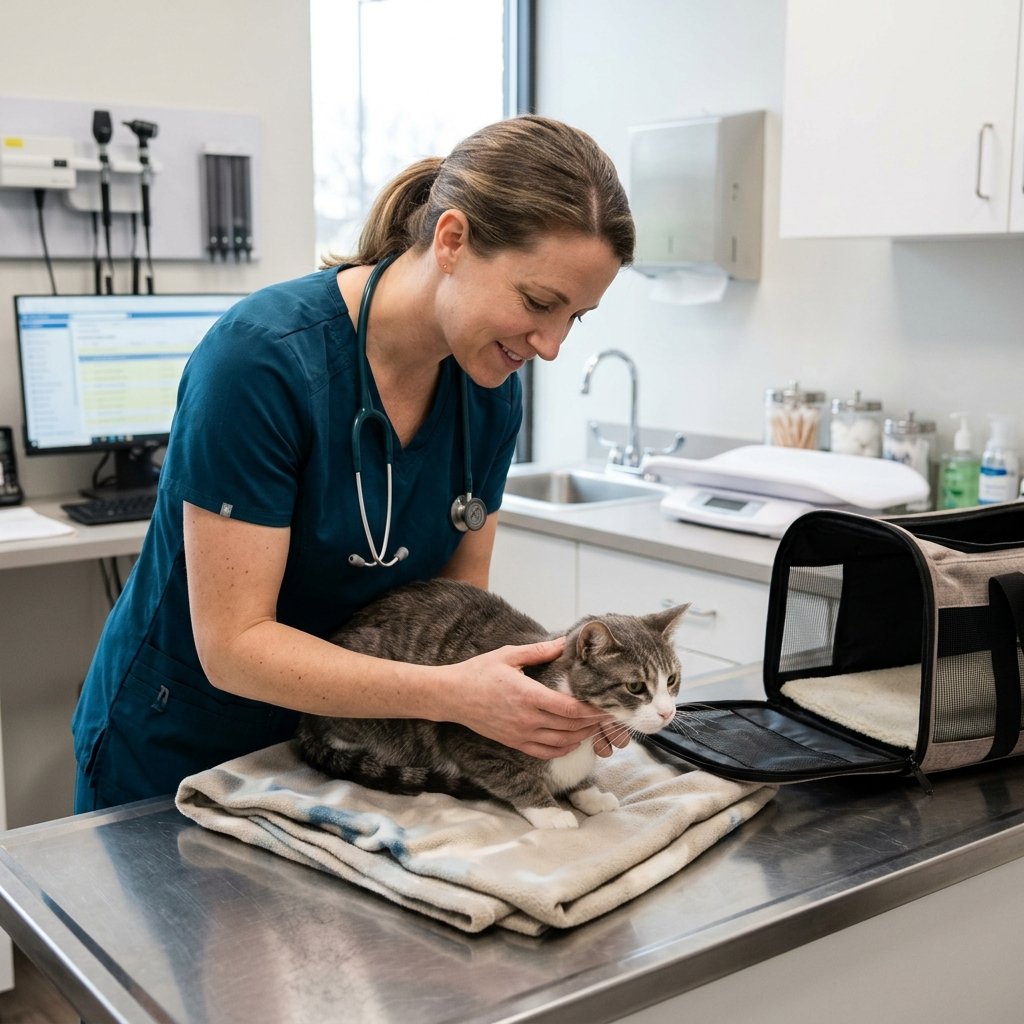
Your vet will check your cat’s temperature, weight, hydration, gums, heart and lungs, and feel the abdomen. They may recommend bloodwork, a urine test or imaging. Tell them everything you’ve noticed. Cat Friendly Practices are clinics trained to handle cats gently, which can make visits less stressful. You can find one at catfriendly.com.
The Cornell Feline Health Center and International Cat Care have good information on recognizing illness in cats.
After the Emergency: Preventing the Next Hiding Episode
- Keep regular vet check-ups. Annual exams, and twice a year for seniors, help catch problems early. Our guide to healthy habits for pets shows how to build easy routines.
- Know your cat’s normal. Learn their usual eating, drinking, litter box and hiding habits so you notice changes quickly.
- Feed a good diet and encourage hydration. See our guide to the best food for cats.
- Reduce stress. Provide safe hiding places, routines, play and quiet spaces.
- Cat-proof the home. Remove toxic plants like lilies, secure strings and cords and keep medications out of reach.
If you’re new to cat ownership, our pet care tips for beginners covers the basics, and the AVMA’s pet owner resources and the ASPCA’s cat care pages are helpful general references.
Quick Answers
How long can a cat hide before I should worry?
For an established cat, more than 24 hours is worth attention, and any hiding with no eating, drinking or peeing needs urgent care.
Is it normal for a cat to hide for days after moving house?
It can be, especially for a new or timid cat, as long as they’re eating, drinking and using the litter box. If not, call your vet.
My cat is hiding and not eating. What should I do?
Call your vet. A cat who goes more than 24 hours without eating needs attention, and prolonged fasting can cause serious liver problems.
My cat is hiding and hasn’t peed. Is that an emergency?
Yes. Especially in male cats, a urinary blockage can be life-threatening. Go to a vet or emergency clinic immediately.
Should I force my cat out of hiding?
No, unless it’s an emergency. Try gentle encouragement with food and a calm voice. If you must move them, use a towel and carrier carefully.
Can stress alone make a cat hide for days?
Yes, but it’s hard to know without a vet check. Illness and pain often look like stress, so it’s wise to rule them out.
The Bottom Line
When a cat is hiding for days, trust your instincts. Short, occasional hiding is normal. But a cat who hides for more than a day and shows any change in eating, drinking, urinating, breathing or energy deserves prompt veterinary attention. Offer food and water close by, keep things calm, take notes and call your vet. It’s always better to be told “it’s nothing” than to wait too long when it’s something.
If your cat is hiding and not eating, not urinating, struggling to breathe or in apparent pain, contact a veterinarian or emergency clinic immediately.




Discussion 0 comments
Share your thoughts — every perspective adds value.