

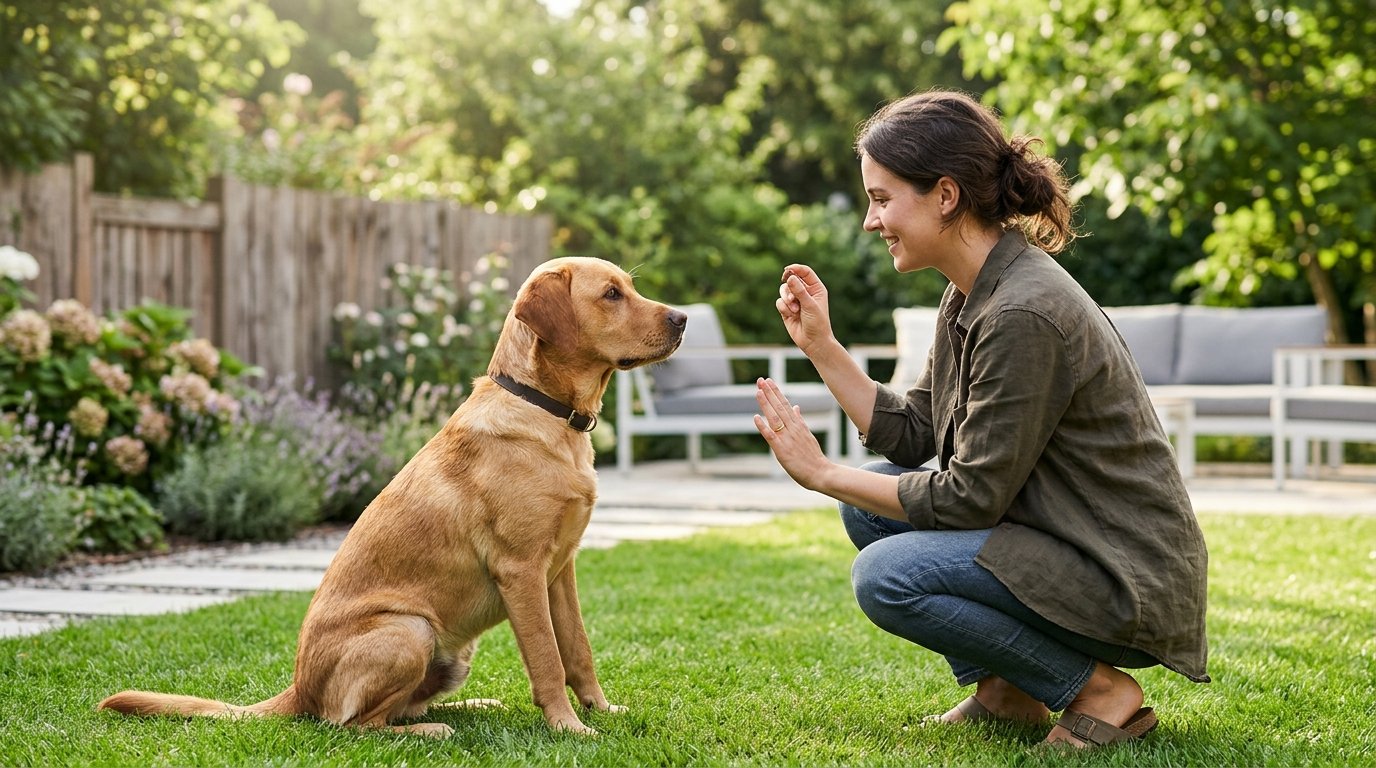
Dog training can be simple. In fact, teaching a few simple commands can make life easier, safer, and more fun for you and your dog. Whether you have a young puppy or an adult dog with better manners, the right training can create communication and trust.
The most useful Basic Dog Commands are not to teach your dog tricks. They are a way to help your dog in practical situations of everyday life, from waiting at the door to coming back when called. Consistent and short training sessions can also help your dog understand what you want from them and be more reliable.
Unsure which commands to teach your dog first? Try these 10 essential dog commands. These include the basics of obedience, and they form a good base for further training.
Why Are Basic Dog Commands Important?
Dogs don’t understand human words or household rules just because. Training teaches them to link a particular word or hand signal to a behavior.
They are easier to manage on walks, with visitors, at mealtimes, and in other everyday situations if they are well-trained. Also, commands like “come,” “stay,” and “leave it” can provide an important layer of safety.
The goal is not to have your dog performing every command perfectly the first day. Instead, focus on communicating clearly, repeating, and rewarding the behavior you want to see more of.
1. Sit
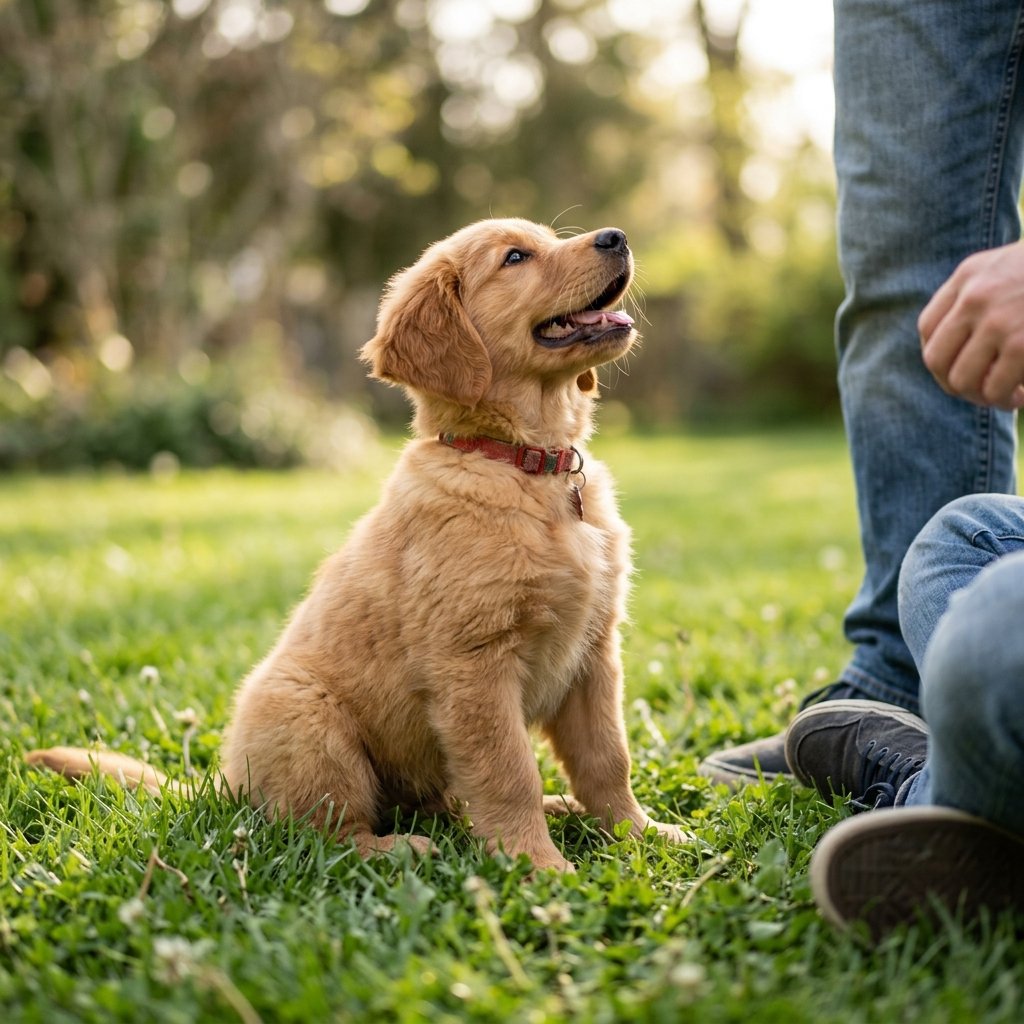
“Sit” is one of the first commands every dog should learn. It is simple, practical, and provides a foundation for other behaviors.
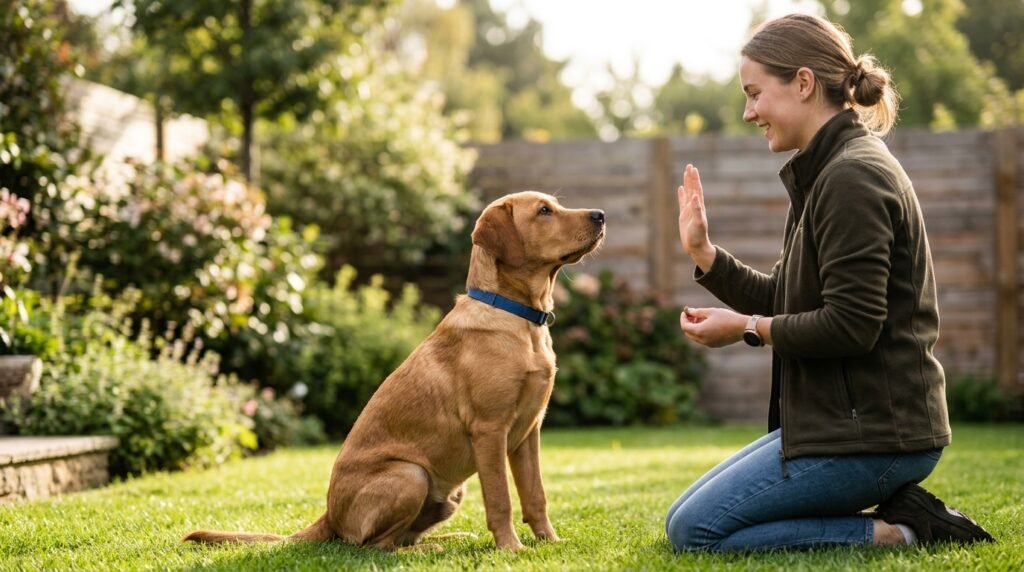
Start by holding a small treat close to your dog’s nose. Slowly move your hand upward and slightly toward the back of the head. As your dog’s nose follows the treat, the natural movement should bring its bottom toward the floor.
The moment your dog sits, say “Sit”, give the reward, and offer calm praise.
Why teach “Sit”?
This command can help your dog:
- Stay calmer when greeting people
- Wait before receiving food
- Focus on you during training
- Practice impulse control
- Prepare for more advanced commands
Keep your sessions short at first. A few successful repetitions are more useful than a long session that leaves your dog distracted.
2. Stay
“Stay” teaches your dog to remain in one position until you give another signal. This is one of the more useful basic obedience commands to teach your dog, especially if you need your dog to stay still.
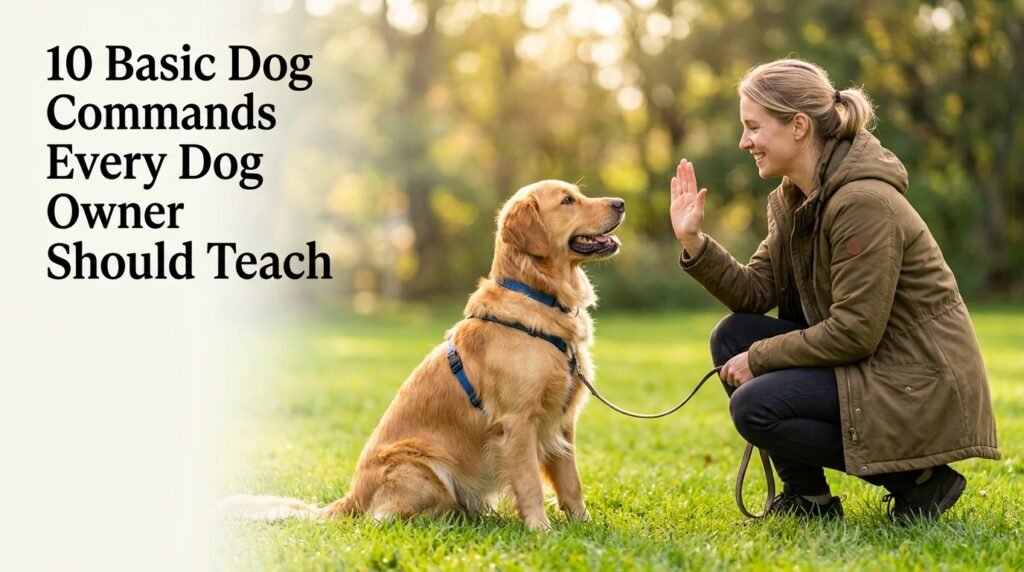
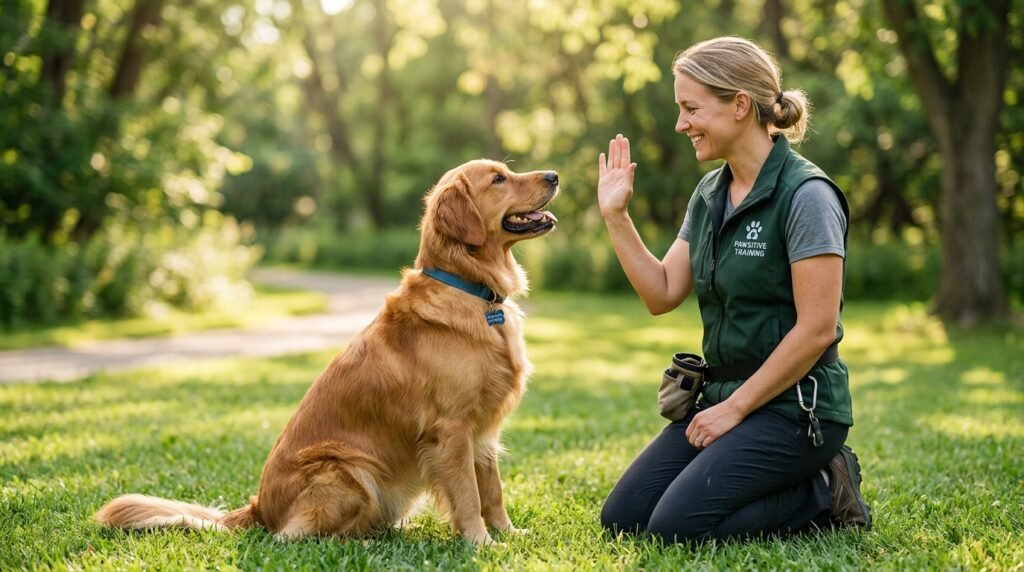
Have your dog sit. Say “Stay” and hold out your palm to your dog. Wait a second or two before rewarding your dog while it stays in place.
Gradually increase the time, distance, and distractions.
Do not rush this command. If your dog repeatedly gets up, the exercise may be progressing too quickly.
A useful training progression
Practice “stay” in this order:
- Increase the duration.
- Increase the distance.
- Add distractions.
- Practice in different locations.
Work on these elements separately before combining them.
3. Come
“Come” is one of the most important commands any dog should know. This can be helpful for calling your dog back on walks when they’re outside, or in potentially dangerous situations.
Start indoors or in a secure enclosure. Say your dog’s name and then Come in a happy voice. Reward your dog generously for coming toward you.
Never use “come” to always mean something your dog doesn’t like, like punishment or the sudden end to all fun. Your dog needs to learn that coming to you is a reward.
How to make recall stronger
Use:
- High-value treats
- An enthusiastic voice
- Plenty of repetition
- Different safe locations
- Rewards for coming all the way to you
Reliable recall takes time. Avoid testing it in an unsafe environment before your dog has developed the skill.
4. Down
The “Down” command asks your dog to lie down and is useful for encouraging calm behavior.
Position: Start with your dog in a sit. Hold a treat close to its nose and slowly move your hand toward the floor. Once your dog goes into the lying position after the treat say “Down” reward and praise.
Some dogs might be uncomfortable or find it hard to get into this position, especially if the surface is hard. Use a comfortable training space and give your dog lots of room.
“Down” can be particularly useful when you want your dog to settle while you are eating, working, or relaxing at home.
5. Leave It
“Leave it” teaches your dog not to touch or pick up something you want it to ignore.
This is one of the most valuable essential dog commands because dogs naturally investigate things with their mouths.
Place a treat in a closed hand. Allow your dog to sniff it without giving it the treat. As soon as your dog moves away from your hand, reward it with a different treat from your other hand.
Once your dog understands the idea, introduce the verbal cue “Leave it.”
Gradually practice with different objects and environments.
Remember
“Leave it” means do not interact with that object. It is different from “drop it,” which asks your dog to release something it already has in its mouth.
6. Drop It
Dogs love to pick things up, and occasionally they pick things up they shouldn’t. The command Drop it teaches you how to safely ask your dog to let go of something.
Start with a toy your dog likes. Have your dog hold it, and offer a tasty treat near your dog’s nose. When your dog drops the toy to get the treat, use the command “Drop it” and reward.
Repetition helps your dog learn to respond to the verbal cue without having to see the treat first.
Stop chasing your dog around the house for something. For many dogs, being chased makes the situation an exciting game.
7. Wait
“Wait” is similar to “stay,” but it is commonly used for short pauses before your dog moves forward.
For example, you might ask your dog to wait before:
- Going through a doorway
- Getting out of the car
- Eating a meal
- Crossing a path
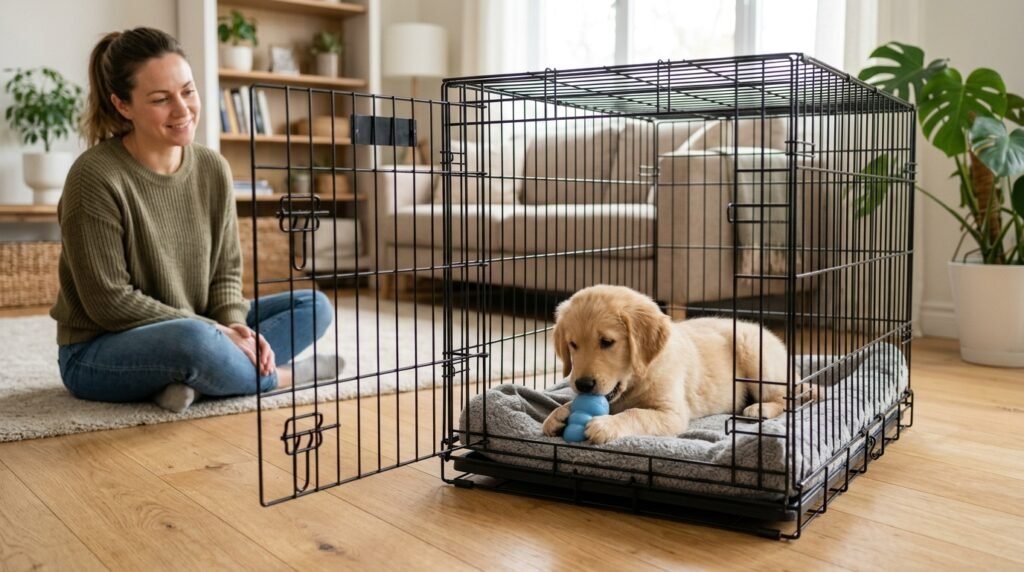
- Leaving its crate
Ask your dog to wait, pause briefly, and then give a release word such as “Okay.”
Start with very short waits and gradually increase the duration.
The important lesson is that “wait” does not mean your dog must remain in position forever. It means your dog pauses until you give permission to continue.
8. Heel
“heel” teaches your dog to walk close to you rather than pulling ahead.
Begin in a quiet location with few distractions. Keep your dog near your side and reward it whenever it walks beside you without pulling.
Take a few steps, reward, and repeat.
As your dog improves, gradually increase the number of steps between rewards.
You do not need your dog to walk perfectly beside you during every casual walk. However, teaching a reliable heel or loose-leash position can make crowded areas and challenging environments much easier to manage.
9. Place
“Place” is teaching your dog to go to a specific place (mat, bed, designated area) and stay there until released.
This can be especially useful when you have guests coming over or need your dog to calm down while you’re busy.
First, reward your dog for stepping on the mat. Keep rewarding the dog for being there. Once your dog is beginning to understand the behavior, add the word “Place.”
Gradually increase the distance between you and the mat. Then add distractions.
This command can be a useful way to train your dog that a calm place to chill is just normal everyday life.
10. Look at Me
Getting your dog’s attention is an important part of successful training. “Look at me” teaches your dog to focus on you when you ask.
Hold a treat near your face. When your dog looks toward your eyes, say “Look at me” and reward immediately.
Once your dog understands the exercise, gradually reduce your reliance on holding the treat next to your face.
This command can be especially helpful when your dog is distracted by another dog, person, sound, or interesting smell.
How to Teach Basic Dog Commands Effectively
Learning beginner dog training commands is easier when training is consistent and predictable.
Keep Training Sessions Short
Dogs can lose focus when training sessions become too long. Several short sessions throughout the day are often easier to manage than one lengthy session.
Start with about 5–10 minutes, depending on your dog’s age, temperament, and attention span.
Use Rewards Your Dog Values
Food treats are popular because they provide immediate feedback, but rewards do not always have to be food.
Depending on your dog, you can use:
- Small treats
- Praise
- Toys
- Playtime
- Access to something your dog enjoys
The best reward is one your dog actually finds motivating.
Use the Same Words
Choose one cue for each behavior and keep it consistent.
For example, if you use “Come,” avoid randomly switching between “Come here,” “Get over here,” and your dog’s name when you expect the same response.
Consistency makes it easier for your dog to understand what you are asking.
Reward the Behavior You Want
Timing matters.
Try to reward your dog immediately after the desired behavior. This helps your dog connect the reward with the action you wanted.
For example, if you are teaching “sit,” reward as soon as your dog’s bottom reaches the floor rather than several seconds later.
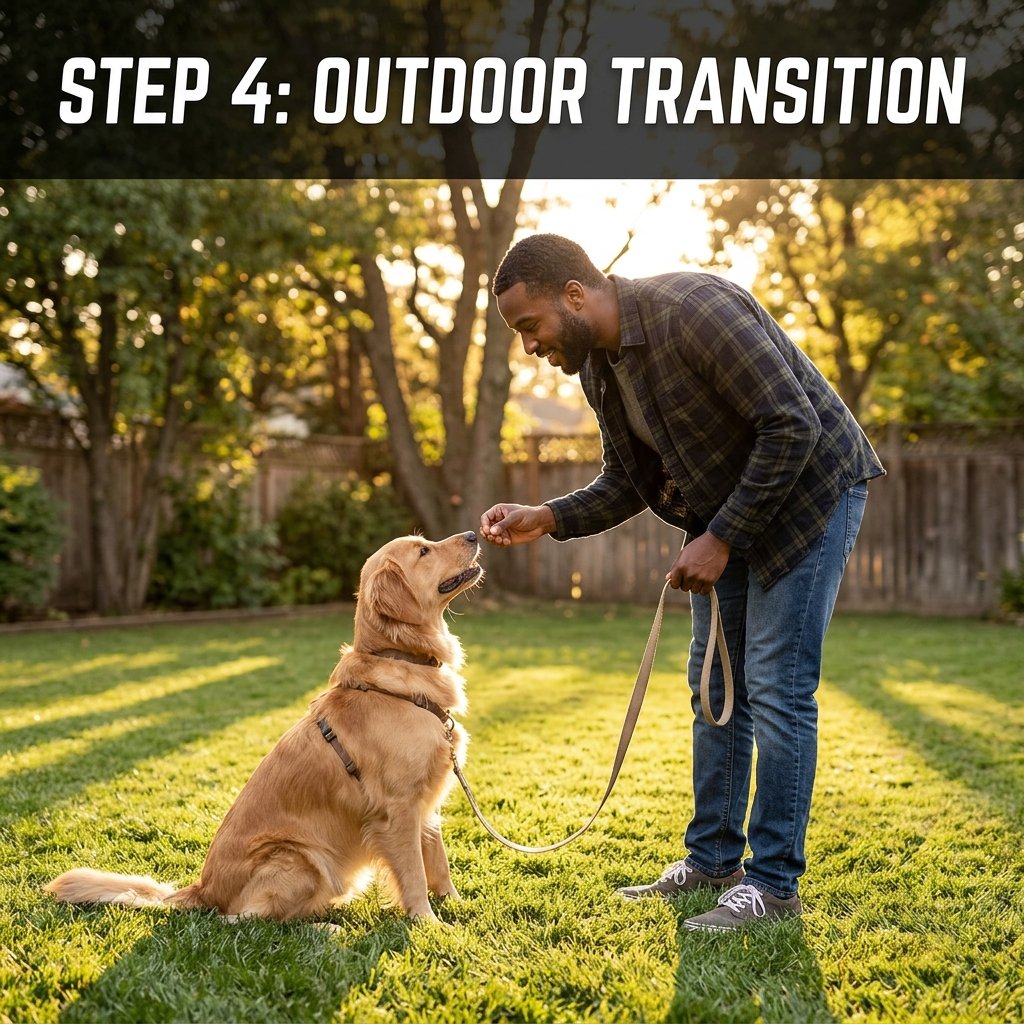
Train in Different Environments
A dog that performs perfectly in your living room may struggle at the park.
Dogs need to learn that the same command applies in different situations.
Once your dog understands a command at home, gradually practice in:
- The backyard
- The driveway
- A quiet outdoor area
- Around mild distractions
- More challenging environments
Increase difficulty slowly rather than expecting immediate reliability.
Common Mistakes When Teaching Dog Commands
Even simple training can become frustrating when communication is unclear.
Repeating the Command Too Many Times
Saying “Sit, sit, sit, sit” teaches your dog that the first command does not matter.
Give the cue once, then help your dog succeed.
Expecting Too Much Too Soon
A puppy that understands “stay” for five seconds does not automatically know how to stay for five minutes while you walk away.
Build the behavior gradually.
Training Only When Something Goes Wrong
Training should not only happen when your dog misbehaves. Practice commands when your dog is calm and likely to succeed.
This creates stronger habits before you need them in difficult situations.
Using Punishment as the Main Training Method
Harsh corrections can create fear, confusion, or avoidance. Reward-based training focuses on teaching the dog what you want it to do and reinforcing successful behavior.
If your dog is showing serious aggression, fear, resource guarding, or other difficult behavior, consider working with a qualified professional trainer or veterinary behavior professional.
How Long Does It Take a Dog to Learn Basic Commands?
There is no universal timeline.
Some behaviors are learned quickly, in a few training sessions, while others may take weeks or more. Learning ability may be affected by age, previous training, motivation, environment, breed predispositions, and individual personality.
More importantly, learning a command is not the same as reliably responding to a command.
Your dog may know “come” in the house, but not pay attention when distracted outside. Reliability is developed through continued practice in ever more difficult environments.
What Commands Should a Puppy Learn First?
If you are training a puppy, you do not need to teach all 10 commands at once.
A practical starting sequence is:
- Name recognition
- Sit
- Come
- Leave it
- Down
- Wait
- Stay
- Drop it
- Place
- Heel
The exact order can be adjusted depending on your dog’s needs and your daily routine.
Frequently Asked Questions
What are the most important commands to teach a dog?
“Sit,” “come,” “stay,” “leave it,” and “drop it” are among the most practical commands for everyday communication and safety. However, the most useful commands depend on your dog’s lifestyle and environment.
What is the easiest dog command to teach?
“Sit” is often a simple starting point because many dogs naturally offer the behavior. It also provides a foundation for teaching impulse control and other commands.
How many commands should a dog know?
There is no required number. A dog that reliably understands a small set of useful commands can be easier to manage than a dog that knows many commands but responds inconsistently.
Can an older dog learn these commands?
Yes. Older dogs can learn new behaviors. Training may need to move at a comfortable pace, particularly if the dog has limited mobility, hearing problems, or little previous training.
Should I use treats when training my dog?
Treats can be very effective, especially during the early stages of learning. As your dog becomes more reliable, you can gradually vary rewards and reinforce behaviors with praise, play, or other rewards your dog enjoys.
Final Thoughts
Teaching your dog Basic Dog Commands is not so much about perfect obedience as it is about straightforward communication. When practiced regularly, commands like “sit,” “come,” “stay,” “leave it,” and “drop it” can also prove to be useful tools in everyday life.
Make training sessions positive, brief, and suited to your dog’s ability. Celebrate the small wins, build the distractions slowly, and remember consistency builds reliability. Give it time and practice regularly, and these commands all dogs should know will become second nature in your dog’s daily routine.

Discussion 0 comments
Share your thoughts — every perspective adds value.