

Nobody tells you this before you get a dog: the first walk is rarely the peaceful stroll you pictured. It’s more like being towed behind a small, furry tugboat. Your arm is fully extended, your dog is wheezing against the collar, and a neighbor is smiling in that very polite, very sympathetic way.
If that sounds familiar, relax. Learning how to leash train a dog is something almost every owner has to do, and your dog isn’t being stubborn. Walking politely beside a human is a completely unnatural skill for a dog. It has to be taught, patiently and in small pieces.
This guide breaks it down into simple steps, from getting your dog used to the gear all the way to calm walks around the neighborhood.
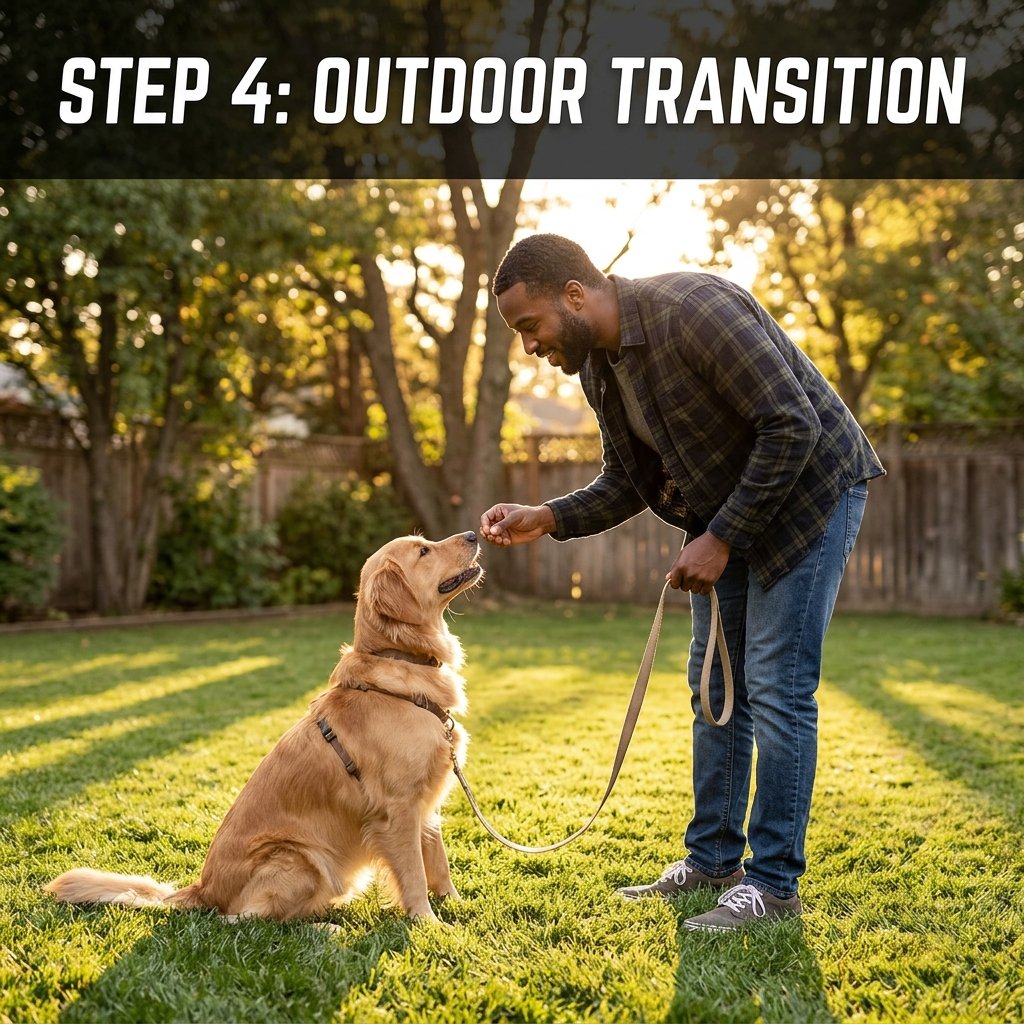
Why Dogs Pull in the First Place
Before fixing it, it helps to understand it. Dogs pull for very simple reasons:
- They walk faster than we do. A dog’s natural pace is a trot, not an amble.
- The world is thrilling. Smells, squirrels, other dogs. You’re competing with a lot.
- Pulling works. Every time your dog pulls and you follow, they learn that tension gets them where they want to go. We accidentally pay them for it.
That last point is the key to the whole process. Leash training is mostly about making pulling stop working and making walking next to you the most rewarding thing in the world.
Choose the Right Gear
Good equipment makes training easier, and bad equipment can make it harder or even painful for your dog.
- A flat collar or a well-fitted harness. For dogs that pull, a front-clip harness can help, because it gently turns your dog toward you when they surge forward. You should be able to fit two fingers between the collar or harness and your dog’s body.
- A standard 4 to 6 foot leash. Nylon, cotton or leather all work. Avoid retractable leashes while you’re training, because they teach dogs that pulling extends the leash.
- Small, tasty treats. Pea-sized and soft, so your dog can eat them without stopping to chew. Keep them in a treat pouch or pocket.
- Skip choke chains, prong collars and shock collars. Experts in animal behavior, including the American Veterinary Society of Animal Behavior, recommend reward-based training over punishment-based tools. You can read their position statements here.
Step 1: Make the Collar and Leash Feel Normal
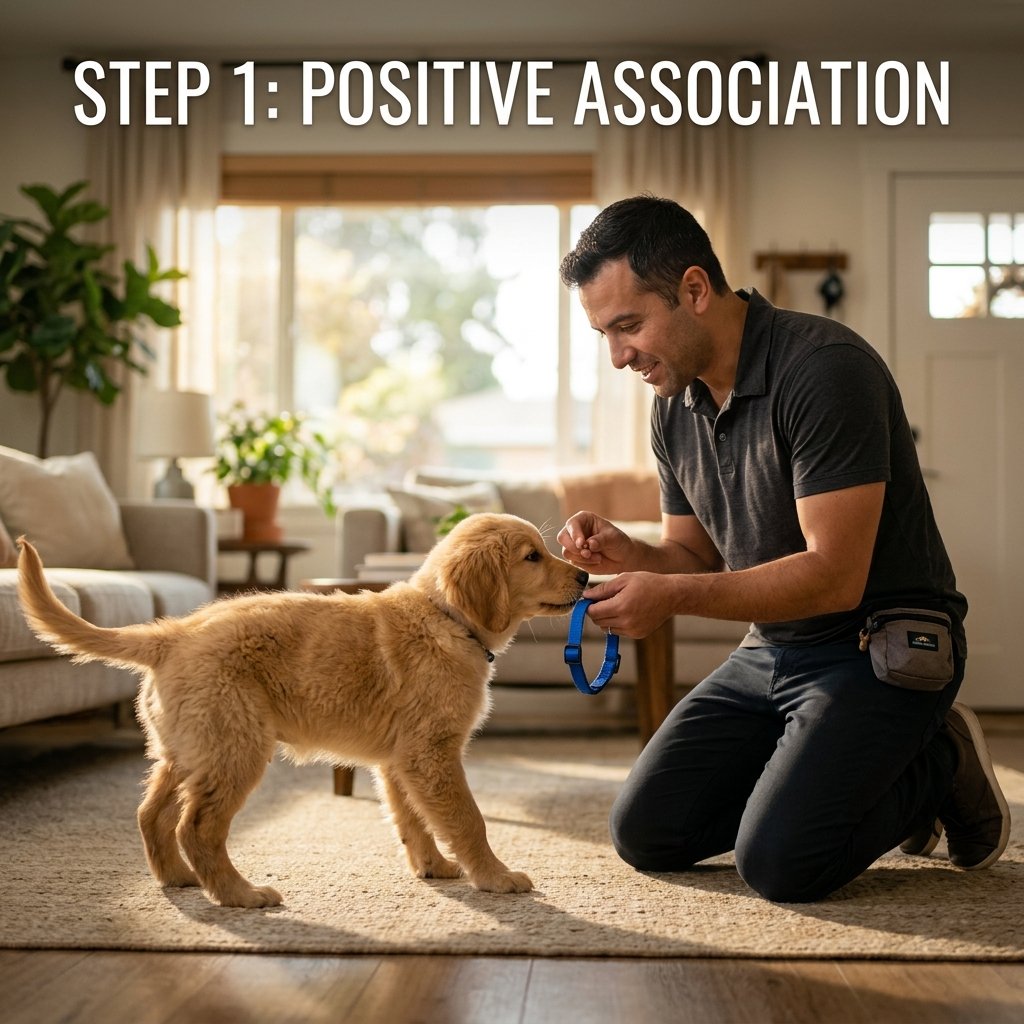
If your dog has never worn a collar or harness, don’t just clip it on and head out the door. Let them sniff it, give a treat, put it on, give another treat. Keep it on for a few minutes while you play or feed them, then take it off. Repeat over a few days until it’s just another boring part of life.
Do the same with the leash. Clip it on indoors and let your dog drag it around for a few minutes while you supervise. Don’t leave a leash on an unsupervised dog, since it can snag or get chewed.
Step 2: Teach Your Dog That Next to You Is the Best Place to Be
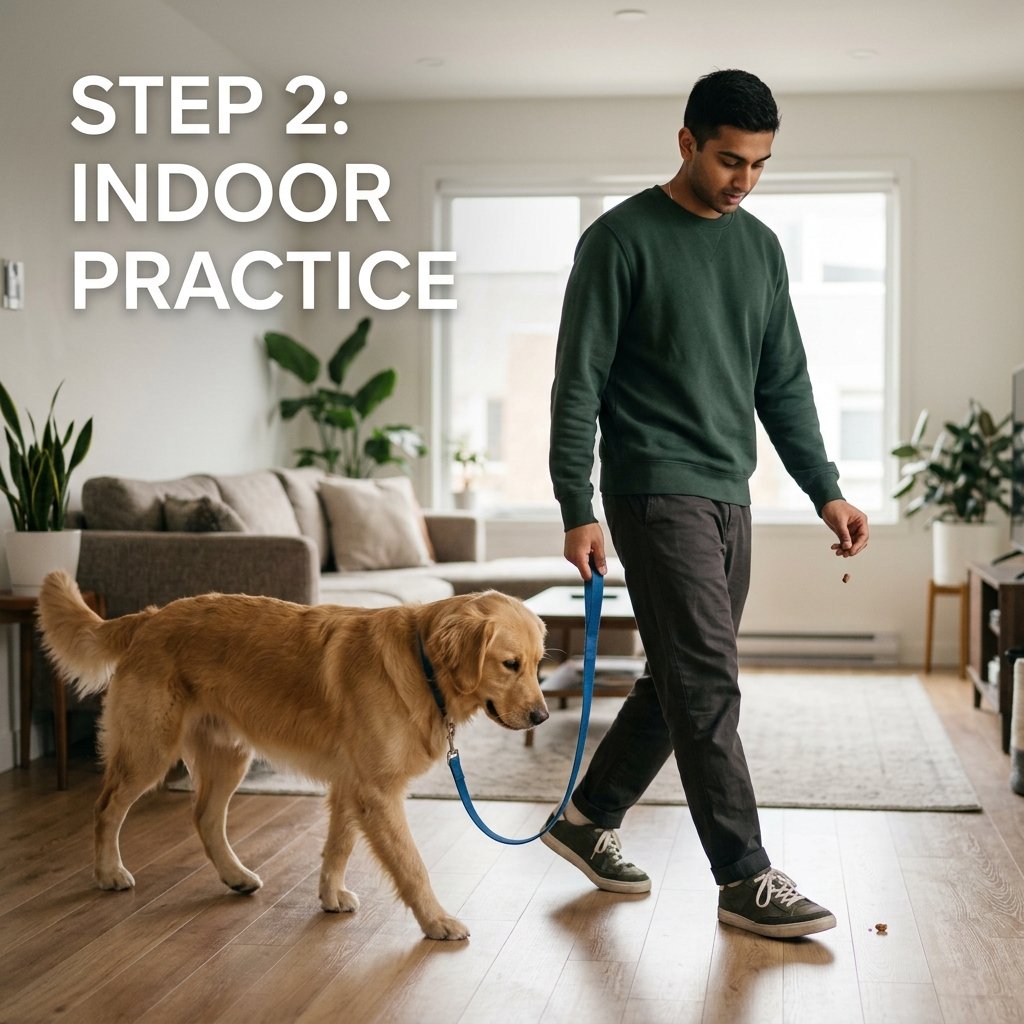
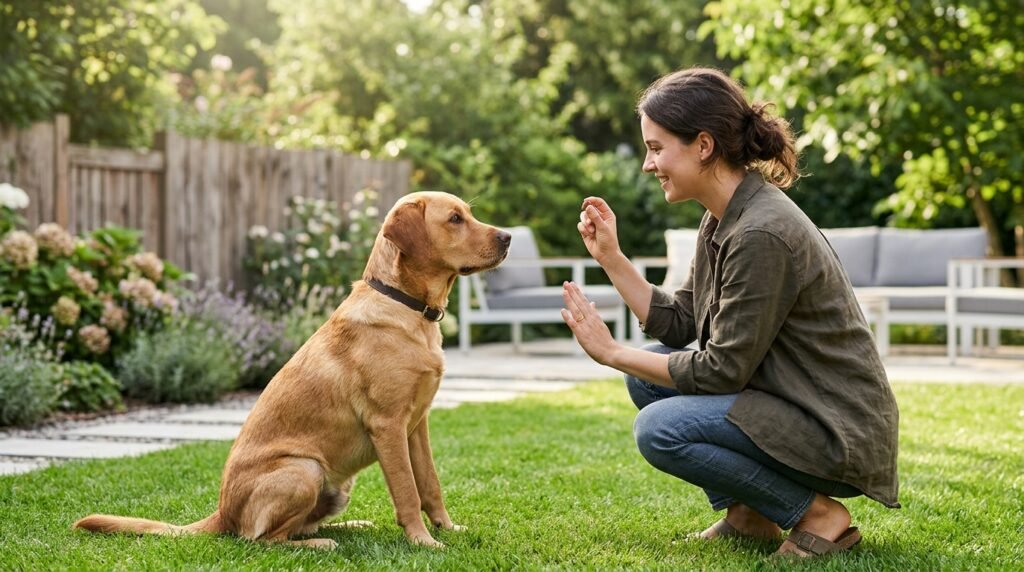
Start inside, where there’s nothing exciting to pull toward. Pick which side you want your dog to walk on (either is fine, just choose one) and then:
- Hold a few treats in your hand on that side.
- Take one step. If your dog is beside you, say “yes” and give a treat right next to your leg.
- Take another step, mark, treat. Repeat for a few steps, then release your dog to wander.
Where you place the treat matters. Always deliver it at your side, near your hip. That’s where you want your dog to learn that good things happen. If you hold treats out in front, your dog learns to walk ahead of you.
Step 3: Teach a “Check-In”
This one is a quiet game-changer. Whenever your dog looks up at you, even for a split second, mark it with “yes” and treat. Soon your dog will start checking in with you on their own, which gives you a built-in alternative to pulling ahead.
If your dog doesn’t know to look at you yet, practice saying their name in a happy voice and rewarding the instant their eyes meet yours. It’s one of the most useful habits you can teach.
Step 4: Walk Using the Lure
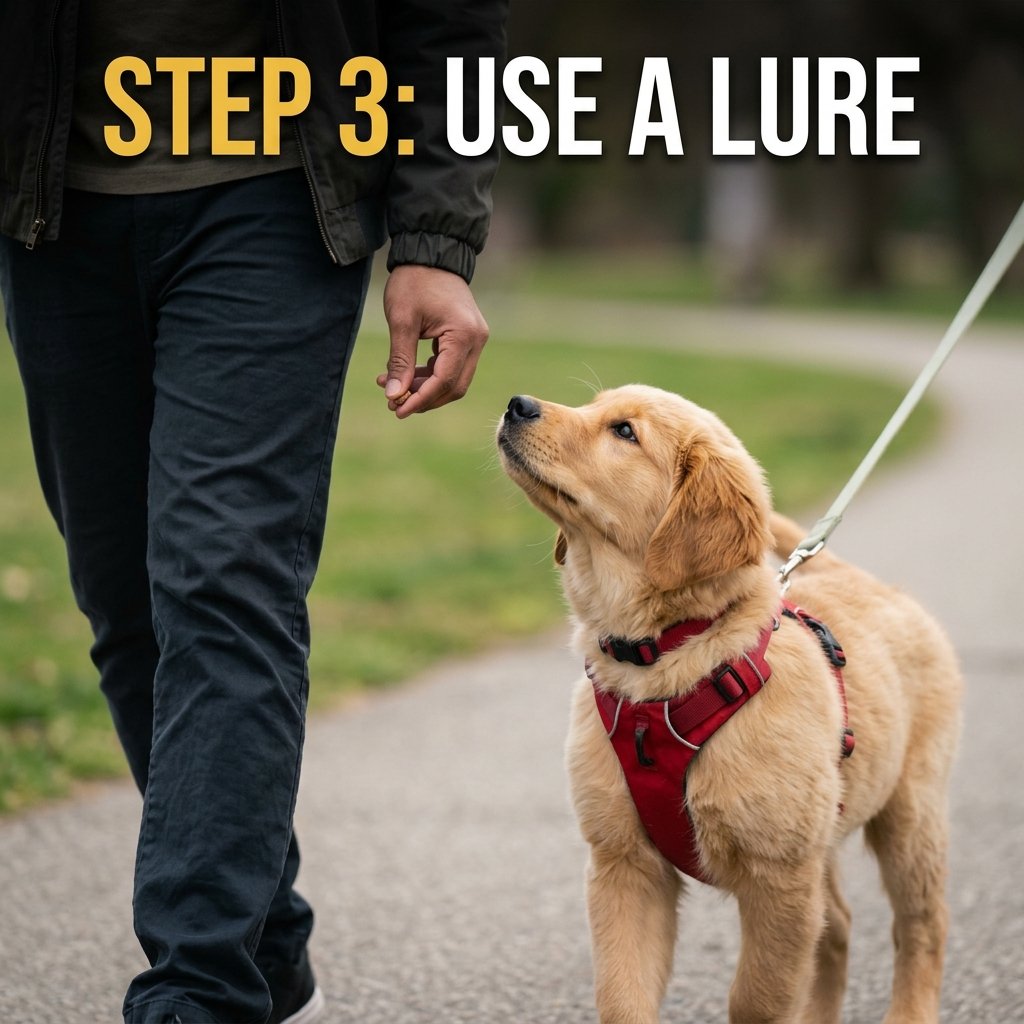
A lure is a treat held close to your dog’s nose to guide them. When you start walking, hold a treat at your side so your dog follows it into position. After a handful of repetitions, stop luring and just reward with treats from your pocket. If you keep using the lure forever, your dog will only walk well when you’re holding food.
Gradually extend how many steps you take between rewards. Two steps, then five, then ten. Mix it up so your dog can’t predict exactly when the treat arrives.
Step 5: Make Pulling Boring
This is the heart of loose-leash walking. You’ve got two main strategies, and both work well.
The “be a tree” method
The moment the leash goes tight, stop walking. Stand still, calm and quiet, and wait. When your dog turns to look at you or steps back so the leash slackens, mark with “yes,” reward and start moving again. Your dog quickly learns that tight leash equals no progress.
The “change direction” method
When your dog starts pulling, turn and walk the other way. Cheerfully. Reward your dog when they catch up and settle at your side. This keeps them paying attention to where you’re going, because you might go anywhere at any moment.
Either way, the secret is consistency. If you let your dog pull to the fire hydrant on Tuesday but not on Wednesday, they’ll keep trying. Everyone in the family has to follow the same rule.
Step 6: Take It Outside
Once your dog walks nicely inside, move to the backyard or driveway, then a quiet street, and then busier areas. Each new place raises the difficulty, so expect to drop back to short distances and more frequent treats. This is normal. Dogs don’t automatically transfer skills from one place to another.
If you have a young puppy that hasn’t finished its vaccinations, check with your vet about when and where it’s safe to walk. In the meantime, you can practice in your own yard or home. Our puppy training guide covers early learning, and our post on pet care tips for beginners explains vaccine timing and what to ask your vet.
Step 7: Let Your Dog Be a Dog
A walk that’s only about marching in a straight line is boring for your dog, and boredom leads to more pulling. Build in “sniff breaks” with a cue like “go sniff,” so your dog knows when they’re free to explore. Sniffing is real mental exercise, and a dog who gets plenty of it is usually calmer overall.
A good pattern is to alternate: a stretch of focused walking at your side, then a release to sniff, then back to walking. Over time, your dog learns the difference.
Troubleshooting Common Problems
My dog pulls the second we leave the house
Excitement at the door is common. Try waiting until your dog is calm before you open it, and begin walking only when the leash is loose. You can also do a few minutes of play or training in the yard first to burn off the initial burst of energy.
My dog lunges at other dogs, bikes or people
Create distance before your dog reacts, reward calm behavior and don’t force greetings. If lunging or barking is intense or involves fear or aggression, work with a certified positive-reinforcement trainer or a veterinary behaviorist. Our guide to common dog behavior problems can help you understand what you’re seeing, and how to stop dog barking covers noisy reactions.
My puppy sits down and refuses to walk
Very common. Don’t drag your puppy. Crouch down, encourage them with a happy voice and a treat, and keep the first walks short. Some puppies need time to feel confident in new places.
My dog bites or chews the leash
Leash biting is often a sign of excitement or boredom. Keep treats flowing so their mouth is busy, and carry a small toy to redirect them. Don’t play tug with the leash, as that can turn it into a game.
My dog stops constantly to sniff
That’s normal, and healthy. Set aside designated sniffing times and use a cue to move on, rewarding your dog when they follow.
Walk-Safety Basics
- Never wrap the leash around your hand or wrist. A sudden lunge can cause injury.
- Make sure your dog wears an ID tag, and that their microchip details are up to date.
- In hot weather, check the pavement. If it’s too hot for the back of your hand to stay on for several seconds, it’s too hot for paws.
- Bring water on longer walks, especially in warm weather.
- Always carry waste bags, and clean up after your dog.
For more on daily exercise routines that keep dogs healthy, see our guide to healthy habits for pets. The ASPCA also has helpful general dog care resources, and the American Kennel Club keeps a large library of training articles if you want a second opinion.
Pair Leash Training With a Few Other Skills
Loose-leash walking gets easier when your dog already understands basics like sit, come and wait at doors. A reliable “stay” is especially handy before you cross a road or open the car door. If you haven’t taught it yet, read how to teach a dog to stay, and our list of basic dog commands every owner should teach covers the rest.
How Long Will It Take?
It depends on your dog’s age, breed and past habits, plus how often you practice. Many dogs show real progress within a couple of weeks of short, daily sessions. Truly polished leash manners in busy environments can take a few months. Adult dogs who’ve been pulling for years can still learn, but they’ll need more repetitions to unlearn the habit.
Short, frequent sessions beat long, tiring ones. Five minutes of focused practice a few times a day is better than one exhausting half-hour.
Quick Answers
What’s the best age to start leash training?
You can start introducing the collar and leash at around 8 weeks, with very short, positive sessions. Older dogs can learn too.
Is a harness or a collar better for leash training?
It depends on your dog. Harnesses are often more comfortable and can be gentler on the neck, especially for dogs that pull. Whichever you choose, make sure it fits well.
Should my dog walk on the left or right?
Either. Pick one side and be consistent, unless you’re training for a specific sport or show.
Should my dog be in a strict “heel”?
For everyday walks, no. A relaxed loose leash is enough. A formal heel is a different skill used mostly in competitions.
What if my dog is still pulling after weeks of training?
Go back a step and check for gaps: are you rewarding enough, practicing in easy places and keeping everyone in the family consistent? A certified trainer can quickly spot what’s going wrong.
The Bottom Line
Leash training doesn’t require special tricks, just a few good habits: use comfortable gear, reward your dog for staying close, never let pulling pay off, and build up difficulty slowly. Be patient, keep sessions upbeat and celebrate small wins. One day soon you’ll realize the leash is hanging loose, your dog is trotting happily beside you, and the walk has finally become the pleasure you imagined.
If your dog shows signs of fear, aggression or pain during walks, talk to your veterinarian or a qualified behavior professional.

Discussion 0 comments
Share your thoughts — every perspective adds value.