

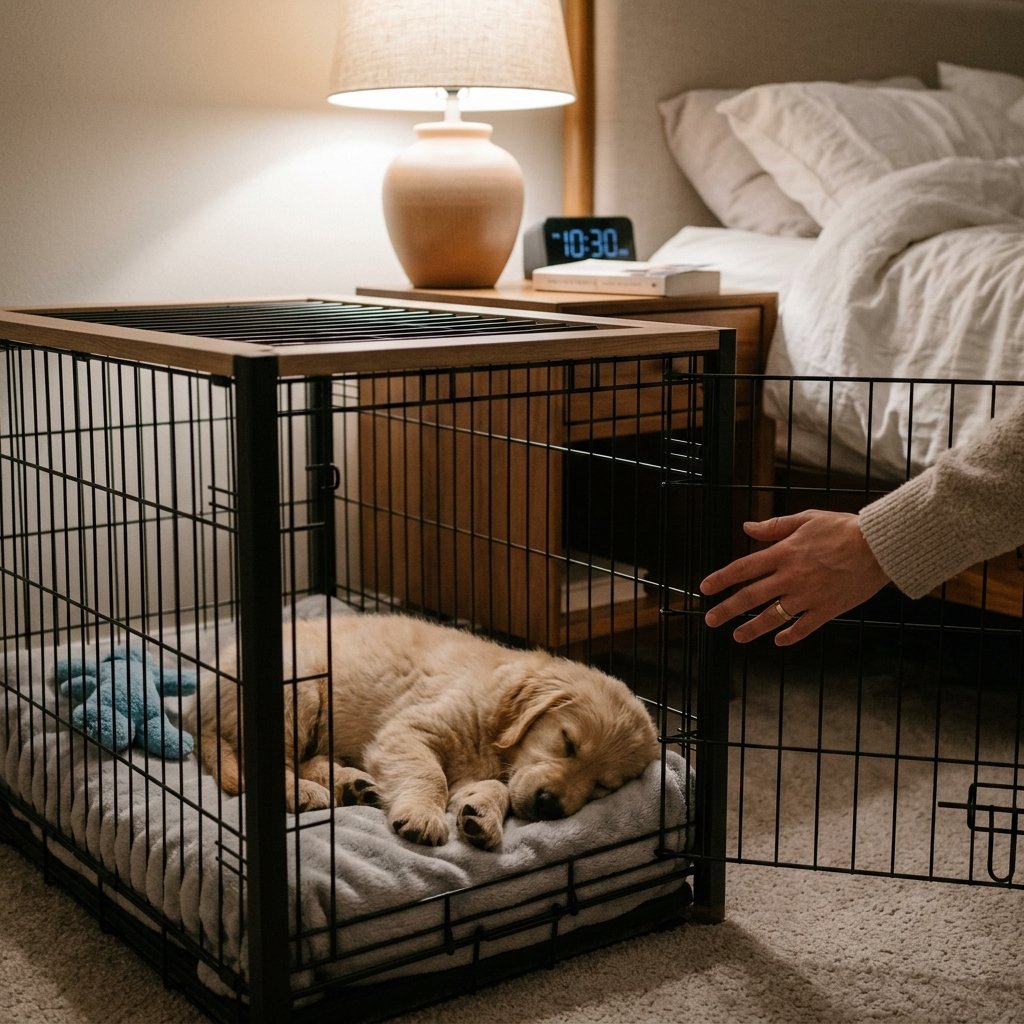
Sarah brought home her 8-week-old Labrador on a Saturday evening. By midnight, the puppy had been crying nonstop for two hours. Sarah was sleeping on the kitchen floor at 2 AM, beside the crate. On Sunday morning, she was googling “is crating cruel?”
Not brutal. She just wasn’t ready.
It’s not just the crate; it’s what you do before, during, and after you close the door. Crating a puppy the first night. You get those steps. Night one is doable. Get them wrong, and you’ll both be miserable.
Do what these steps say.
Why the First Night Feels So Hard (And Why That’s Normal)
Before the steps, understand what your puppy is actually experiencing.
Your puppy has just left his mother and his littermates and all the familiar smells he has ever known. The problem isn’t the crate; it’s the sudden isolation.
In the wild, a solitary puppy would be vulnerable to predation. So their instinct is to cry loudly until someone comes. This crying is not manipulation. It’s just survival biology.
When you know this, your response changes. By being there, you’re not “giving in”; you’re helping your puppy’s nervous system settle into a brand new environment.
What You Need Before Night One
Don’t wait until 10 PM to set up. Have everything ready before you bring the puppy home.
The crate:
- Size matters — big enough to stand, turn around, and lie down
- Too large = puppy uses one corner as a bathroom
- A divider panel lets you adjust size as they grow
Inside the crate:
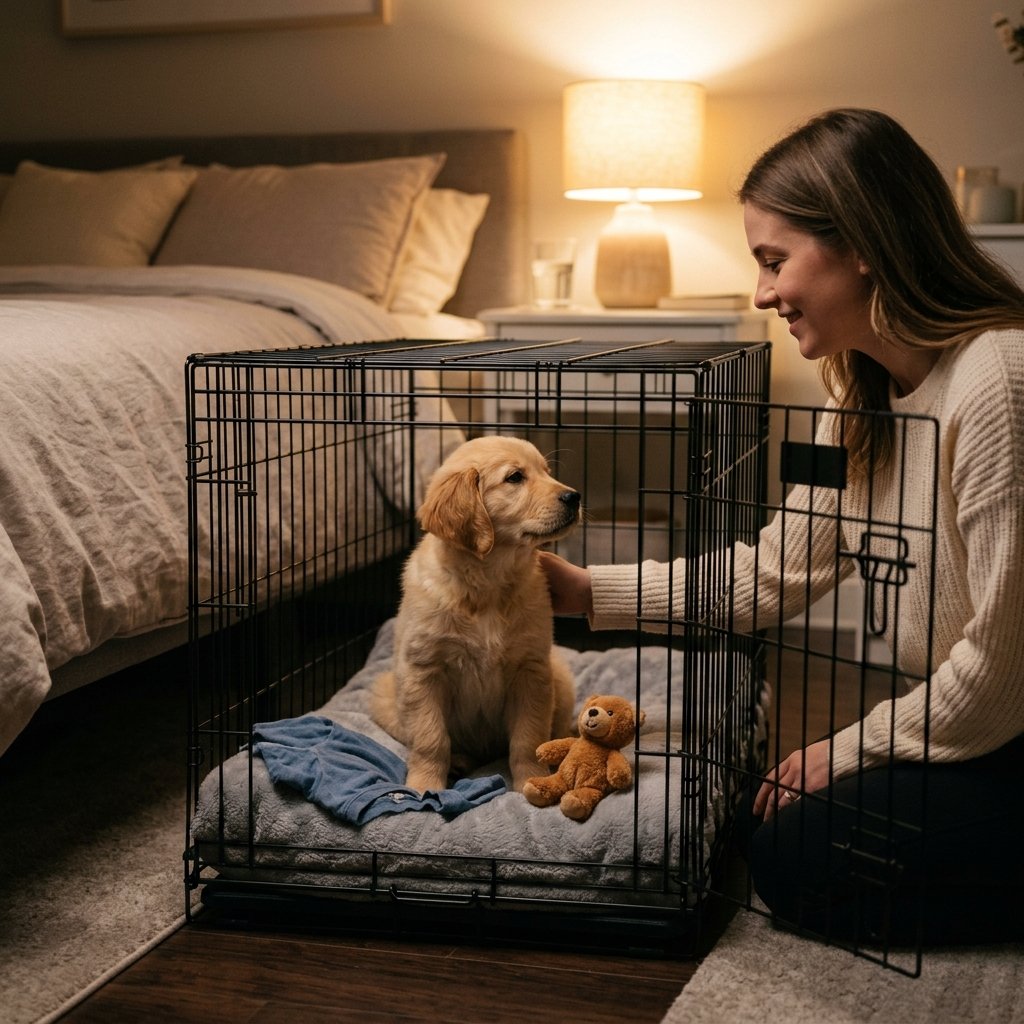
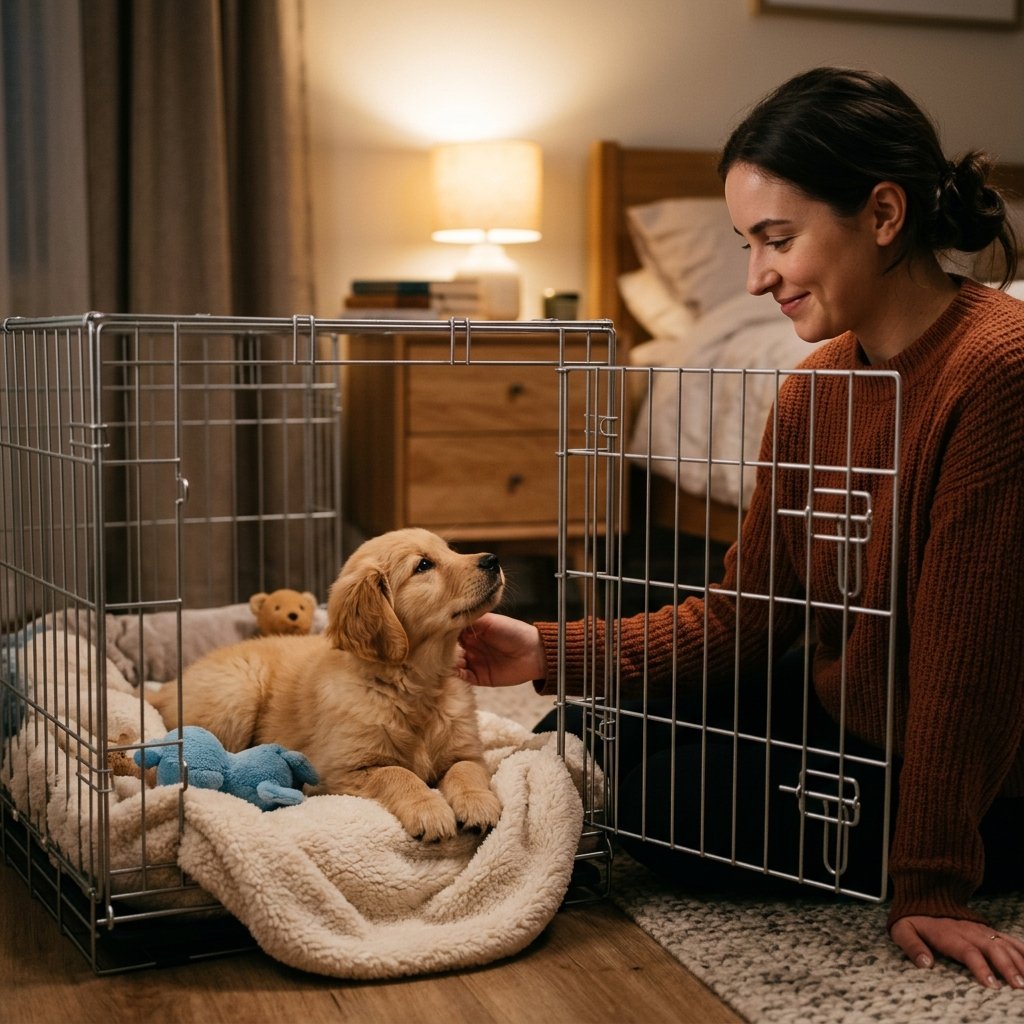
- Soft blanket or crate mat
- A worn t-shirt of yours (your scent is calming)
- A small stuffed animal the puppy can curl against
Next to the crate:
- A ticking clock wrapped in a towel (mimics a heartbeat)
- White noise machine or a fan on low
- Water — but limit it 2 hours before bed to reduce accidents
Step-by-Step: Crating a Puppy the First Night
Step 1 — Introduce the Crate Before Bedtime
Never put your puppy in the crate for the first time at midnight.
During the day or early evening, leave the crate door open and let the puppy explore it on their own terms. Toss treats inside. Feed their dinner near the crate entrance. Let them walk in and out without closing the door.
This single step removes a huge layer of stress from night one.
Expert Tip: Put a small piece of bedding from the breeder inside the crate. The familiar scent of littermates can significantly reduce first-night crying.
Step 2 — Tire the Puppy Out (Appropriately)
A tired puppy settles faster. But keep it age-appropriate — puppies at 8 weeks have joints and bones still developing.
Good options:
- 10-15 minutes of gentle play
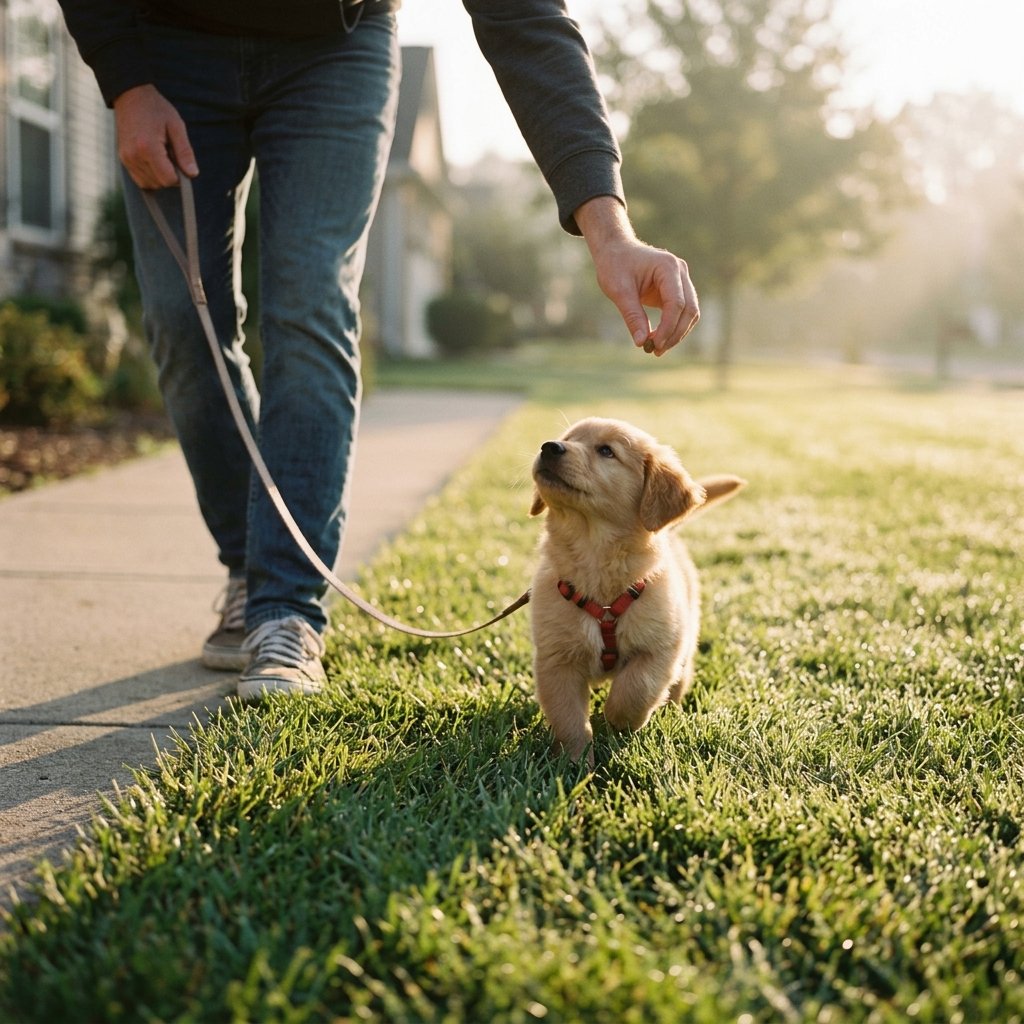
- Short exploratory walk around the yard
- Basic interaction and handling
Avoid: intense fetch, jumping, running on hard floors. At this age, mental stimulation tires them as much as physical activity.
Step 3 — Final Potty Trip Right Before Bed
Take them out before putting your puppy in the crate. Don’t just count to 60 and come back in; wait till they actually go.
Most 8-week-old puppies can only hold their bladder for 2-3 hours at night. Schedule at least one late-night outdoor adventure. This is not optional. Expecting a young puppy to sleep through the night without a bathroom break will result in accidents and a puppy that learns to soil their crate.
Step 4 — Place the Crate in the Right Spot
Location makes a bigger difference than most people expect.
Where to put it:
- Your bedroom, next to your bed, for the first few weeks
- This lets the puppy hear and smell you without being held
Where not to put it:
- Isolated in another room — this maximizes anxiety and crying
- Next to heating vents or drafty windows
Being physically close to you doesn’t spoil the puppy. It gives their nervous system what it needs to relax in a new environment. You can gradually move the crate further away over the following weeks.
Step 5 — Put the Puppy in Calmly
Your energy transfers directly to the puppy.
Place them in the crate without a big production. Speak in a calm, low voice. Drop a treat inside as you close the door. Then go about your routine as normally as possible.
What not to do:
- Don’t make the crate closing a dramatic moment
- Don’t hover anxiously outside the door
- Don’t immediately react to every sound
Step 6 — Handle the Crying Correctly
This is where most people go wrong — in both directions.
Mistake 1: Letting them “cry it out” completely
A puppy crying for hours on the first night isn’t learning independence — it’s learning that the world is unsafe and no one comes. This damages trust and makes crate training harder, not easier.
Mistake 2: Taking them out of the crate every time they cry
This teaches the puppy that crying = door opens. You’ve just trained them to cry more.
The right approach:
- Wait 1-2 minutes after crying starts
- If it escalates and doesn’t stop, do a calm check-in without making it exciting
- Place your fingers near the crate door so they can smell you
- Speak quietly: “It’s okay. Good dog.”
- Do not take them out unless they need a bathroom break
Over time — sometimes as quickly as 20-30 minutes — most puppies settle when they realize you’re nearby and the environment is safe.
Step 7 — Middle-of-the-Night Bathroom Break
Set an alarm for 2-3 hours after the puppy falls asleep.
Keep it boring. Lights low, no talking, no playtime. Carry them outside, wait for them to go, bring them straight back to the crate. The goal is for your puppy to understand that nighttime is not interesting.
Common Mistakes to Avoid
Buying a crate that’s too big
More space isn’t kinder. A crate that’s too large gives the puppy room to toilet in one corner and sleep in another — the opposite of what you want.
Putting the puppy in the crate for the very first time at bedtime
They need daytime exposure first. Going from “never seen this thing” to “locked inside it alone at night” is a recipe for panic.
Responding to every whimper
Distinguish between distress crying (escalating, frantic) and settling sounds (intermittent, fading). You want to respond to the first, not the second.
Skipping the bedtime potty trip
One extra minute outside saves you a soiled crate and a stressed puppy at 1 AM.
Giving up after one bad night
Most puppies improve significantly by night three or four. Night one is almost always the hardest.
FAQ
Q: Should I put water in my puppy’s crate at night?
Remove the water bowl about 2 hours before bed to reduce middle-of-the-night accidents. If your puppy seems thirsty, a small ice cube in the crate is a reasonable compromise.
Q: How long can a puppy stay in a crate at night?
A general rule: puppies can hold their bladder for one hour per month of age, plus one. An 8-week-old (2 months) can typically manage 2-3 hours maximum before needing a bathroom break.
Q: Is it okay if my puppy cries all night in the crate?
One night of crying is often extended but not ideal for crying all night long without any intervention. Quietly check on your puppy, make sure they don’t need to go to the bathroom, and reassure them with your presence. And if it’s extreme and won’t be comforted, consult your vet to make sure there’s no health issue.
Q: Where should I put the puppy crate at night?
In your bedroom for the first few weeks. Isolation in another room dramatically increases anxiety and crying. Once your puppy is sleeping through the night comfortably, you can gradually move the crate to your preferred location.
Q: How many nights until my puppy sleeps through the night?
Most puppies begin sleeping 4-5 hour stretches by weeks 3-4 of crate training. Some adjust faster, some slower. Consistency in your routine is the biggest factor.


Discussion 0 comments
Share your thoughts — every perspective adds value.