

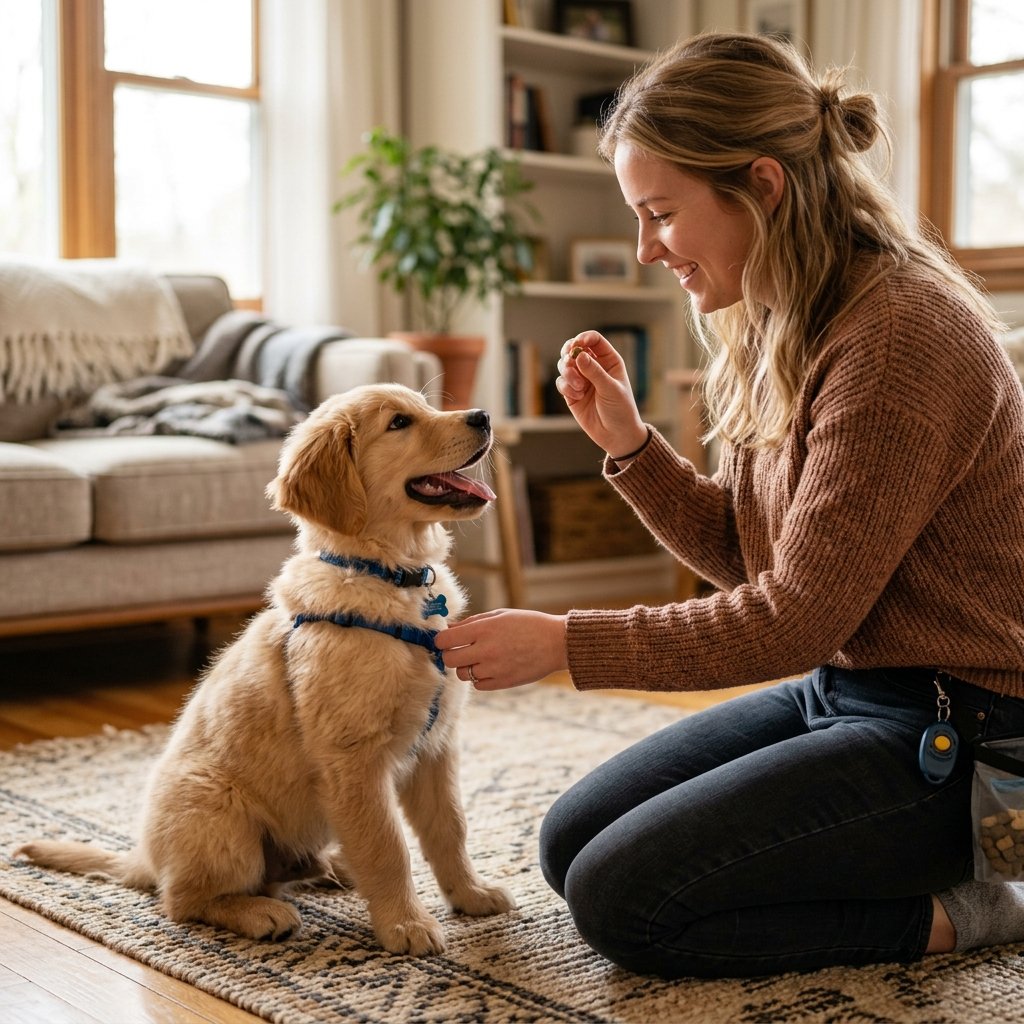
Bringing a puppy home is an exciting time, but it also comes with a responsibility. Puppies are curious, energetic, and eager to learn. With the right approach, you can teach your puppy good habits, build trust, and create a strong bond that will last for years.
Training a puppy isn’t about punishment or making your dog obey. Good puppy training is about patience, consistency, positive reinforcement, and understanding your puppy’s behavior.
In this guide, we’ll walk you through the major stages of puppy training, including basic commands, potty training, socialization, and common mistakes to avoid.
Table of Contents
Why Puppy Training Is Important
Puppy training helps your dog understand what behaviors are acceptable and what is expected from them. A trained puppy is usually more confident, easier to manage, and better prepared for everyday situations.
Early training can help prevent problems such as:
- Excessive barking
- Chewing furniture
- Jumping on people
- Separation anxiety
- Aggressive behavior
- Poor social skills
Training also gives your puppy mental stimulation. Dogs enjoy learning because it keeps their minds active and strengthens their connection with their owners.
When Should You Start Training a Puppy?
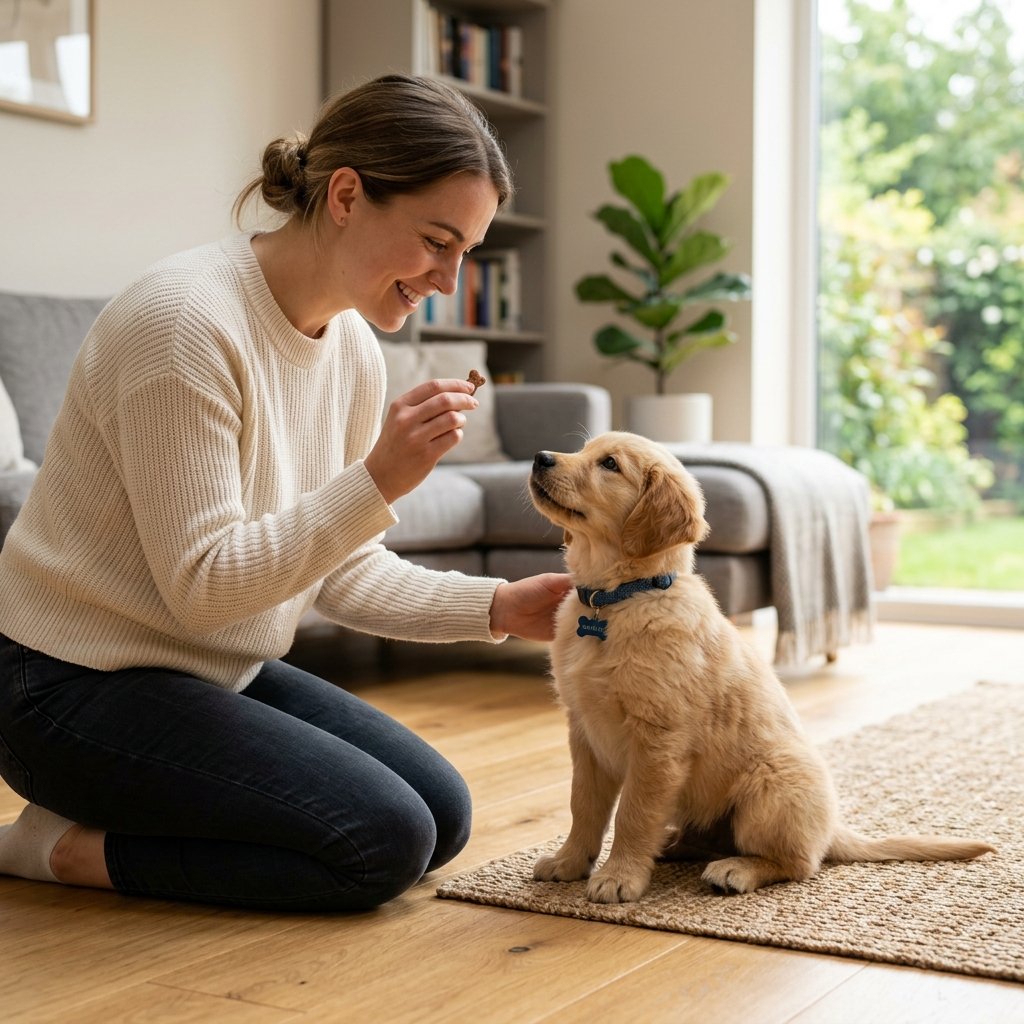
Many owners wonder when the best time to start puppy training is. The answer is simple: as soon as your puppy comes home.
Most puppies can begin learning basic behaviors from around 8 weeks old. At this age, puppies are naturally curious and can quickly develop new habits.
Early training should focus on:
- Learning their name
- Following simple commands
- Getting comfortable with handling
- Potty training
- Meeting new people and animals safely
Remember that puppies have short attention spans, so keep training sessions short and enjoyable.
1. Build Trust Before Teaching Commands
The first step in learning how to train a puppy is creating a positive relationship.
Your puppy needs to feel safe with you before they can learn effectively.
You can build trust by:
- Spending quality time together
- Using a calm voice
- Providing a predictable routine
- Rewarding good behavior
- Avoiding harsh punishment
A puppy that trusts its owner will be more willing to listen and learn.
2. Start With Basic Puppy Commands
Basic commands create the foundation for good behavior. Start with simple words and practice regularly.
Sit
“Sit” is one of the easiest commands for puppies to learn.
How to teach it:
- Hold a treat near your puppy’s nose.
- Slowly move your hand upward.
- When your puppy naturally sits, say “Sit.”
- Reward immediately.
Repeat this several times until your puppy connects the word with the action.
Stay
The “stay” command teaches patience and self-control.
Steps:
- Ask your puppy to sit.
- Hold your hand up and say “Stay.”
- Take a few steps back.
- Reward your puppy for remaining still.
Increase the distance slowly as your puppy improves.
Come
Teaching your puppy to come when called is important for safety.
Tips:
- Use a happy voice.
- Reward your puppy every time they come.
- Never call your puppy for punishment.
Your puppy should learn that coming to you is always a positive experience.
3. Create a Puppy Training Schedule
Consistency is one of the most important parts of successful puppy training.
A simple daily schedule may include:
| Time | Activity |
|---|---|
| Morning | Potty break + short training session |
| Afternoon | Playtime + basic commands |
| Evening | Walk + socialization practice |
| Night | Calm activities before bedtime |
Short sessions of 5–10 minutes several times a day are usually more effective than one long session.
4. Use Positive Reinforcement Training
Positive reinforcement is one of the most effective puppy training methods.
Instead of punishing mistakes, reward behaviors you want your puppy to repeat.
Rewards can include:
- Small treats
- Praise
- Toys
- Extra attention
- Playtime
For example, when your puppy sits instead of jumping, reward the sitting behavior. Over time, your puppy learns which actions bring positive results.
5 . Teach Your Puppy Potty Training
Potty training requires patience and consistency.
Helpful tips:
Create a Routine
Take your puppy outside:
- After waking up
- After eating
- After playing
- Before bedtime
Choose One Bathroom Spot
Using the same area helps your puppy recognize where they should go.
Reward Success
Praise your puppy immediately after they finish outside.
Avoid yelling when accidents happen. Puppies do not understand punishment after the mistake has already occurred.
6. Socialize Your Puppy Early
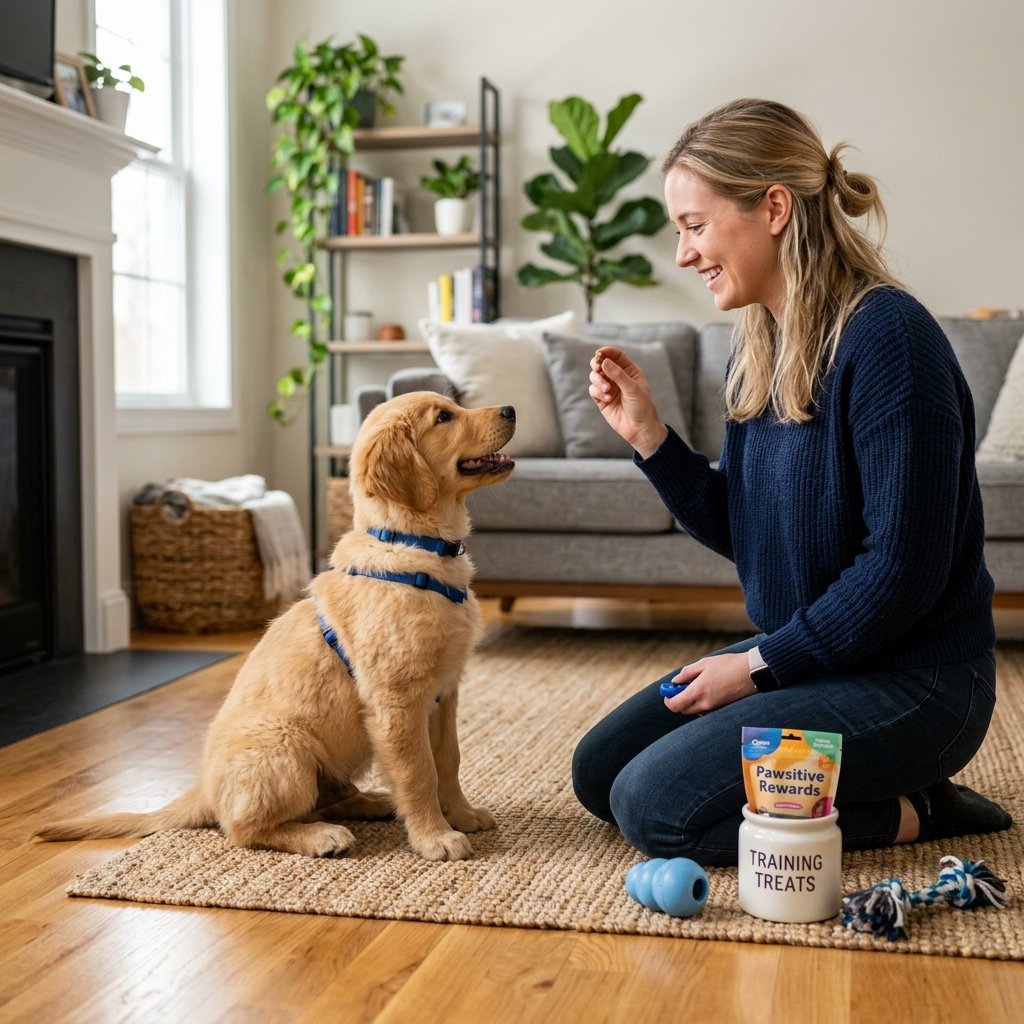
Socialization helps puppies become confident adult dogs.
A well-socialized puppy learns how to handle:
- Different people
- New environments
- Sounds
- Other animals
- Car rides
- Grooming
Introduce new experiences slowly and make sure they remain positive.
Avoid overwhelming your puppy with too many new things at once.
7. Stop Common Puppy Behavior Problems
Puppy Biting
Puppies explore with their mouths, but they need to learn bite control.
Try:
- Redirecting biting to toys
- Ending play when biting becomes too rough
- Rewarding gentle behavior
Chewing Everything
Chewing is normal for puppies, especially during teething.
Help by:
- Providing safe chew toys
- Removing dangerous objects
- Redirecting unwanted chewing
Jumping on People
Teach your puppy that calm behavior gets attention.
Ignore jumping and reward your puppy when all four paws are on the floor.
Common Puppy Training Mistakes to Avoid
Many owners make mistakes without realizing it.
Avoid:
1. Being inconsistent
If one behavior is allowed sometimes and forbidden other times, your puppy becomes confused.
2. Training too long
Long sessions can make puppies tired and frustrated.
3. Using punishment
Fear-based training can damage trust and increase anxiety.
4. Expecting perfection too quickly
Every puppy learns at a different pace.
How Long Does It Take to Train a Puppy?
The time required depends on:
- Your puppy’s age
- Breed characteristics
- Training consistency
- Previous experiences
Some basic behaviors may improve within weeks, while advanced training can take months.
The key is regular practice and patience.
Conclusion
Training a puppy requires patience, consistency, and understanding. The goal is to teach commands but also to help your puppy be confident, happy, and well-adjusted.
With positive reinforcement, routines, and practice, you can create healthy habits that will be good for you and your dog for a lifetime.
Training a well-trained puppy takes a lot of time and effort, but every little training session brings you closer to a stronger bond with your pet.
Frequently Asked Questions
How early can you start training a puppy?
You can start training a puppy as soon as they come home, usually around 8 weeks old. Begin with simple commands, daily routines, and positive experiences to help your puppy learn good habits.
What is the easiest command to teach a puppy?
“Sit” is usually one of the easiest commands to teach because puppies naturally follow movement and can quickly connect the word with the action through rewards.
How many times a day should I train my puppy?
Short training sessions of 5 to 10 minutes several times a day are ideal for most puppies. Regular practice helps your puppy learn without becoming tired or frustrated.
How do I train my puppy not to bite?
Redirect biting toward appropriate toys, reward gentle behavior, and avoid encouraging rough play with your hands. Consistency helps puppies learn bite control.
Can an older puppy still be trained?
Yes, older puppies can still learn new behaviors. With patience, positive reinforcement, and consistent practice, dogs of different ages can develop good habits.

Discussion 0 comments
Share your thoughts — every perspective adds value.