

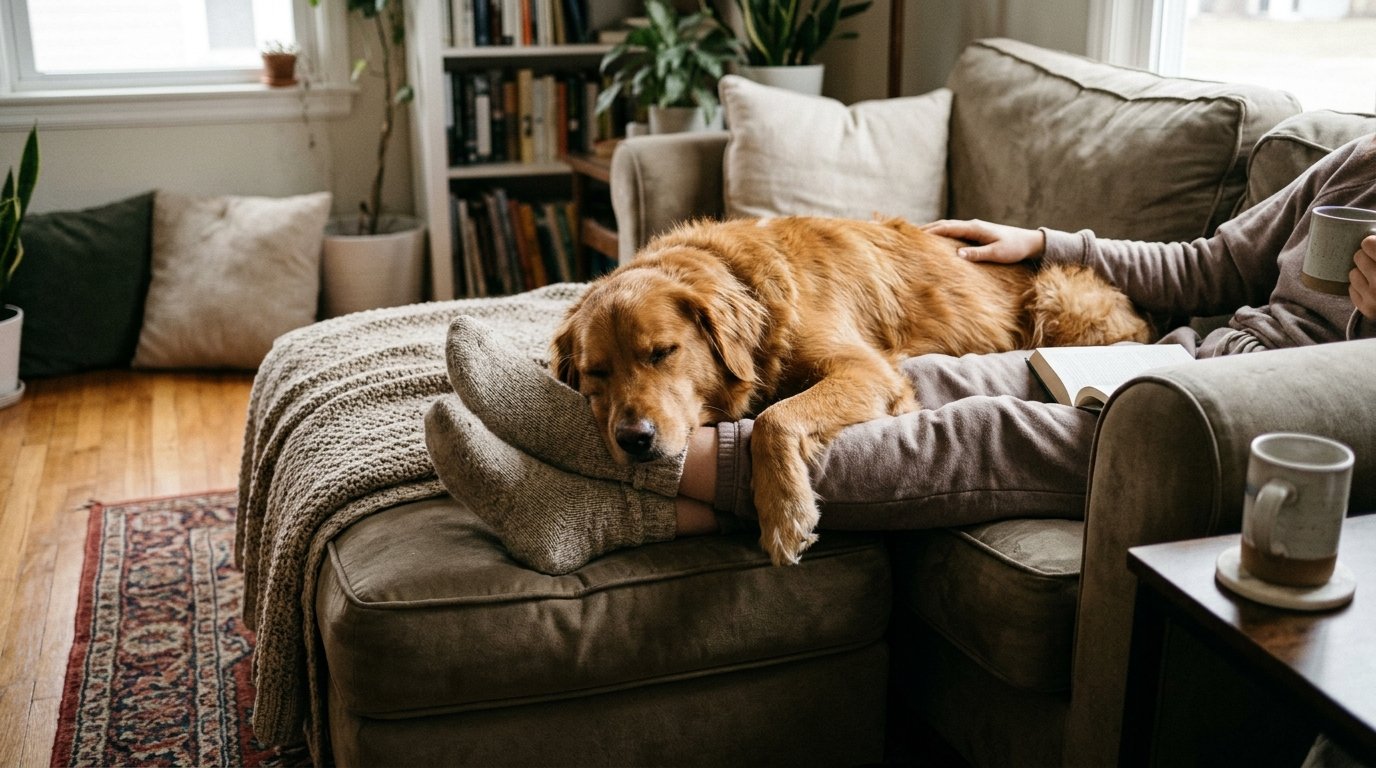
You settle into bed or onto the couch, and before long there is a warm, heavy weight across your toes. You shift a little, and your dog shifts with you, as if your feet were the only acceptable pillow in the house. If you have ever wondered why does my dog sleep on my feet, you are asking about one of the most common, and most telling, habits in the dog world.
In most cases the answer is simple and sweet: your dog feels safe near you and wants to stay close. But the exact reason can vary from dog to dog. Some are looking for warmth, some are keeping tabs on where you go next, and a few are telling you they feel uneasy when you are out of reach. Below, we break down what this behavior means, how to read your own dog’s version of it, and what to do if you would rather have your feet back.
The Short Version
- Usually normal: sleeping on or against your feet is mostly about closeness, comfort and trust.
- Rooted in instinct: dogs evolved to rest in groups, touching each other for warmth and safety.
- Sometimes practical: your feet tell your dog the moment you get up, so they never miss you leaving.
- Worth a closer look: if it comes with panic when you leave, stiffness or growling over your space, there may be more going on.
Why Does My Dog Sleep on My Feet? Where the Habit Comes From
Long before dogs had orthopedic beds and blankets, they slept the way many social animals do: in a pile. Puppies spend their first weeks pressed against their mother and littermates. That contact keeps them warm, keeps them calm and tells them they are not alone. Researchers who study canine behavior generally describe this as “contact sitting” or social resting, and it does not disappear when a puppy grows up. It simply moves to a new family: you.
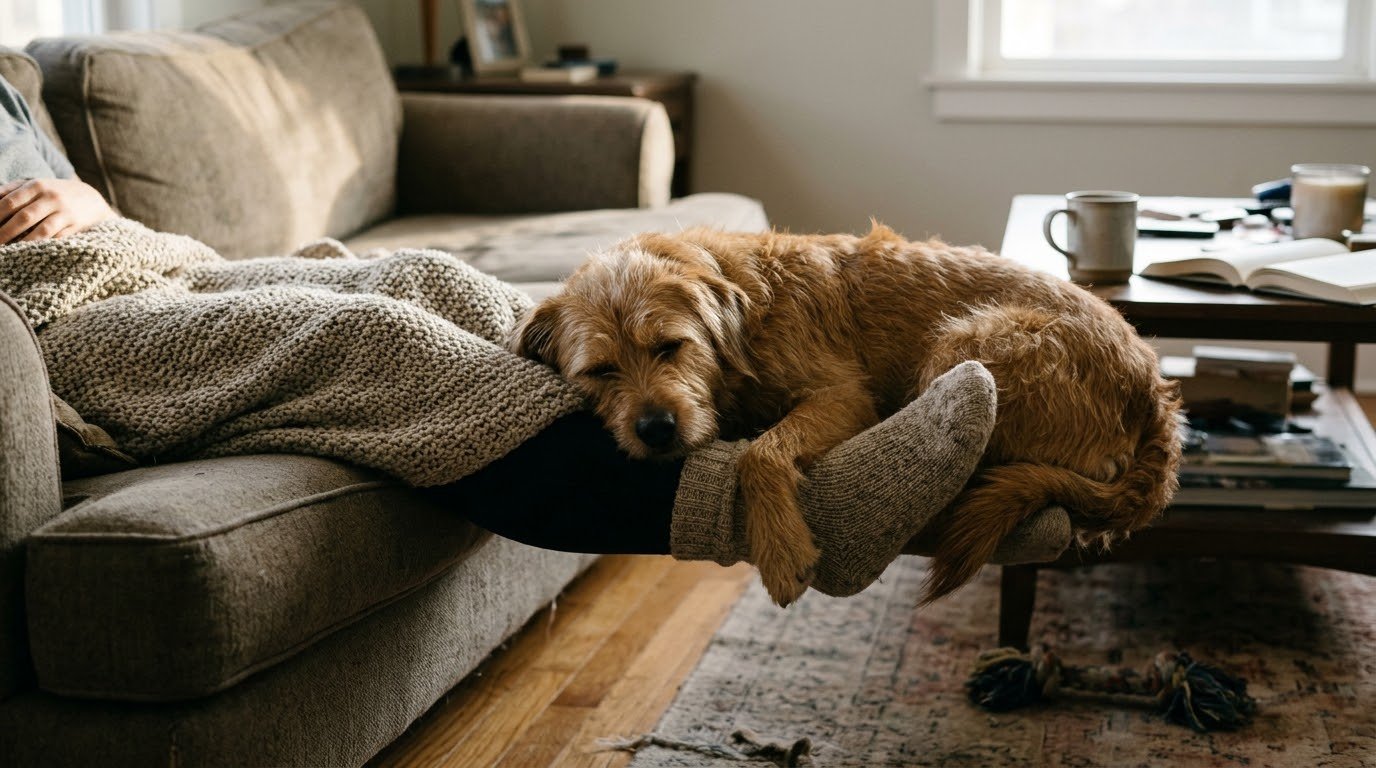
Your feet are also an easy target. They are at floor level, they stay in one place while you sit or sleep, and they do not push your dog away the way a moving arm might. For a dog who wants contact without being in the way, your feet are the perfect spot.
Why Does My Dog Sleep on My Feet? 8 Likely Reasons
Most dogs have more than one reason at once. Read through the list and notice which ones match the moments when your dog chooses your feet.
They See You as Their Safe Place
Sleep is when an animal is most vulnerable. A dog that chooses to fall asleep touching you is showing a high level of trust. They are saying, in their own way, that being next to you is where they feel secure enough to let their guard down. This is the most common answer, and it is a compliment.
It Is Pure Affection and Bonding
Physical contact helps dogs and people bond. Gentle touch and closeness are linked to the release of oxytocin, often called the bonding hormone, in both species. When your dog curls up on your feet, they are not just napping. They are spending time with you in the most relaxed way they know.
They Want to Know When You Move
Here is the practical side. If your dog is lying on your feet, they will feel it the second you stand up. That means no sneaking off to the kitchen without them. Dogs who like to stay involved in everything you do, the same dogs who follow you from room to room, often pick your feet for exactly this reason. It is an early-warning system with fur.
Your Feet Are Warm
Small breeds, short-coated dogs, puppies and seniors lose heat faster than a big, fluffy adult dog. If you notice the foot-sleeping gets more frequent in winter or in a cool room, warmth is probably part of the story. A blanket on the floor or a heated pet pad nearby can tell you quickly whether temperature is the main driver.
They Are Following a Pack Instinct
Older ideas about dogs trying to “dominate” their owners by lying on them have largely been set aside by modern behavior science. A better way to see it is simple social instinct: group members rest together. Your dog is treating you as part of their group, and resting together is part of how a group stays close and safe.
They Are Guarding You (or Your Spot)
Some dogs position themselves at your feet so they are between you and the rest of the room. Breeds with a guarding or herding background often do this. Usually it is harmless. It becomes a concern only if your dog stiffens, stares or growls when another pet or person comes near you. That is a sign of resource guarding, where your dog treats you as something to protect from others, and it is worth addressing early. Our guide on why dogs growl explains how to read those warning signals.
You Smell Like Home
To a dog, your feet and your socks carry a strong version of your scent. That familiar smell is comforting, which is also why many dogs steal shoes and slippers. Resting on your feet surrounds your dog with the smell they connect to food, play and safety.
They Feel Anxious Without You
For most dogs, foot-sleeping is about comfort, not worry. For some, though, it is part of a bigger pattern of needing to be in contact at all times. If your dog cannot settle unless they are touching you, follows you into the bathroom and becomes distressed when you leave, they may be dealing with separation-related anxiety. The ASPCA’s overview of separation anxiety lists the signs to watch for.
Reading the Moment: What Your Dog Is Telling You
When you ask yourself why does my dog sleep on my feet, the context around the behavior says a lot. Use this table as a quick way to match what you see with what it most likely means.
| What you notice | What it most likely means |
|---|---|
| Loose body, slow breathing, deep sleep on your feet | Trust and comfort. This is a relaxed, happy dog. |
| Lies on your feet mainly when you are about to leave | Wants to keep track of you, possibly mild worry about separation. |
| Happens more in cold weather or chilly rooms | Looking for warmth. |
| Faces outward, alert, ears up | Watching over you or the room. |
| Stiffens or growls when someone approaches | Possible resource guarding. Worth working on. |
| Only after a scary event (storm, fireworks, new place) | Seeking reassurance from you. |
| Panting, pacing or whining if you move away | Possible anxiety. Watch for other signs. |
Is It OK to Let Your Dog Sleep on Your Feet?
For most healthy dogs and owners, yes. There is nothing wrong with enjoying it. The questions worth asking are about comfort and safety rather than “spoiling” your dog:
- Your circulation and sleep: a large dog on your legs all night can cause numbness or broken sleep. If you wake up tired, that matters.
- Trip hazards: a dog sleeping at your feet can be easy to step on when you get up, especially at night or for older adults.
- Allergies: if anyone in the bed has pet allergies, close contact may make symptoms worse.
- Your dog’s independence: a dog who never learns to rest alone may struggle more when you are away.
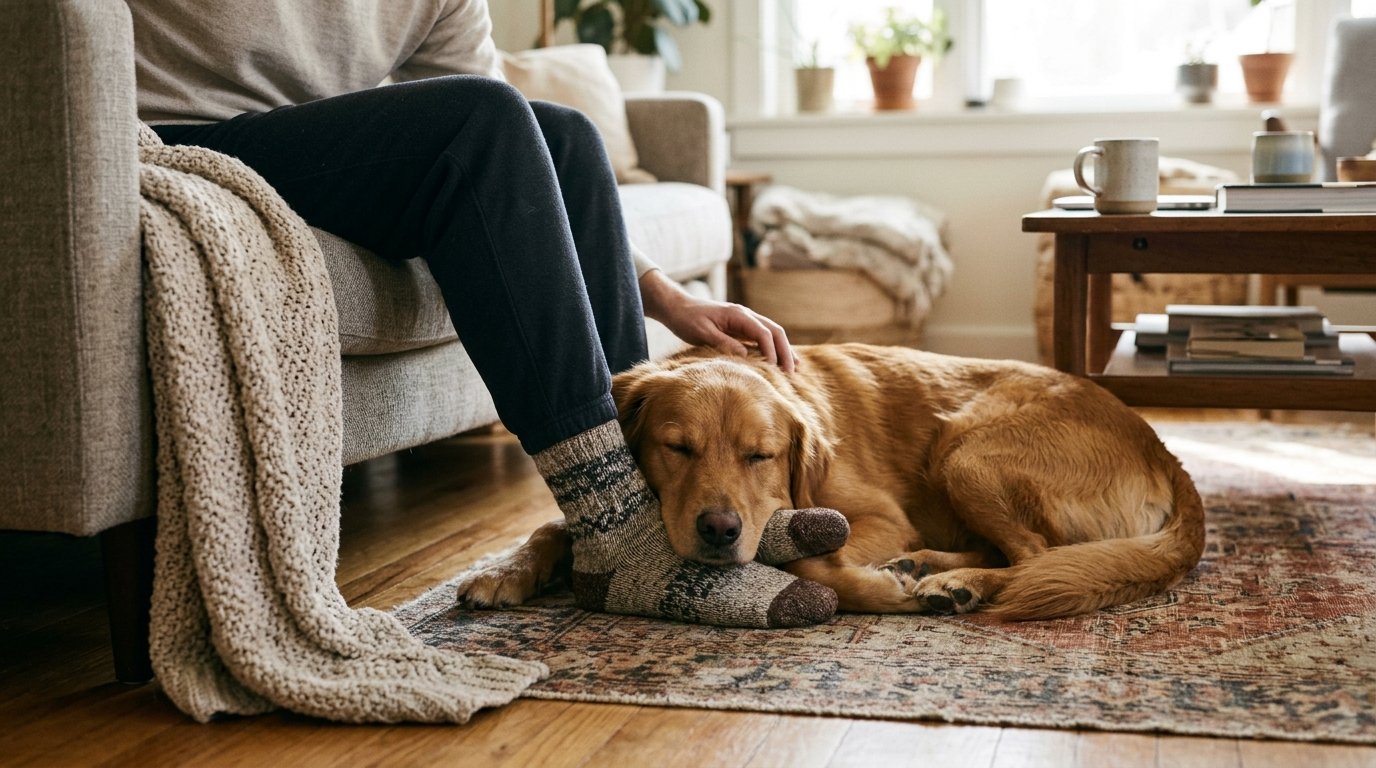
If none of these are a problem for you, you can enjoy the closeness. It is one of the small ways dogs show they are attached to their people, much like licking or leaning on your legs.
How to Gently Teach Your Dog to Sleep Somewhere Else
Maybe your dog is too heavy, too warm or too wiggly. You can redirect the habit without making your dog feel pushed away. The key is to make another spot just as rewarding as your feet.
- Put a comfortable bed close by. Start right next to where you sit or sleep. Your dog still gets to be near you, just not on you.
- Add your scent. An old t-shirt or blanket you have used makes the new spot feel familiar.
- Teach a “go to bed” cue. Toss a treat onto the bed, say the cue as your dog steps on it, and reward again when they lie down. Keep sessions short and fun. Our guide to positive reinforcement training covers the basics.
- Reward calm settling. When your dog chooses the bed on their own, quietly drop a treat or offer a gentle word.
- Move the bed gradually. Once your dog settles easily, shift the bed a little further away every few days if you want more space.
- Stay consistent. If your dog is allowed on your feet some nights and not others, the rule becomes confusing. Decide what you want and stick with it.
Avoid scolding or pushing your dog off roughly. That can make an anxious dog more clingy, not less. If your dog sleeps in a crate overnight, our tips on crate sleeping at night can help make that space feel just as safe as your feet.
When the Behavior Is a Sign of Something Bigger
A dog sleeping on your feet is rarely a problem by itself. If the question “why does my dog sleep on my feet” comes with any of these other changes, talk to your veterinarian or a qualified behavior professional:
- A sudden change, such as an independent dog who now will not leave your side.
- Destructive behavior, howling or house soiling when you leave.
- Growling, snapping or stiffening when people or pets come near you.
- Signs of pain, like reluctance to lie down, restlessness or limping.
- Constant shivering or seeking heat, which can sometimes point to a health issue.
Sudden clinginess in older dogs can also be linked to changes in vision, hearing or cognition. A vet check is the right first step whenever the behavior appears out of nowhere.
Frequently Asked Questions
Why does my dog sleep on my feet and not my partner’s?
Dogs often bond most strongly with the person who feeds them, walks them or spends the most quiet time with them. If your dog picks your feet, it usually means you are their main source of comfort and routine.
Does my dog sleeping on my feet mean they are dominant?
No. The idea that dogs lie on people to show dominance is outdated. Modern trainers and behavior experts see this as a social, affectionate behavior. The American Veterinary Society of Animal Behavior has position statements explaining why dominance-based thinking is not a helpful way to understand most dog behavior.
Why does my dog sleep at my feet instead of next to me?
The foot of the bed or couch gives your dog more room to stretch, an easy exit and a good view of the room, while still keeping them in touch with you. It is a comfortable middle ground between closeness and space.
Is my puppy sleeping on my feet a habit I should stop early?
Not necessarily. Puppies seek contact naturally. If you want an adult dog that sleeps in its own bed, start teaching a bed cue early while still letting your puppy be near you. Building some comfortable alone time now helps prevent separation problems later.
Do cats sleep on feet for the same reasons?
Partly. Cats also look for warmth, scent and safety, though their social style is different from dogs. You can read more in our article on why cats sleep on their owners.
The Bottom Line
So, why does my dog sleep on my feet? Most of the time it comes down to trust, warmth and the simple wish to stay close to the person they love most. It is an old instinct that started in a litter of puppies and now shows up at the end of your bed. Enjoy it if it works for you, redirect it gently if it does not, and keep an eye out for signs of anxiety or guarding. Either way, a dog who chooses your feet as their pillow is telling you that you are their safe place.


Discussion 0 comments
Share your thoughts — every perspective adds value.