

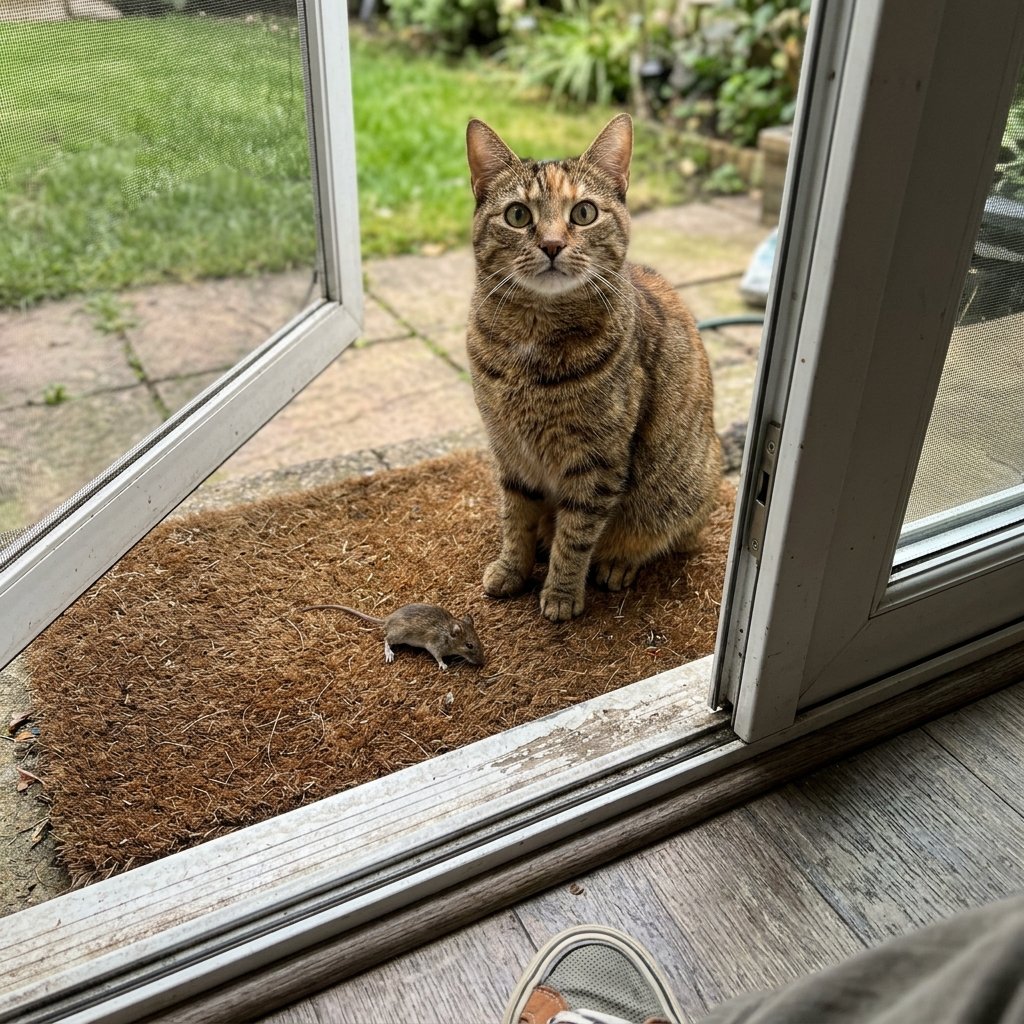
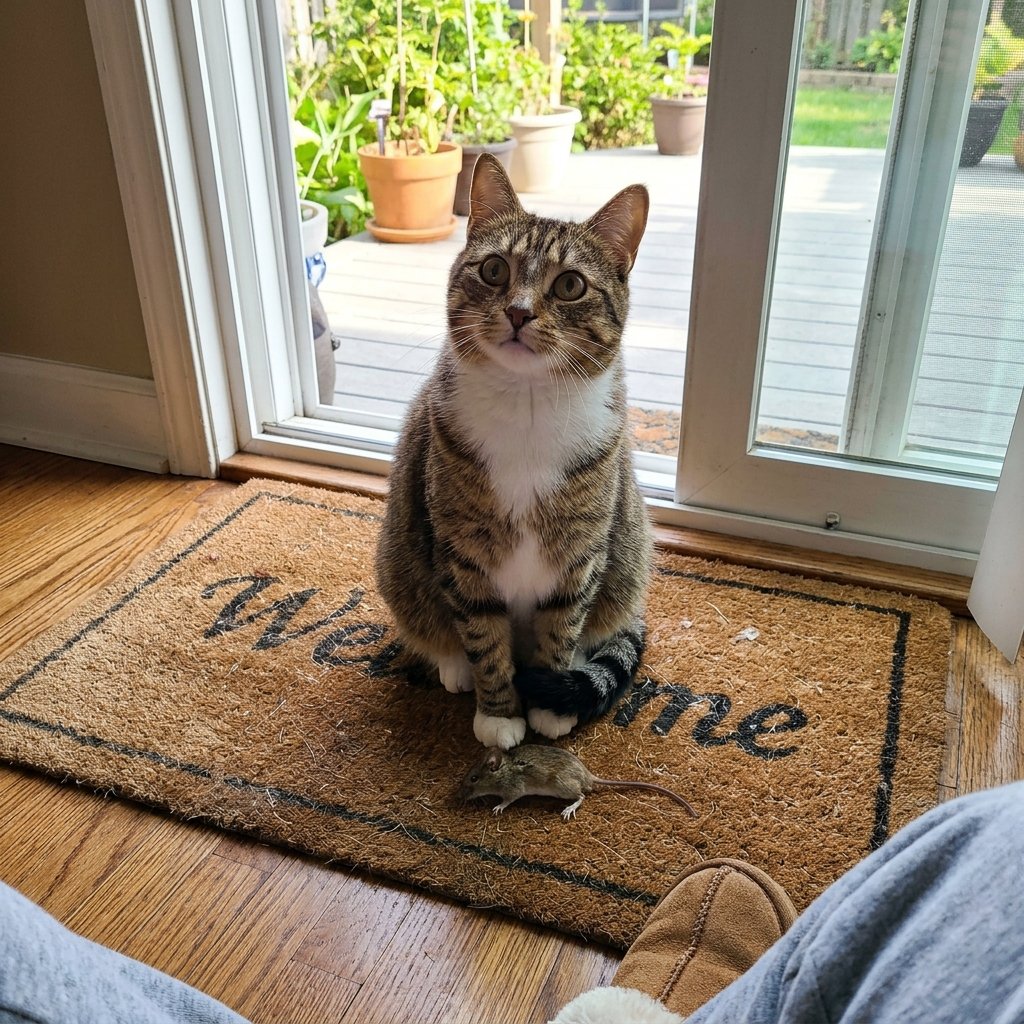
You open the back door in the morning and there it is: a dead mouse, laid out neatly on the mat. Your cat sits nearby, looking very pleased with itself. It’s gross, a little sad, and confusing all at once.
So, why does my cat bring me dead animals? In short, it’s normal hunting behavior. Cats are wired to hunt, and many carry their catch back to the place they feel safest, which is your home. Some experts also think cats bring prey to the humans they live with because they see us as part of their group, and possibly as hunters who could use a little help.
The good news is that your cat isn’t sick, angry, or trying to upset you. Below, we’ll walk through the real reasons behind these “gifts”, what to do when one shows up, and how to cut down on them without stressing your cat.
Why Does My Cat Bring Me Dead Animals? 7 Real Reasons
There isn’t one single answer. Most of the time, a few of these reasons overlap.
1. Hunting is hardwired, even in well-fed cats
A full food bowl doesn’t switch off the urge to hunt. In cats, hunting and hunger are driven by different systems in the brain, which is why a cat can catch a mouse, play with it, and then walk away without eating it. Stalking, pouncing, and catching are rewarding on their own.
2. Your home is the “safe den”
In the wild, a cat that catches something out in the open is exposed to bigger predators and rival cats. Carrying prey back to a protected spot is the smart move. For a pet cat, the safest spot is your house, your porch, or your bedroom. The dead animal often ends up there simply because that’s where your cat planned to deal with it later.
3. They see you as family
Cats that live with people often treat their humans like members of their social group. It’s the same bond behind why your cat follows you everywhere. Bringing prey home is something cats do with their group, especially mothers with kittens, and your cat may be including you in that routine.
4. Teaching instinct (you’re the “kitten”)
Mother cats teach kittens to hunt in stages. First they bring back dead prey, then injured prey, then let the kittens practice. A popular theory is that some cats, especially spayed females who never raised a litter, redirect this teaching instinct toward their owners. From your cat’s point of view, you’re a very large kitten who never catches anything.
5. Showing off a successful hunt
Some cats seem to bring prey to wherever their person is, then wait for a reaction. If dropping a mouse at your feet once got a lot of attention (even shrieking), your cat may have learned that a “gift” gets you to notice them.
6. Saving it for later
Not every catch is eaten right away. Some cats stash prey in a quiet corner, under furniture, or by the door as a snack for later, then forget about it.
7. Boredom and pent-up energy
Indoor-outdoor cats with little play at home may hunt more. Hunting fills the gap left by a lack of stimulation, so a bored cat is often a busier hunter.
Why Does My Cat Bring Live Animals Inside?
A live mouse running under the sofa is even worse than a dead one. Cats usually bring prey in alive for one of these reasons:
- Practice and play. Releasing and recatching prey sharpens hunting skills. It looks cruel to us, but it’s instinct, not malice.
- Unfinished hunt. Your cat may not have finished the kill outside and wants to continue somewhere safe.
- The “teaching” stage. Mother cats bring live prey to older kittens so they can practice. Your cat may be giving you the same lesson.
When Cats Bring the Most Gifts
Many owners notice the gifts follow a pattern:
- Dawn and dusk. Cats are crepuscular, so they’re most active in the early morning and evening, when mice and birds are out too.
- Spring and summer. Young birds and rodents are easier to catch, so gifts often go up in warmer months.
- After a change at home. A new pet, a move, or less playtime can lead to more hunting. Watch for other signs your cat is stressed too.
What to Do When Your Cat Brings You a Dead Animal
Your reaction matters more than you might think. Here’s a calm, practical way to handle it:
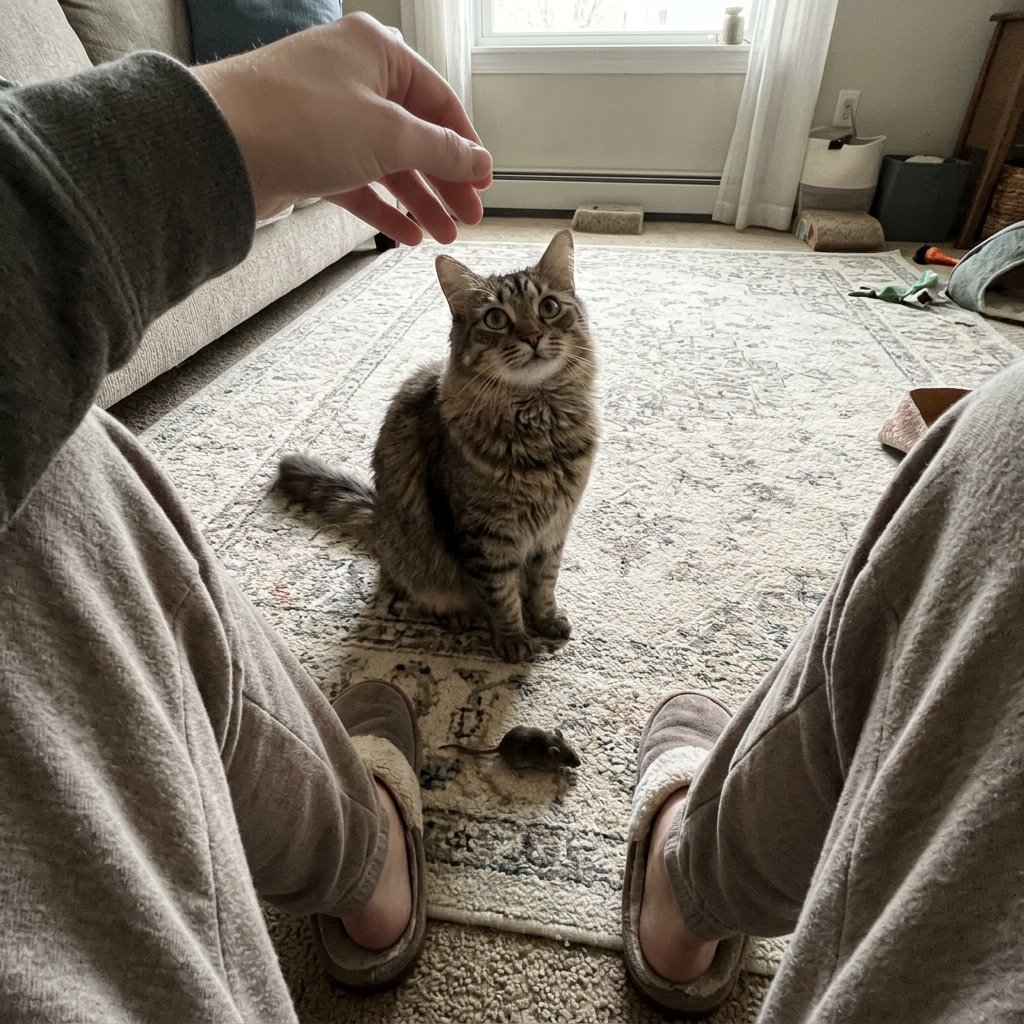
- Stay calm. Don’t yell or scold. Your cat won’t connect the punishment with hunting, and it can damage trust.
- Don’t make a big fuss either. Loud praise or a dramatic scream can both teach your cat that gifts get attention.
- Distract your cat. Toss a treat or a toy away from the prey so your cat leaves it alone.
- Remove it safely. Wear gloves or use a plastic bag turned inside out. Seal it and put it in an outdoor bin.
- Clean the spot. Wipe the area with a pet-safe disinfectant and wash your hands well.
- For live prey, close off the room, cover the animal gently with a box or towel, and release it outside away from your cat. If it looks hurt, call a local wildlife rescue.
What not to do
- Don’t punish your cat after the fact.
- Don’t pick up prey with bare hands.
- Don’t let your cat eat wild prey regularly if you can avoid it (see the health risks below).
How to Stop Your Cat From Bringing You Dead Animals
You can’t remove the hunting instinct, but you can redirect it. These steps work best together:
- Play “hunting” games every day. Two or three short sessions with a wand toy, ending with a “catch” and then a small meal or treat, satisfy the hunt-catch-eat cycle. Regular play also helps if you’re trying to stop a cat from biting.
- Keep your cat in at dawn and dusk. These are peak hunting hours for cats and their prey.
- Try a bright collar cover or bell. Brightly colored collar covers can make cats easier for birds to spot. Bells help some cats and not others. Always use a breakaway (quick-release) collar.
- Use puzzle feeders. Making your cat “work” for food burns some of the same energy as hunting.
- Build a catio or cat-proof yard. Outdoor time without access to wildlife is a good middle ground.
- Move bird feeders. A feeder in your yard is basically a buffet for your cat. Place it higher, away from hiding spots, or remove it.
- Consider keeping your cat indoors. With enough enrichment, many cats adjust well to indoor life.
Is It Dangerous If My Cat Catches or Eats Wild Animals?
It can be. Wild prey may carry parasites like roundworms and tapeworms, bacteria such as Salmonella, and fleas or ticks. Rodents that ate poison bait can also make a cat sick. Talk to your vet about a regular deworming and flea plan if your cat hunts, and call them quickly if your cat vomits, seems weak, or bleeds after eating prey. The Cornell Feline Health Center is a good place to read more about feline health.
Hunting cats also affect local wildlife, especially songbirds. The American Bird Conservancy has practical tips for keeping cats and birds safe. Cutting down on outdoor hunting is better for your cat and for the animals around your home.
FAQ
Is my cat bringing me dead animals a sign of love?
It’s a sign that your cat feels safe with you and sees your home as its territory. Many owners read it as affection, and that’s not far off: cats rarely bring prey to places or people they don’t trust.
Should I praise my cat for bringing dead animals?
No. Praise can encourage more gifts. A calm, neutral reaction followed by a distraction works better.
Why does my cat bring dead animals but not eat them?
Hunting and eating are separate urges in cats. A well-fed cat often hunts for the thrill of it and has no need to eat the catch.
Why does my indoor cat bring me toys like they’re prey?
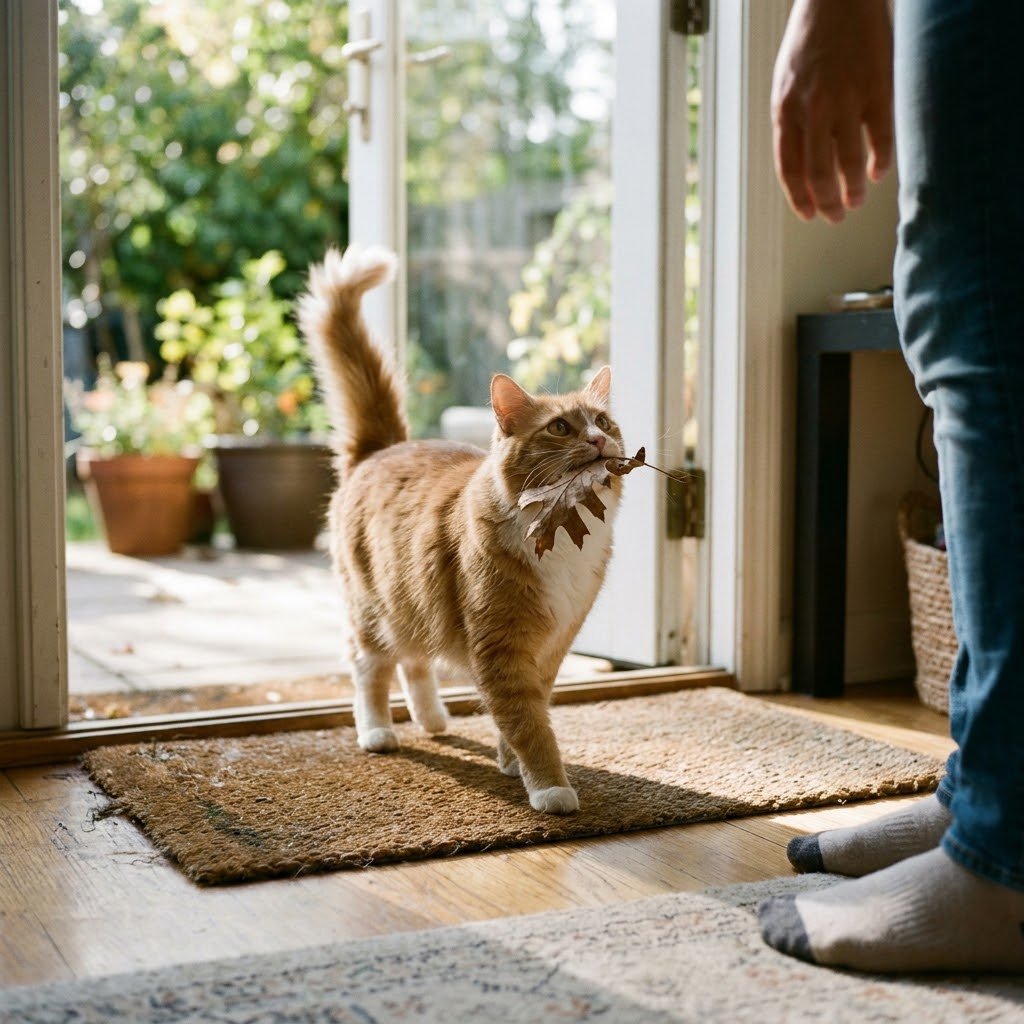
It’s the same instinct. Indoor cats “hunt” toys, socks, or hair ties and carry them to you. It’s a harmless outlet, so keep it going with daily play.
Do male or female cats bring more gifts?
Both do. Some owners and behaviorists notice it more in spayed females, possibly linked to the teaching instinct, but any cat with a strong prey drive can do it.
Will my cat stop bringing dead animals as it gets older?
Often, yes. Hunting usually slows down with age as cats become less active, though some keep hunting well into their senior years.
The Bottom Line
If you’ve been asking “why does my cat bring me dead animals?”, the answer comes down to instinct, safety, and the bond your cat has with you. It isn’t a problem to punish. It’s a behavior to manage. Stay calm, clean up safely, give your cat daily hunting-style play, and limit outdoor time at dawn and dusk. You’ll likely see fewer gifts, and a happier, more relaxed cat.


Discussion 0 comments
Share your thoughts — every perspective adds value.