

Few dog habits confuse owners as much as this one. You take your dog out for a walk, and instead of sniffing or playing, they start grazing like a small cow. Sometimes they throw it back up a few minutes later. Sometimes they just keep chewing happily. So, why does my dog eat grass, and should you be worried about it?
Here is the reassuring part first: grass eating is very common in dogs, and in most cases it is normal behavior rather than a sign of illness. That said, there are a few situations where it is worth a closer look. This article explains what is really going on, which popular explanations do not hold up, and how to tell harmless grazing from something your vet should check.
Is It Normal for Dogs to Eat Grass?
Yes. Veterinarians see this behavior so often that it is generally considered a normal part of being a dog. Researchers at the University of California, Davis surveyed owners whose dogs regularly ate plants and found that plant eating was common, most dogs did not seem unwell beforehand, and only a minority vomited afterwards. You can read a summary of that research on dvm360.
In other words, the classic idea that dogs only eat grass when they feel sick does not match what most owners actually see.
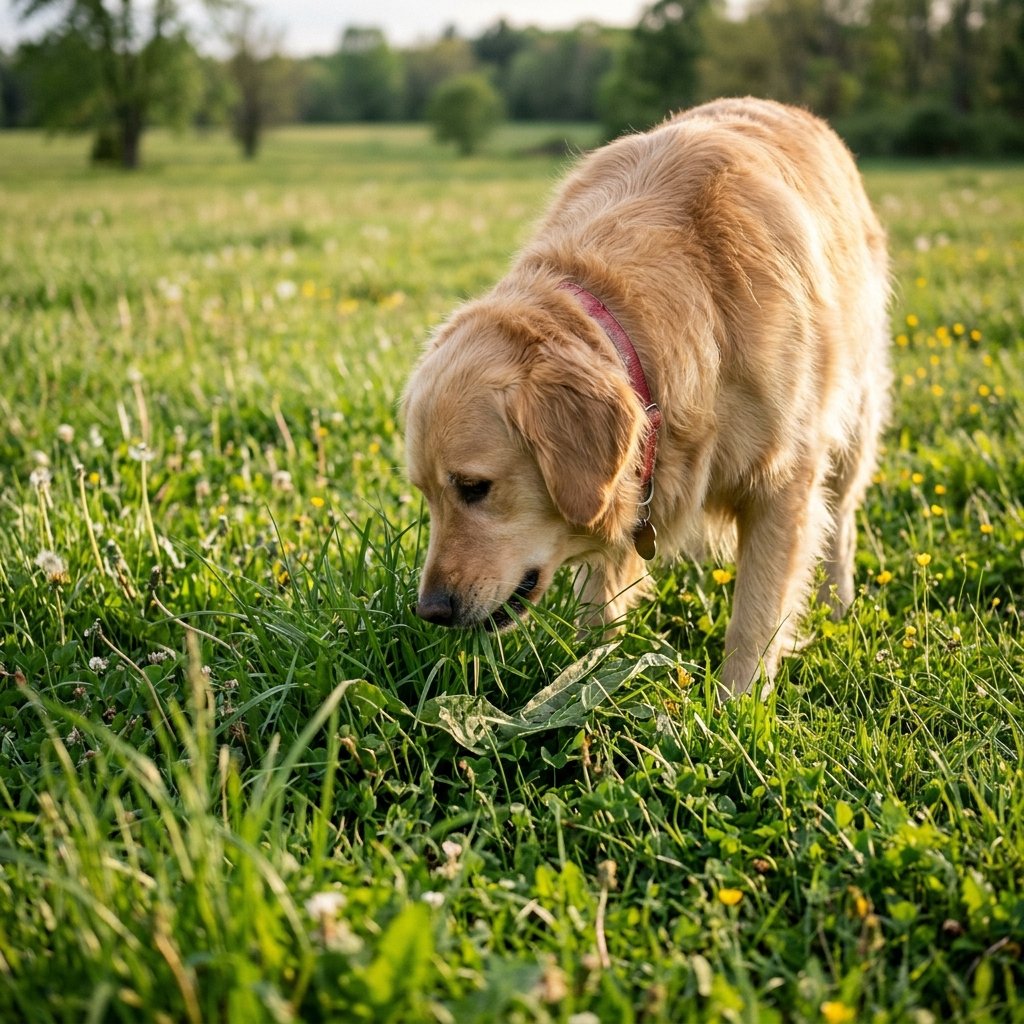
Myths vs. Facts About Dogs Eating Grass
| Common belief | What we actually know |
|---|---|
| Dogs eat grass only when they are sick | Most dogs that eat grass show no signs of illness before or after |
| Grass eating always leads to vomiting | Only some dogs vomit afterwards; many never do |
| It means something is missing from the diet | Dogs on complete, balanced diets eat grass too, although fiber may play a role for some |
| It is a sign of worms | Not on its own, though regular parasite control is still important |
| It is always safe | Plain, untreated grass usually is, but chemicals, parasites and toxic plants are real risks |
Why Does My Dog Eat Grass? 8 Possible Reasons
There is no single answer that fits every dog. Most experts think several factors are involved, and the reason can change from one day to the next.
1. They Simply Like It
Many dogs seem to enjoy the taste and texture of fresh grass, especially new spring growth. If your dog picks out particular types of grass, chews calmly and moves on, the most likely explanation is that they find it pleasant.
2. It Is Instinctive Behavior
Wild canids such as wolves have been observed eating plant material, and plant remains show up in their droppings. One theory is that this habit helped wild ancestors move intestinal parasites through the gut. Domestic dogs may have kept the instinct even though their lives are very different now.
3. Boredom
A dog with too little to do will invent its own entertainment. Grazing in the yard fills time, the same way some dogs dig or chew furniture. If your dog eats grass mostly when left outside alone, boredom is worth considering. Our guide on why dogs chew everything covers the same problem from another angle.
4. Looking for Fiber
Grass contains roughage. Some owners notice that their dog eats less grass after switching to a food with more fiber, which suggests that for some dogs, grazing may be linked to digestion. If you suspect this, discuss the diet with your vet before making changes. Our pet nutrition guide explains the basics of a balanced diet.
5. An Upset Stomach
Some dogs do eat grass quickly and in large mouthfuls when they feel nauseous, and then vomit. Whether the grass causes the vomiting or the dog was going to vomit anyway is not fully clear. If your dog gulps grass urgently rather than nibbling it, and this happens with other signs of stomach trouble, it deserves attention.
6. Anxiety or Stress
Like licking or chewing, grazing can be a self-soothing habit. Dogs that eat grass more during changes at home, after being left alone, or in busy environments may be using it to cope.
7. Attention Seeking
If eating grass makes you run over, call their name or chase them around the garden, your dog may learn that grass is a great way to get your attention. The behavior becomes a game.
8. Puppy Curiosity
Puppies explore everything with their mouths. Grass, sticks, leaves and soil are all part of learning about the world. This usually settles with age and training, but keep a close eye on what goes in, because puppies are more likely to swallow something harmful. Our puppy care tips for beginners has more on keeping young dogs safe.
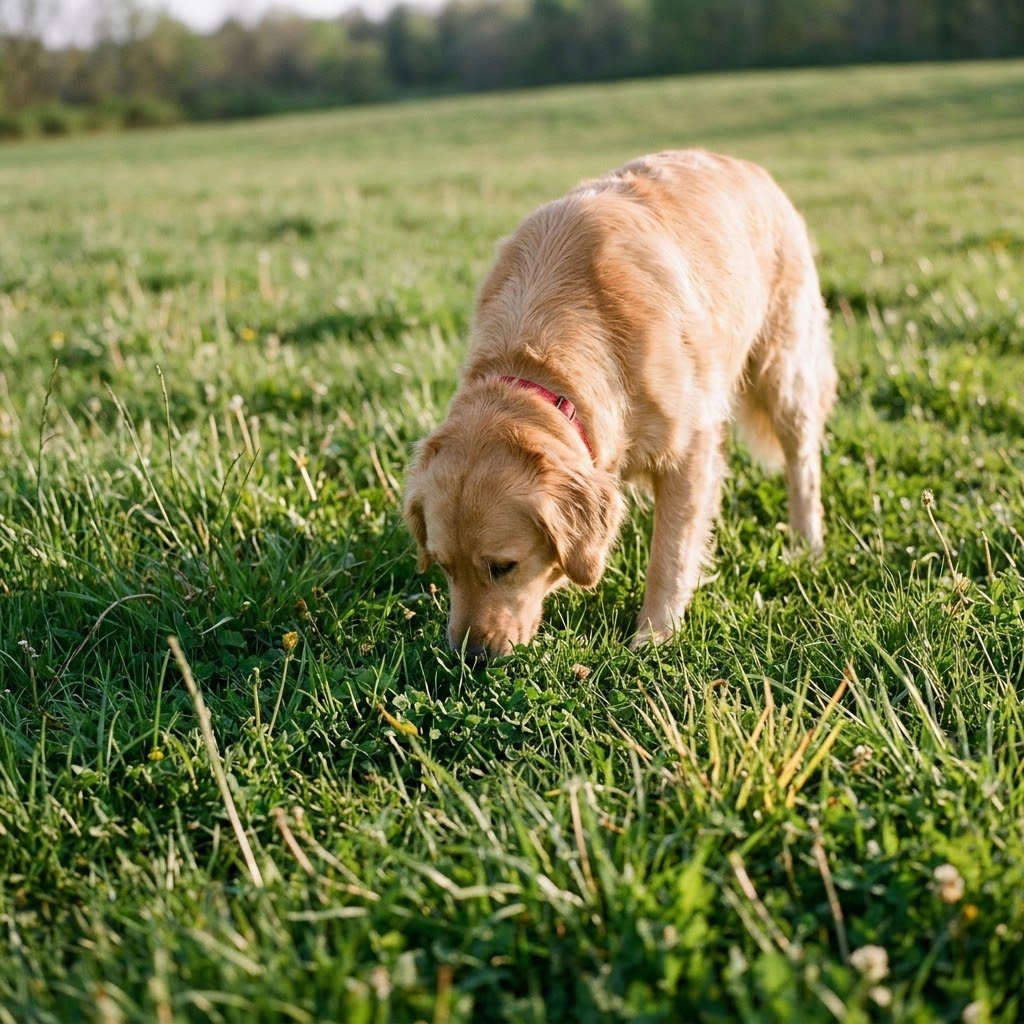
Nibbling vs. Gulping: Read the Behavior
How your dog eats the grass tells you a lot. A simple way to think about it:
- Slow, selective nibbling: the dog sniffs, chooses certain blades, chews and moves on. This is usually taste, habit or boredom.
- Fast, urgent gulping: the dog pulls at grass frantically, swallows big mouthfuls and may lick its lips or swallow repeatedly. This is more often linked to nausea or stomach discomfort.
When to Call the Vet
Occasional grass eating in a healthy, happy dog is rarely a concern. Contact your vet if you notice:
- Vomiting more than once, or vomiting several days in a row
- Diarrhea, blood in vomit or stool, or black, tarry stool
- Loss of appetite, weight loss or low energy
- A sudden, big increase in grass eating
- Signs of pain, such as a hunched back, restlessness or reluctance to lie down
- Eating soil, rocks or other non-food items as well as grass
- Any chance your dog ate a treated lawn or a toxic plant
Your vet may check for stomach and intestinal problems, parasites, dietary issues or other medical causes.
The Real Risks of Eating Grass
The grass itself is rarely the problem. What is on it, or growing next to it, can be.
- Pesticides, herbicides and fertilizers. Treated lawns, parks and roadsides can be toxic. Ask before letting your dog graze on someone else’s lawn.
- Toxic plants. Many garden plants are dangerous to dogs. The ASPCA keeps a searchable list of toxic and non-toxic plants.
- Parasites. Grass contaminated with other dogs’ feces can carry worm eggs. Keep up with your vet’s parasite prevention schedule.
- Grass seeds and awns. Sharp seed heads can get stuck in the mouth, throat, nose or paws.
How to Stop Your Dog From Eating Grass
If your vet has ruled out health problems and you would still like to cut down the grazing, these steps help:
- Teach “leave it”. A solid “leave it” cue lets you stop your dog before they start. Practice indoors with treats, then outside. It fits naturally alongside other basic dog commands.
- Keep walks engaging. Use a lead in grassy areas, move on when your dog starts grazing, and reward them for walking with you. Good leash training makes this much easier.
- Bring a better option. Carry a chew or a favorite toy and swap it in when your dog heads for the grass.
- Add more exercise and mental work. Sniff walks, food puzzles and short training sessions reduce boredom. These indoor activities for dogs are helpful on rainy days.
- Review the diet with your vet. If fiber might play a role, your vet can suggest a suitable food or addition.
- Reward, do not punish. Scolding can turn grass into an attention game. Positive reinforcement gets better results.
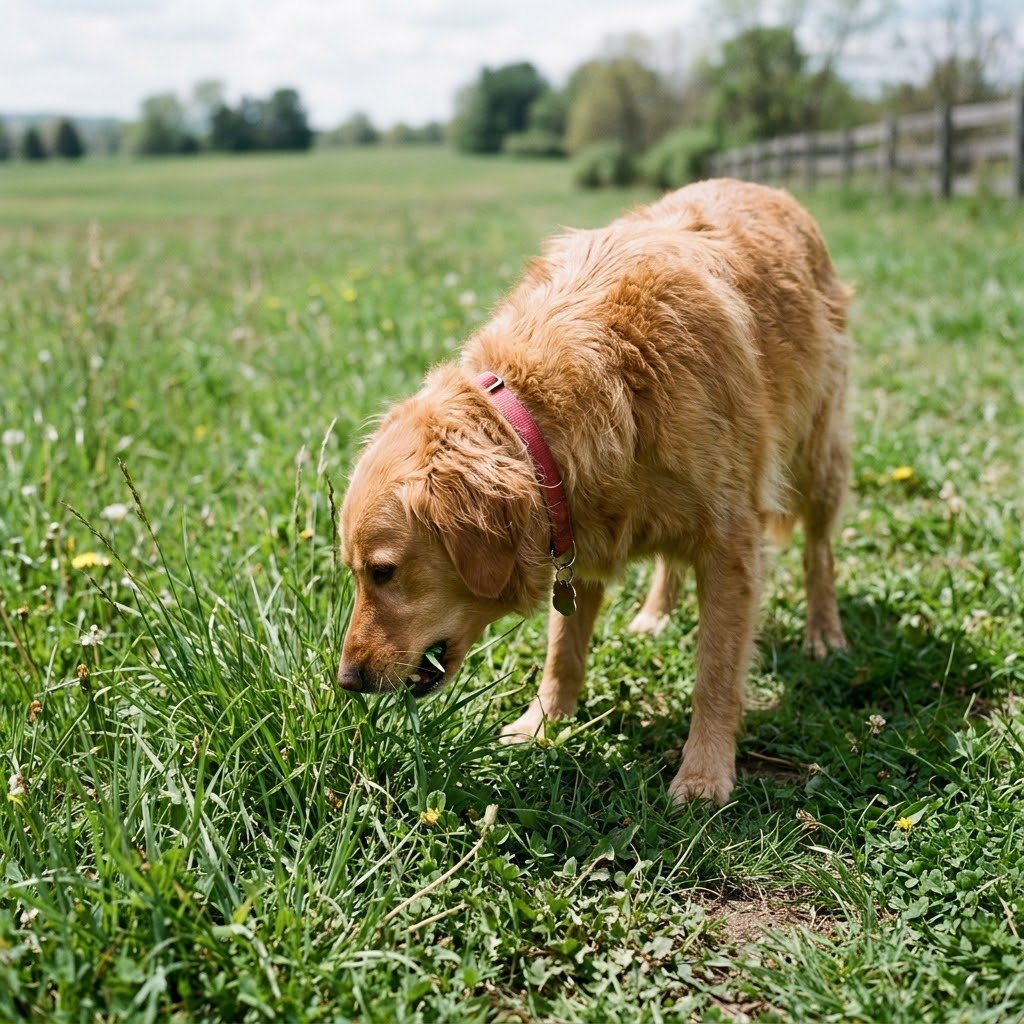
A Safe Alternative: Dog-Friendly Grass at Home
If your dog loves grass and you cannot stop it completely, some owners grow a small pot of untreated wheatgrass or oat grass at home. That way, you know exactly what your dog is eating. Introduce it slowly, offer small amounts, and stop if it causes stomach upset.
Frequently Asked Questions
Why does my dog eat grass and then throw up?
Some dogs eat grass when they already feel nauseous, and vomiting follows. Long blades of grass can also tickle the throat and stomach. If it happens once and your dog seems fine afterwards, it is usually not serious. If it keeps happening, see your vet.
Why does my dog eat grass every morning?
Morning grazing can be a habit, a response to an empty stomach, or simply a dog enjoying fresh, dewy grass. If your dog also vomits yellow bile in the morning, mention it to your vet, as feeding times may need adjusting.
Why does my dog eat grass like crazy all of a sudden?
A sudden, frantic interest in grass often points to stomach discomfort. Watch for vomiting, diarrhea, lip licking or loss of appetite, and call your vet if the behavior continues for more than a day or comes with other symptoms.
Should I let my dog eat grass?
Occasional nibbling of untreated grass is generally fine for healthy dogs. Avoid areas sprayed with chemicals, roadsides and places with lots of dog waste.
Is eating grass a sign of worms?
Not by itself. Many dogs with no parasites eat grass. Still, keep your dog on the parasite prevention your vet recommends.
The Bottom Line
If you have been wondering why does my dog eat grass, the most likely answer is that it is a normal, common habit driven by taste, instinct, boredom or occasionally an upset stomach. Keep the grass free of chemicals, watch how your dog eats it, and pay attention to any change in health or behavior. When in doubt, a quick call to your vet will give you peace of mind.



Discussion 0 comments
Share your thoughts — every perspective adds value.