

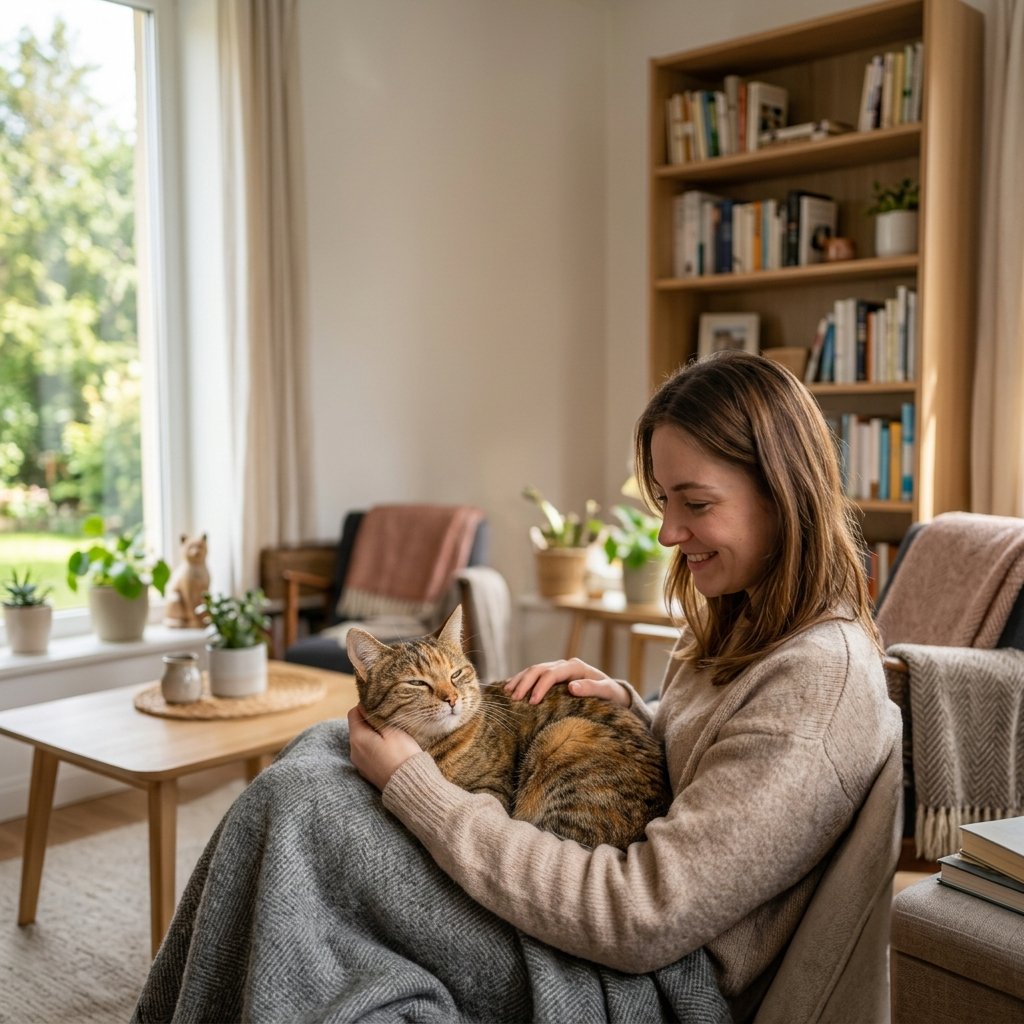
Your cat hops onto the couch, circles twice, settles against your leg, and the motor kicks in. Most of us hear that rumble and think the same thing: she’s happy. Sometimes that’s exactly right. But if you’ve ever asked yourself why does my cat purr at the vet, where she clearly isn’t enjoying herself, you’ve already spotted the catch. A purr isn’t a simple “I’m happy” button.
Scientists still disagree on parts of this, so I’ll keep the facts and the educated guesses separate. Here’s what we actually know about purring, what’s still theory, and how to read your own cat’s rumble.
The Short Answer
Cats purr to communicate and to cope. Contentment is the most common trigger, but they also purr to ask for food, to get attention, to calm themselves when they’re nervous or hurting, and to keep things friendly around other cats. Kittens start within the first few days of life, which makes purring one of the oldest tricks a cat has.
How Does a Cat Actually Purr?
Surprisingly, nobody has the full picture. The most widely accepted explanation is that the brain fires rapid, repeating signals to the muscles of the voice box and the diaphragm. The muscles twitch, the vocal folds vibrate, and you get a steady hum somewhere between 25 and 150 hertz, according to Scientific American. A meow ends when the air runs out. A purr doesn’t, because cats keep it going on both the inhale and the exhale. That’s why it sounds so unbroken.
7 Reasons Your Cat Is Purring
1. She’s relaxed and content
This is the one everybody knows. A cat that purrs with half-closed eyes, a loose body and a tail that barely moves is usually telling you she feels safe. You’ll hear it most while she’s being petted, dozing in a sunny spot, or settling in beside you for the evening. Kneading often joins in, and we explain that habit in why does my cat knead me. If those kneading claws start doing damage, our guide on how to stop a cat from scratching can help.
2. It’s a leftover from kittenhood
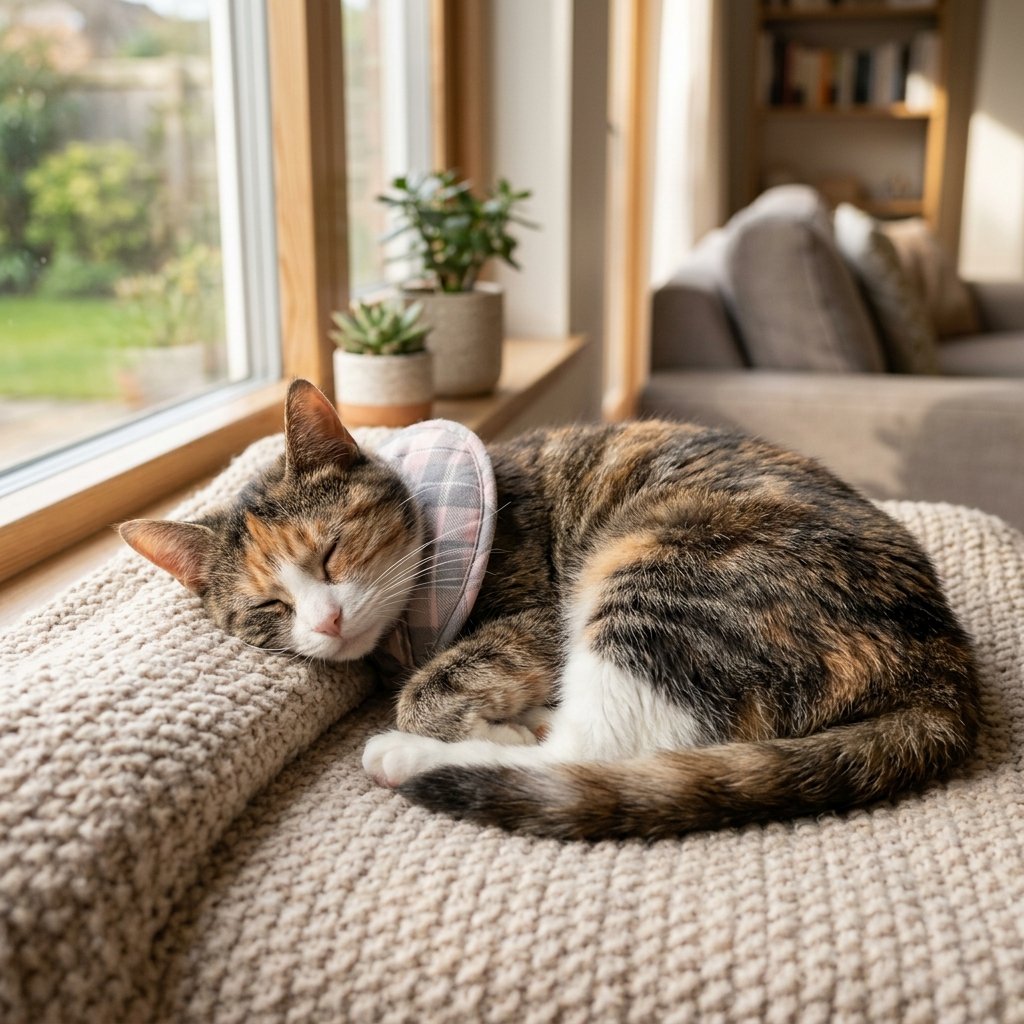
Kittens can purr when they’re only about two days old, and they do it while nursing. Mother cats purr back, and many experts see that as a quiet way of saying everything’s fine. Adult cats seem to carry the link with them: purring goes with comfort and being looked after. That’s a big part of why you hear it the moment she settles onto your lap.
3. She wants something from you
This one explains the 5 a.m. wake-up call. In a 2009 study, researchers at the University of Sussex led by Karen McComb found that cats who purr to get fed tuck a high-pitched, cry-like sound inside the normal low rumble. It peaks around 380 hertz and resembles a baby’s cry. Listeners rated these “solicitation purrs” as more urgent and less pleasant, even people who had never owned a cat. National Geographic’s write-up of the study is worth a read.
McComb suspects cats learn to do this because an outright meow tends to get them thrown out of the bedroom. A purr with a hidden whine gets results and keeps her on the bed. If the purring comes with nonstop calling, our post on why your cat meows so much covers the other causes.
4. She’s calming herself down
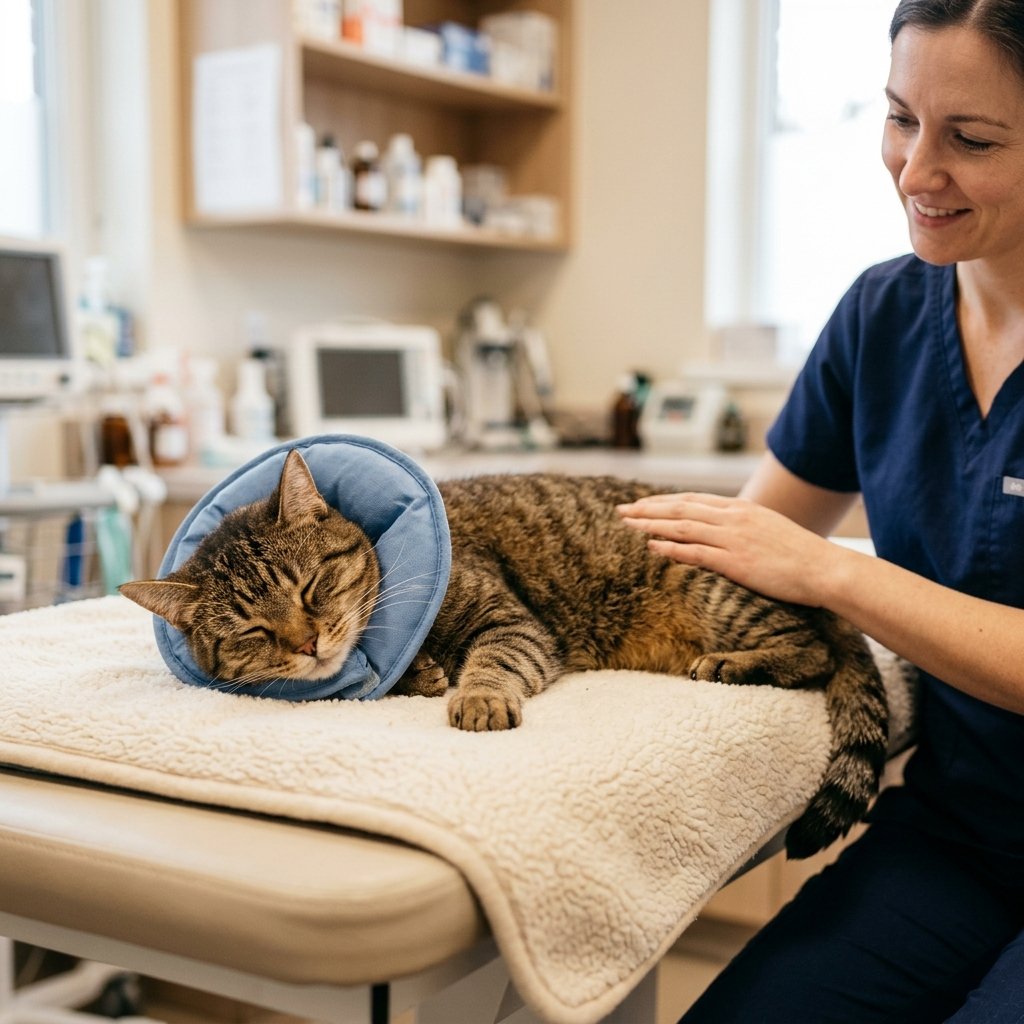
Plenty of cats purr in the carrier, in the exam room, or at home after something scary. Carlo Siracusa, a clinical animal behavior professor at the University of Pennsylvania, explains in Popular Science that a purr at the vet isn’t necessarily contentment. It may be a cat asking for help or comfort.
So don’t treat every purr as a thumbs-up. Check the rest of her body. Flattened ears, a tucked posture or wide pupils say she’s stressed, whatever the sound says. And if a purring cat keeps vanishing under the bed, read up on cat hiding behavior to see when it’s normal and when it isn’t.
5. She’s saying hello, or keeping the peace
Short purrs often show up as greetings, when you walk through the door or when two cats who know each other cross paths. PetMD lists greeting as one of the main reasons. Some behaviorists also think a purr can signal “I’m not a threat” when cats meet, which would help avoid a fight. A cat who purrs while nuzzling or licking you is usually in the same friendly mood. Here’s more on why cats lick their owners.
6. She’s in pain or feeling unwell
This is the uncomfortable one. Cats can purr when they’re sick, injured or giving birth, and some purr near the end of life. One theory is that it works as self-comfort, a bit like a person humming to get through something unpleasant. The takeaway for owners is simple: a purr doesn’t prove your cat feels fine. If she’s purring but also hiding, skipping meals, or reacting when you touch a sore spot, trust those signs over the sound.
If she’s recovering from a procedure, our guide to female cat behavior after spaying explains what normal recovery looks like.
7. It might help her heal (maybe)
You’ve probably heard that a cat’s purr vibrates at frequencies linked to bone and tissue repair. It’s a popular idea, and it would neatly explain why cats seem so tough. The honest status is that it’s a hypothesis. Siracusa points out that there’s no solid data favoring any single explanation of purring, healing included, and Scientific American calls self-healing a plausible possibility rather than a proven fact. Enjoy the theory, but never treat a purr as a substitute for a vet visit.
How to Tell What Your Cat’s Purr Means
The sound alone won’t tell you much. Context does. Run through this quick checklist next time she starts rumbling:
- Soft eyes, loose body, still tail: she’s relaxed.
- Purring beside your face at dawn, or near the food bowl, with a slightly needy edge: she’s asking for something.
- Purring with flattened ears, a hunched posture or wide pupils: she’s anxious or uncomfortable.
- Purring in the carrier or exam room: she’s probably coping.
- Purring while hiding, not eating or avoiding touch: worth a closer look.
When Purring Is a Reason to Call the Vet
The purr itself is rarely the problem. It’s what comes with it. Call your vet if purring shows up alongside any of these: refusing food or water for more than a day, hiding far more than usual, labored or open-mouth breathing, limping, flinching when touched, or a sudden change in her normal behavior. Some cats drool a little when they’re deeply relaxed, but heavy or brand-new drooling deserves a check, since dental trouble and nausea can cause it.
Do All Cats Purr?
No. Some cats purr loudly enough to hear across the room. Others do it so softly you only feel it with your hand on their side, and a few rarely purr at all. A quiet cat isn’t a broken one. What matters is a sudden change from her own normal. Among big cats the split is interesting: lions roar but don’t purr, while cougars and cheetahs purr but can’t roar.
Frequently Asked Questions
Do cats purr when they’re happy?
Often, yes, but not only then. Cats also purr when they’re hungry, anxious, hurt or looking for attention, so check her body language before deciding what it means.
Why does my cat purr and knead at the same time?
Kneading starts in kittenhood, when babies press on their mother to get the milk flowing. Adult cats seem to bring it back when they feel safe and cozy, which is why the two so often go together.
Why does my cat purr so loudly?
Volume varies from cat to cat, like human voices do. Some are just loud purrers. If it gets louder when you wake up or walk toward the food bowl, you may be hearing a solicitation purr.
Is it normal for a cat to purr in her sleep?
Yes. Plenty of cats purr while dozing, usually because they feel relaxed and safe.
Can a cat’s purr really heal?
Possibly, but it’s unproven. Think of it as an interesting theory, not a treatment.
The Takeaway
Next time your cat starts rumbling, look at the whole picture before you decide what she’s saying. Most of the time it really is “I’m comfortable, don’t move.” Now and then it’s “feed me,” or “something’s wrong.” Knowing which one you’re hearing is half the job of living with a cat.


Discussion 0 comments
Share your thoughts — every perspective adds value.