

You’ve settled in on the sofa with a cup of tea, a good show and absolutely no plans to move. Within minutes, a warm, purring weight lands on your lap and curls into a ball. Suddenly, standing up for any reason, including the bathroom, has become a serious decision.
If you’ve ever asked yourself why does my cat sleep on me, you’re in good company. It’s one of the most common cat behaviors, and one of the sweetest. The reasons range from “you’re warm” to “I trust you completely.” Here’s what’s really going on, plus what to do when your cat’s sleeping spot becomes inconvenient.

Why Does My Cat Sleep on Me? The Top Reasons
1. You’re warm
Let’s start with the obvious. Cats love heat. Their comfortable temperature range is higher than ours, which is why they’re always found in sunny patches, on laptops and next to radiators. A human body is basically a free, soft, living heating pad. If your cat chooses your lap, chest or legs in cold weather, warmth is often a major reason.
2. They feel safe with you
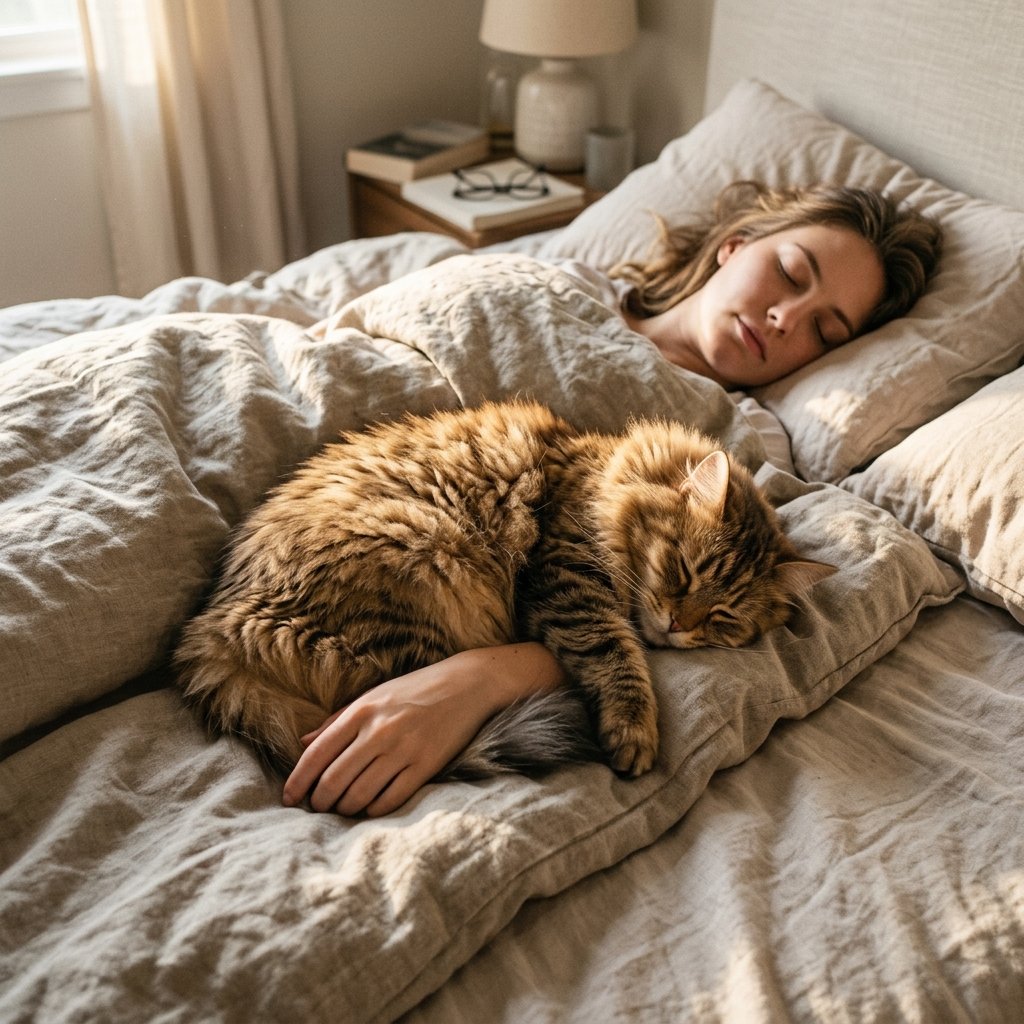
Sleeping is a vulnerable time for any animal. In the wild, a sleeping cat could become someone else’s meal. A cat who is willing to fall asleep on you is saying, in the only way they can, “I trust you to keep watch.” That’s a big compliment, especially from a species famous for being independent.
3. They’re bonded to you
Cats form real attachments to their people. Sleeping in close contact is a way of showing affection and strengthening that bond, much like cats who sleep curled up together. If your cat picks you out of everyone in the house, you’ve clearly earned VIP status.
4. They like your scent
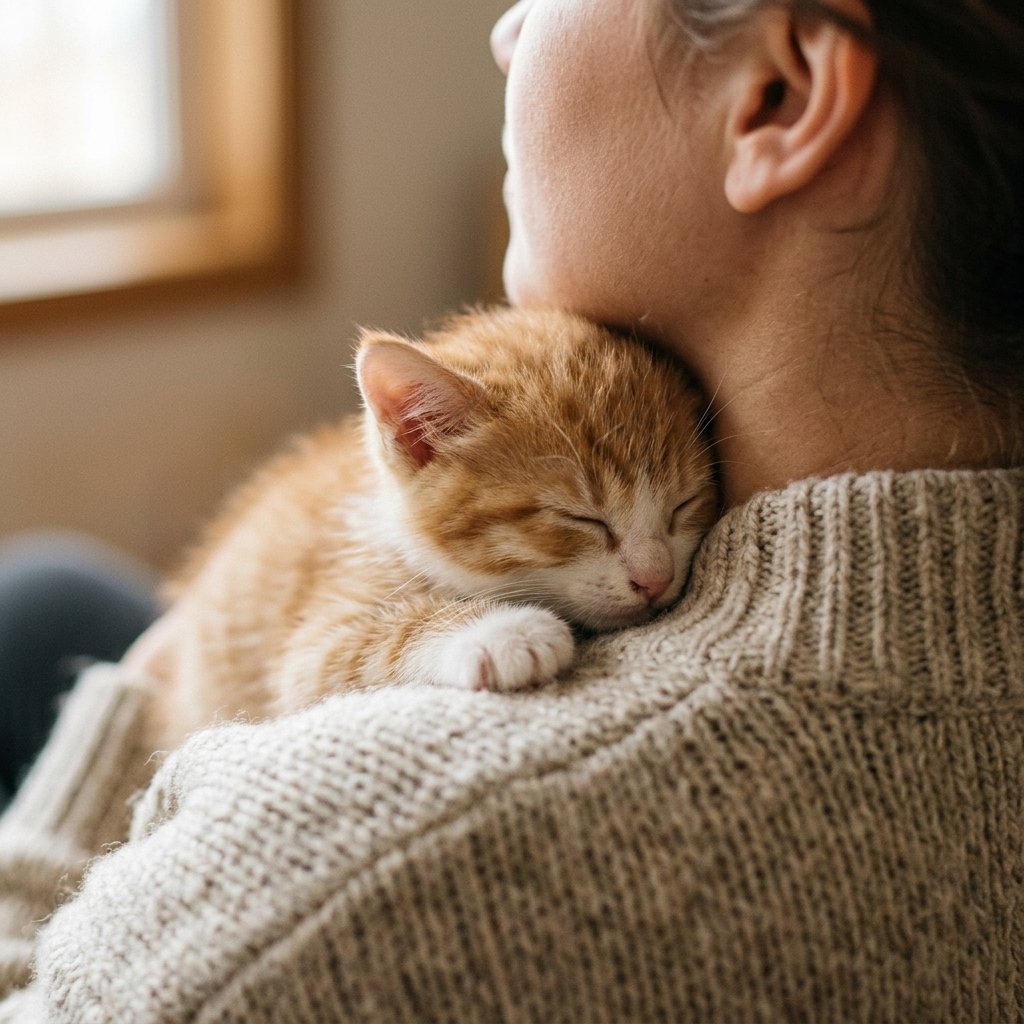
Cats rely heavily on scent to feel secure. When they sleep on you, they’re surrounded by your familiar smell, which is calming. They’re also leaving their own scent on you through their cheeks, paws and body, mixing your scents together. It’s a way of saying “you belong to our group.”
5. Your heartbeat and breathing are soothing
Many people think that cats like the sound and motion of a heartbeat, which may remind them of being close to their mother as kittens. While we can’t know exactly what a cat feels, the steady rhythm of your chest rising and falling is clearly relaxing for a lot of cats. It’s also one reason many cats prefer sleeping on your chest.
6. It’s part of a routine
Cats are creatures of habit. If you always sit on the sofa at 8 p.m. or go to bed at the same time each night, your cat learns exactly when and where you’ll be available. Once they’ve found a comfortable routine, they’ll stick to it.
7. You’re comfortable
Sometimes the answer is simply that you’re soft, you hold still and you don’t mind a cat on top of you. Many cats are happy to choose the most comfortable spot available, and your lap often wins.
8. They want your attention
A cat that climbs onto you while you’re busy with a laptop or phone may also be saying, “Hello, look at me.” Sleeping on you gets attention, which often means petting and a soothing voice.
9. They’re claiming you
Cats use scent marking to claim things as part of their territory. If you’ve noticed your cat kneading you before settling, that’s another way they mix their scent with yours and say you’re theirs. We cover this in more detail in our post on why your cat purrs, since kneading and purring often go together.
10. They’re a little anxious
Some cats seek extra closeness when stressed, whether due to a change at home, a new pet or separation worries. If your cat has suddenly become much clingier than usual, it may be a sign of stress or even illness. We’ll look at that below.
What Your Cat’s Sleeping Position Might Mean
Where your cat sleeps on you can offer small clues:
- On your chest or neck: maximum closeness, warmth and heartbeat. Often a sign of deep trust.
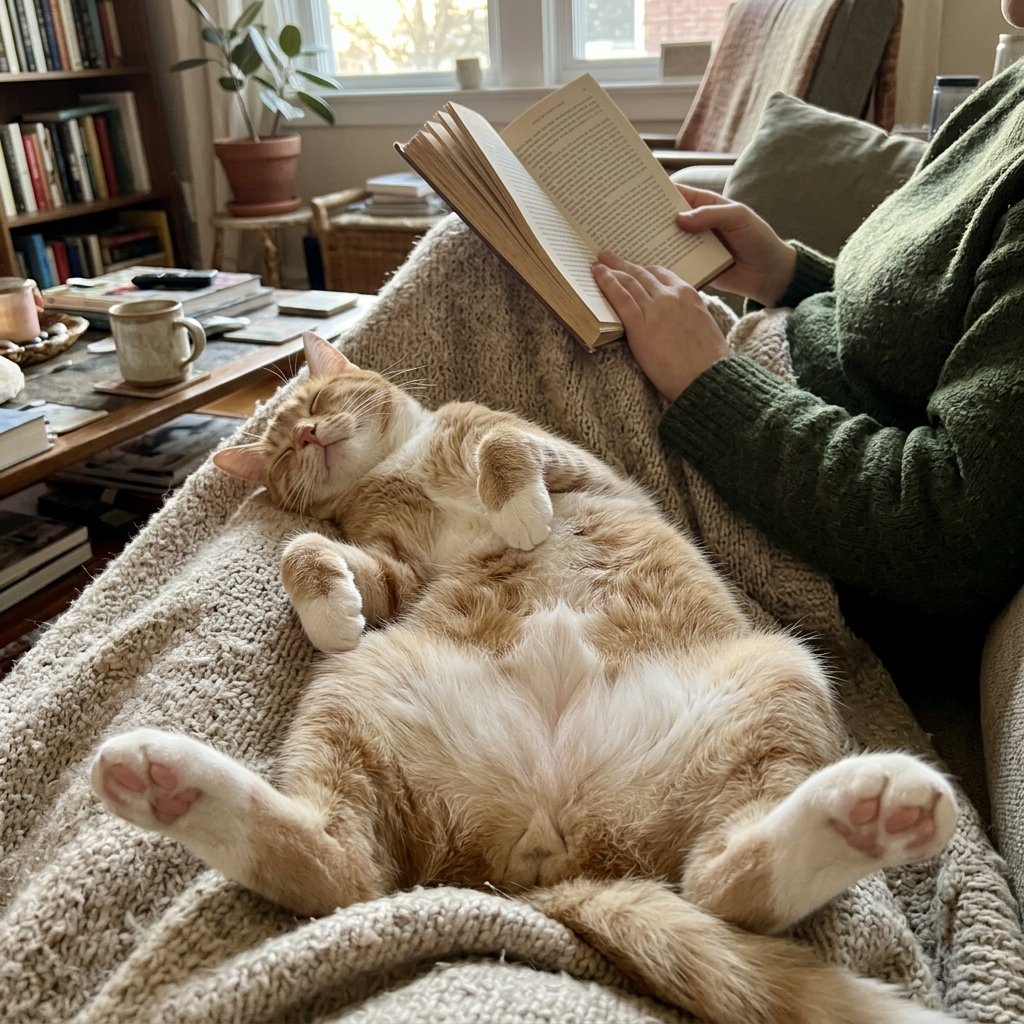
- On your lap: a classic choice for comfort and bonding.
- On your legs or feet: a bit more independence, while still staying close and warm.
- Curled next to your head or on the pillow: they like your scent and want to be near your face.
- On your shoulder: especially common in kittens, who may feel safe and secure up high.
These are only general patterns. Each cat has their own personality and favorite spots.
Is It Healthy to Let Your Cat Sleep on You?
For most people, sleeping with a cat is perfectly fine and can even feel calming. There are a few things worth knowing, though.
- Allergies and asthma: Cat allergens can build up in bedding and bedrooms, so if you’re sensitive, it may make symptoms worse. Talk to your doctor if you’re concerned.
- Hygiene and parasites: Keep your cat up to date on flea and parasite prevention and vet visits. The CDC’s healthy pets page has guidance on staying safe around pets, especially if someone in the home has a weakened immune system.
- Your sleep quality: A cat who wanders, plays or wakes you at 4 a.m. can disrupt sleep. That’s more about their schedule than their affection.
- Safety: Be careful with very young babies. Keep cats away from infants’ sleeping areas.
It’s also worth keeping your cat’s overall health in mind. A cat who is healthy, well-fed and well-exercised tends to sleep more calmly. Our guides on the best food for cats and healthy habits for pets cover routines that support this.
When Sleeping on You Might Signal a Problem
Usually, a cat sleeping on you is perfectly normal. But a sudden, major change is worth noticing. See your vet if your cat:
- Suddenly becomes much more clingy or, on the other hand, stops wanting contact
- Sleeps much more than usual or seems lethargic
- Eats or drinks less, or uses the litter box differently
- Shows other signs of pain, such as hiding, limping or avoiding touch
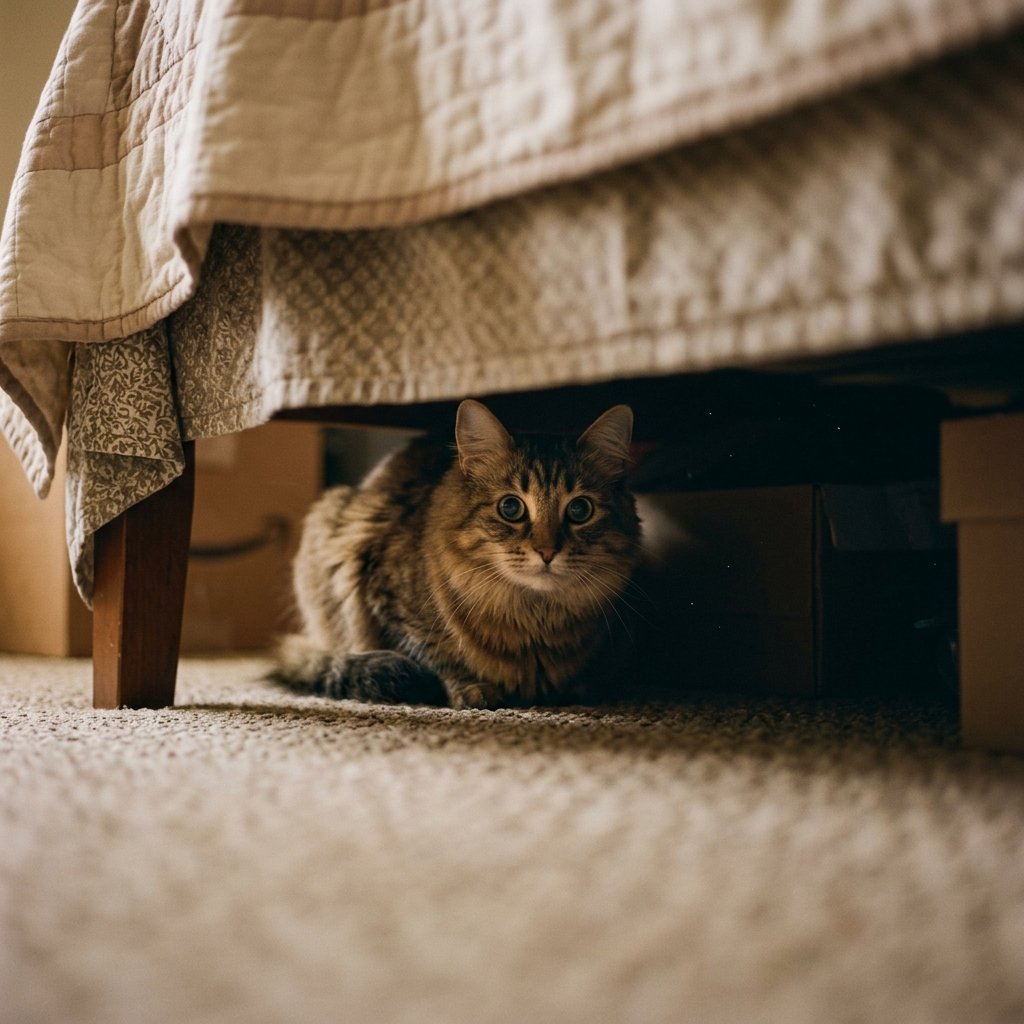
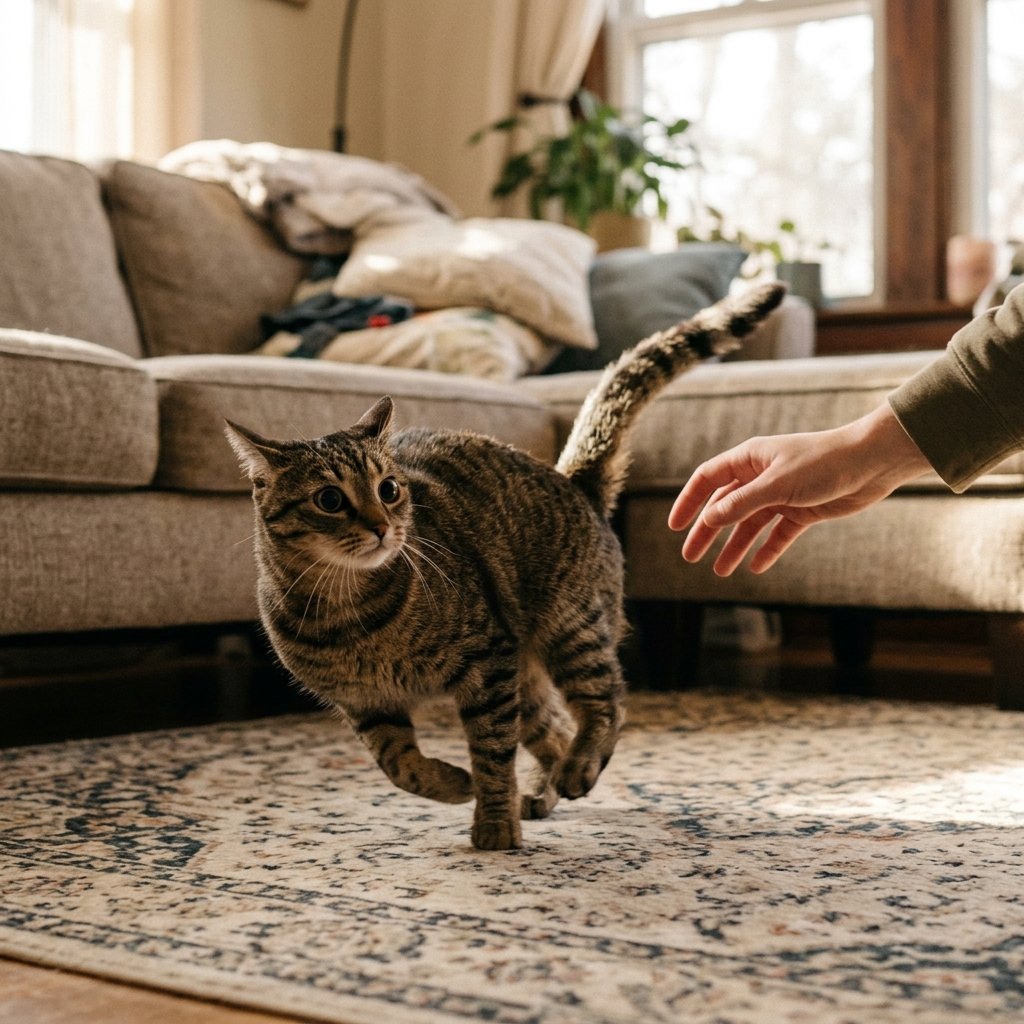
Cats are experts at masking illness, and changes in behavior are often the first sign. The Cornell Feline Health Center offers reliable information on feline health. If your cat does the opposite and starts avoiding you, see our post on why your cat runs away from you and our guide to why cats hide.
What If You Don’t Want Your Cat Sleeping on You?
Maybe you love your cat but need to be able to move, or sleep, in peace. Here’s how to redirect them without hurting their feelings.
Offer an equally tempting alternative
Put a soft, warm bed or blanket next to you on the sofa or at the foot of your bed. A heated cat bed or a self-warming pad can be very tempting. Reward your cat with praise or a treat when they choose it.
Play before bedtime
A short play session in the evening, followed by a small meal, mimics the natural hunt, catch and eat cycle and helps cats settle into sleep instead of seeking attention. It also reduces nighttime wake-up calls.
Be consistent
If you don’t want your cat on your pillow, gently move them each time, without scolding, and offer the alternative. Mixed messages will confuse them. If you’re not sure how to build consistent habits, our guide to pet care tips for beginners has useful tips.
Don’t reward night-time attention-seeking
If your cat wakes you up, avoid feeding or playing in the middle of the night, as it teaches them that waking you works. A timed feeder or a small snack before bed can help.
Close the bedroom door if necessary
If your cat is a persistent night-time disturber, sometimes the simplest solution is to keep them out, as long as they have comfortable bedding, food, water and a litter box elsewhere. Some cats protest at first, but most adapt within a week or two.
For more on understanding feline behavior, International Cat Care, the Cat Friendly Homes resources and the ASPCA’s cat care pages are all helpful.
Quick Answers
Why does my cat sleep on me and not my partner?
Cats often pick one favorite person, usually the one who feeds them, plays with them or who has the calmest energy. It doesn’t mean they dislike others.
Why does my cat sleep on my chest?
The warmth, steady heartbeat and closeness all contribute. It’s often a sign of deep trust.
Does my cat sleeping on me mean it loves me?
Very likely. Cats don’t sleep close to someone they don’t trust.
Why does my cat sleep on me when I’m sick?
Some cats seem to sense changes in routine or body temperature and become more attentive. It’s most likely a mix of comfort-seeking and noticing you’re home and still.
Is it bad to let my cat sleep on my face?
It’s not recommended. It can disturb your sleep and spread allergens near your airways. Gently move them to another spot.
How many hours do cats sleep a day?
Most adult cats sleep around 12 to 16 hours a day, often in short naps.
The Bottom Line
When you ask why does my cat sleep on me, the best answer is a mix of warmth, safety, comfort and love. It’s a lovely sign that your cat feels secure and bonded with you. Enjoy the cuddles, keep an eye out for sudden behavior changes and provide cozy alternatives if you ever need your lap back.
If your cat’s sleeping or clinginess changes suddenly, or you notice signs of illness, speak with your veterinarian.

Discussion 0 comments
Share your thoughts — every perspective adds value.