

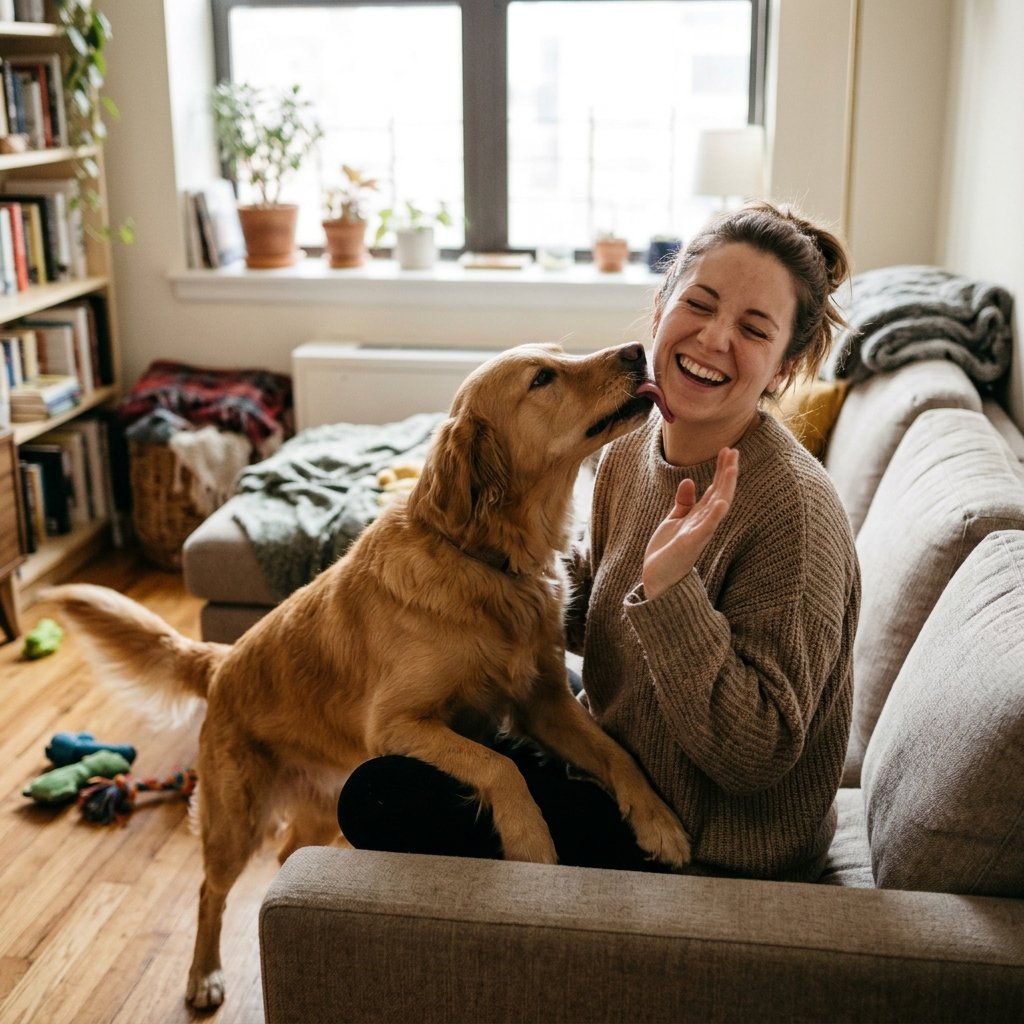
You sit down on the couch, and within seconds there is a warm tongue on your hand. Then your arm. Then, if you are not quick enough, your face. If this happens every day, it is natural to ask: why does my dog lick me so much?
The short answer is that licking is one of the most basic ways dogs communicate. It starts in the first days of life and never really goes away. Most of the time it is a sign of affection, attention-seeking or simple curiosity. Sometimes, though, a dog that licks a lot is telling you something about stress, boredom or even their health.
This guide walks through the most common reasons dogs lick their people, how to tell normal licking from a problem, and what to do if the licking has become too much for you.
The Quick Answer
Dogs lick people to show affection, ask for attention, explore taste and smell, calm themselves down, and show respect within the relationship. Licking also releases feel-good chemicals in the dog’s brain, so many dogs simply enjoy it. If the licking is sudden, constant, or comes with other changes such as restlessness, skin problems or appetite changes, it is worth talking to your vet.
Why Does My Dog Lick Me So Much? 10 Common Reasons
1. It Is How They Show Affection
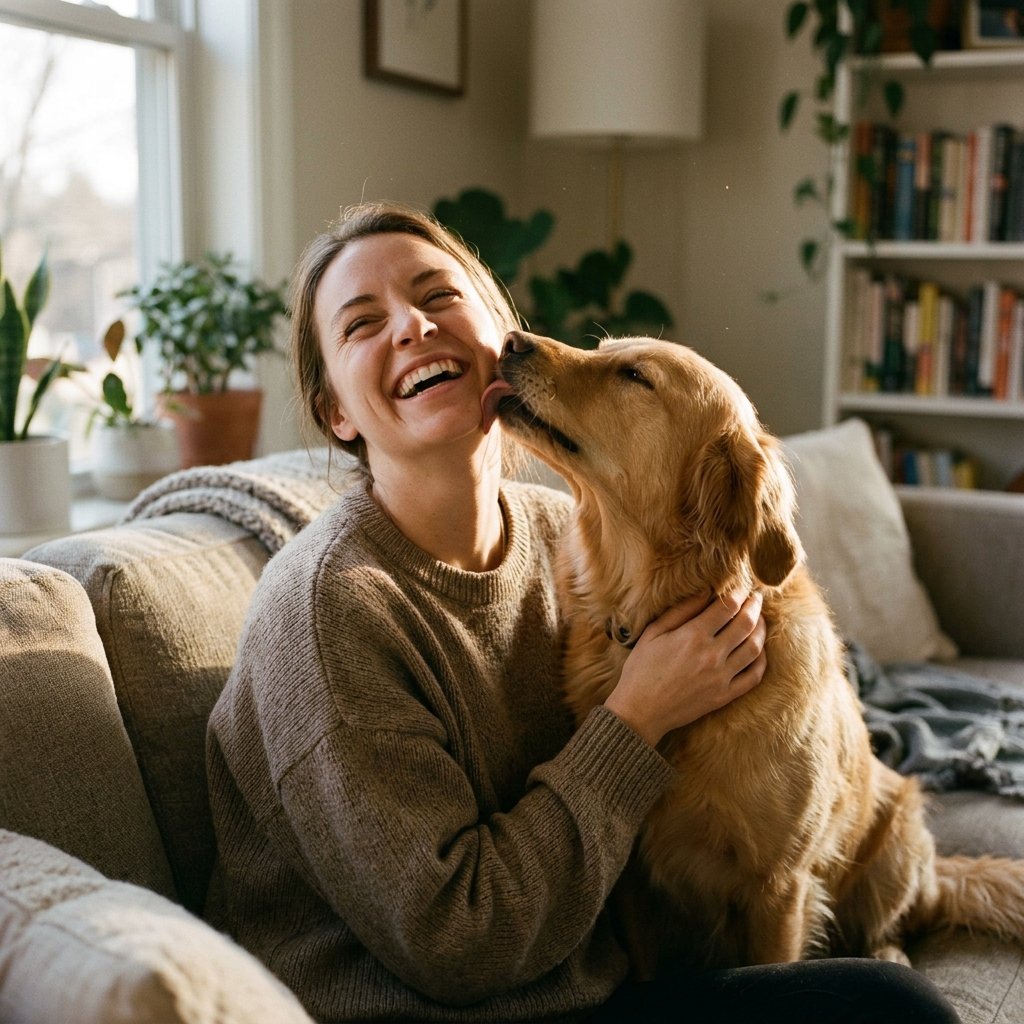
Puppies are licked by their mother from birth. She cleans them, comforts them and keeps them close with her tongue. Puppies lick her back and lick their littermates. Licking becomes tied to closeness and safety very early, so it is no surprise that many adult dogs use it to bond with the people they love.
If your dog licks you calmly while leaning into you, wagging loosely, or settling down next to you afterwards, affection is the most likely explanation. It is often part of the same attachment that makes dogs follow their owners everywhere.
2. They Want Your Attention
Dogs learn fast. If licking your hand gets you to look at them, talk to them, laugh or pet them, they will repeat it. Even pushing them away is a kind of attention. Over time, licking can turn into a reliable “hey, notice me” signal.
This is one of the most common reasons a dog licks a lot. It usually shows up when you are busy: on your phone, working at a desk, or chatting with someone else.
3. You Taste Interesting
Human skin is salty, especially after exercise or on a hot day. Hands carry traces of food, lotion and everything you touched during the day. A dog’s sense of taste and smell is far more detailed than ours, so your skin is full of information. Some dogs lick more after you come home from the gym or the kitchen for exactly this reason.
4. They Are Gathering Information About You
Dogs explore the world through their nose and mouth. Licking helps them pick up scents and chemical signals. When you return home after being out, your dog may lick you to “read” where you have been, who you met and what you touched.
5. It Is a Greeting
In dog groups, licking around the mouth and face is a common greeting, especially from younger or less confident dogs toward older ones. Many dogs carry this habit into their relationship with people. If the licking is strongest when you walk through the door, it is probably a greeting ritual. Dogs that greet this way often jump too, and teaching a calmer greeting can help with both.
6. It Is an Appeasement Signal
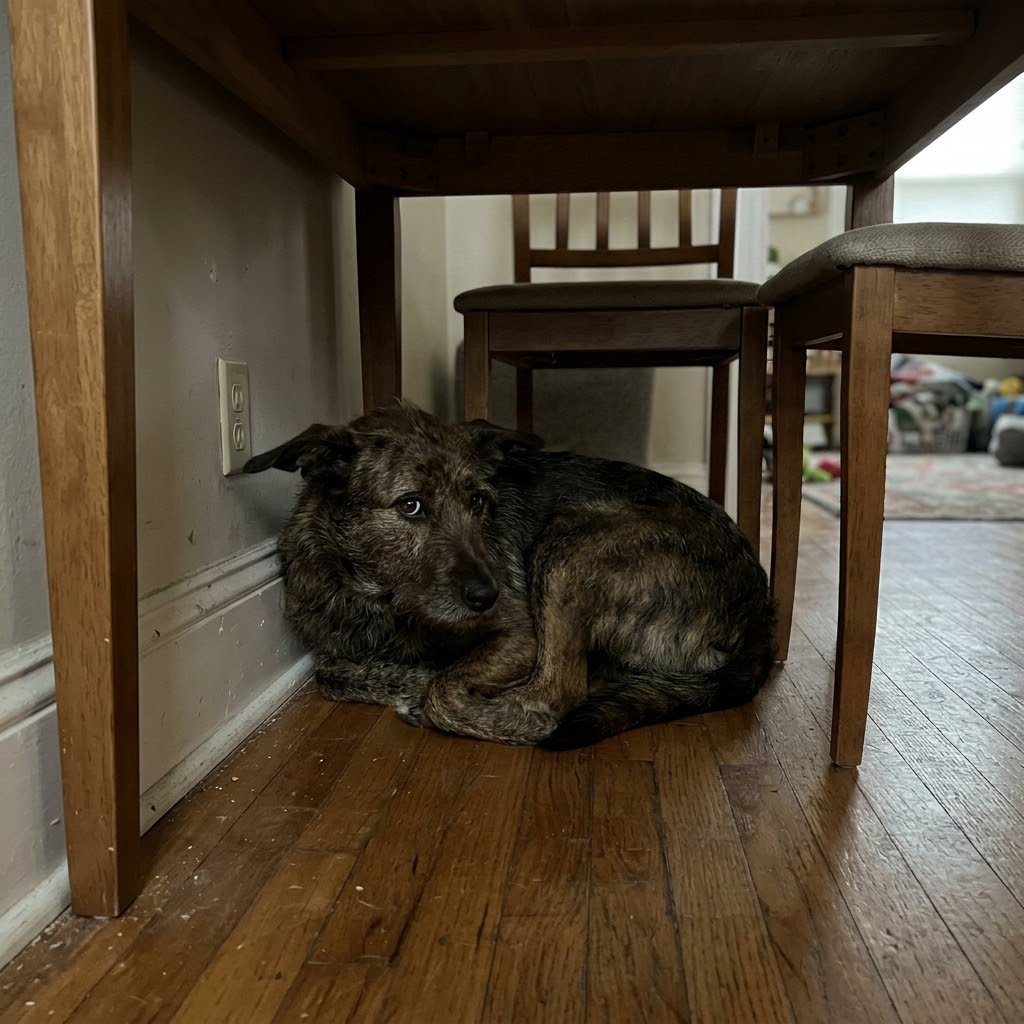
Licking can also be a polite “I mean no harm” signal. A dog may lick your hand or face after being told off, when you sound tense, or when they feel unsure. Look at the rest of the body: lowered ears, a tucked tail, a crouched posture or looking away suggest the licking is about calming the situation, not just love.
7. It Calms Them Down
Licking releases endorphins and helps dogs relax, which is why many dogs lick themselves, blankets or people when they feel anxious. If your dog licks you a lot during storms, car rides, visitors or when you are about to leave the house, the licking may be a way to self-soothe.
8. They Are Bored or Under-Stimulated
A dog without enough exercise or mental work will find something to do. For some dogs, that is chewing. For others, it is licking. If the licking happens mostly on quiet days or after long periods alone, try adding more activity. These indoor activities for dogs are a good place to start.
9. They Are Trying to Groom You
Dogs groom each other as a social behavior. If your dog licks a small scratch, your hair or the same patch of skin over and over, they may be “cleaning” you the way they would clean a companion.
10. Something Is Not Right
Licking that suddenly increases, becomes frantic, or is directed at everything (you, the floor, furniture, their own paws) can be linked to nausea, stomach upset, dental pain, skin allergies or anxiety. In some dogs, constant licking becomes a compulsive habit. This is the reason to watch for, and it is covered in more detail below.
What Your Dog’s Licking Might Mean: A Quick Guide
The context around the licking matters more than the licking itself. Use this table as a rough guide:
| When it happens | What it often means |
|---|---|
| When you come home | Greeting and gathering information about where you have been |
| While you are relaxing together | Affection and bonding |
| When you are busy or ignoring them | Attention-seeking |
| After exercise or cooking | Interest in salt, sweat or food smells |
| After being scolded, or with ears back | Appeasement, trying to calm things down |
| During storms, visitors or before you leave | Stress or anxiety |
| Suddenly, constantly, at people and objects | Possible health or compulsive issue |
When Is Licking Too Much?
There is no exact number of licks that counts as “too much”. What matters is whether the behavior is changing, whether it is hard to interrupt, and whether it comes with other signs. Book a vet visit if you notice any of the following:
- Licking that started suddenly or has increased a lot in a short time
- Licking of the air, floor, walls or furniture as well as people
- Constant licking of their own paws or legs, red or bald patches, or sores
- Swallowing a lot, drooling, gulping or eating grass along with the licking (possible nausea)
- Bad breath, pawing at the mouth or dropping food (possible dental pain)
- Licking that your dog cannot be easily distracted from
Long-term licking of one spot on the body can lead to a skin condition called acral lick dermatitis, sometimes called a lick granuloma. You can read more about it in this overview of acral lick dermatitis in dogs. Your vet can check for allergies, pain, stomach issues and anxiety, and help you work out a plan.
Is It Safe to Let Your Dog Lick You?
For most healthy adults, a lick on the hands or arms is low risk. Dog mouths do carry bacteria, though, and some of them can pass to people. It is sensible to:
- Avoid letting your dog lick your mouth, nose, eyes or any open wounds
- Wash your hands after a licking session, especially before eating
- Be more careful with babies, older adults and anyone with a weakened immune system
- Keep your dog up to date on vet checks, parasite control and dental care
Regular care such as brushing your dog’s teeth also helps keep their mouth healthier.
How to Stop Your Dog From Licking You So Much
If the licking is normal but simply too much for you, you can reduce it without punishing your dog. Punishment can make a dog more anxious, which may increase licking. Instead, try these steps:
- Rule out health problems first. If anything on the warning list above sounds familiar, start with the vet.
- Stop rewarding it. When licking starts, calmly stand up or move your hand away for a few seconds. Do not talk, laugh or push. The goal is for licking to make attention disappear.
- Reward the behavior you want. When your dog sits or lies quietly next to you, give calm praise, a gentle stroke or a treat. Positive reinforcement works far better than telling a dog off.
- Give the mouth a job. Offer a chew toy, a lick mat or a food puzzle when your dog is most likely to lick, such as in the evening or while you work.
- Teach an alternative cue. A simple “sit”, “touch” (nose to your hand) or “go to your bed” gives your dog something else to do. Practice it when the dog is calm before using it during licking moments.
- Increase exercise and enrichment. Walks, sniffing games and short training sessions use up energy that might otherwise go into licking.
- Work on stress if that is the cause. Build calm routines, keep departures low-key, and talk to your vet or a qualified behavior professional if anxiety seems to drive the licking.
Be patient and consistent. Everyone in the household should respond the same way, or your dog will keep trying the people who still reward the licking. Inconsistency is one of the most common dog training mistakes.
Should You Stop Your Dog Licking Completely?
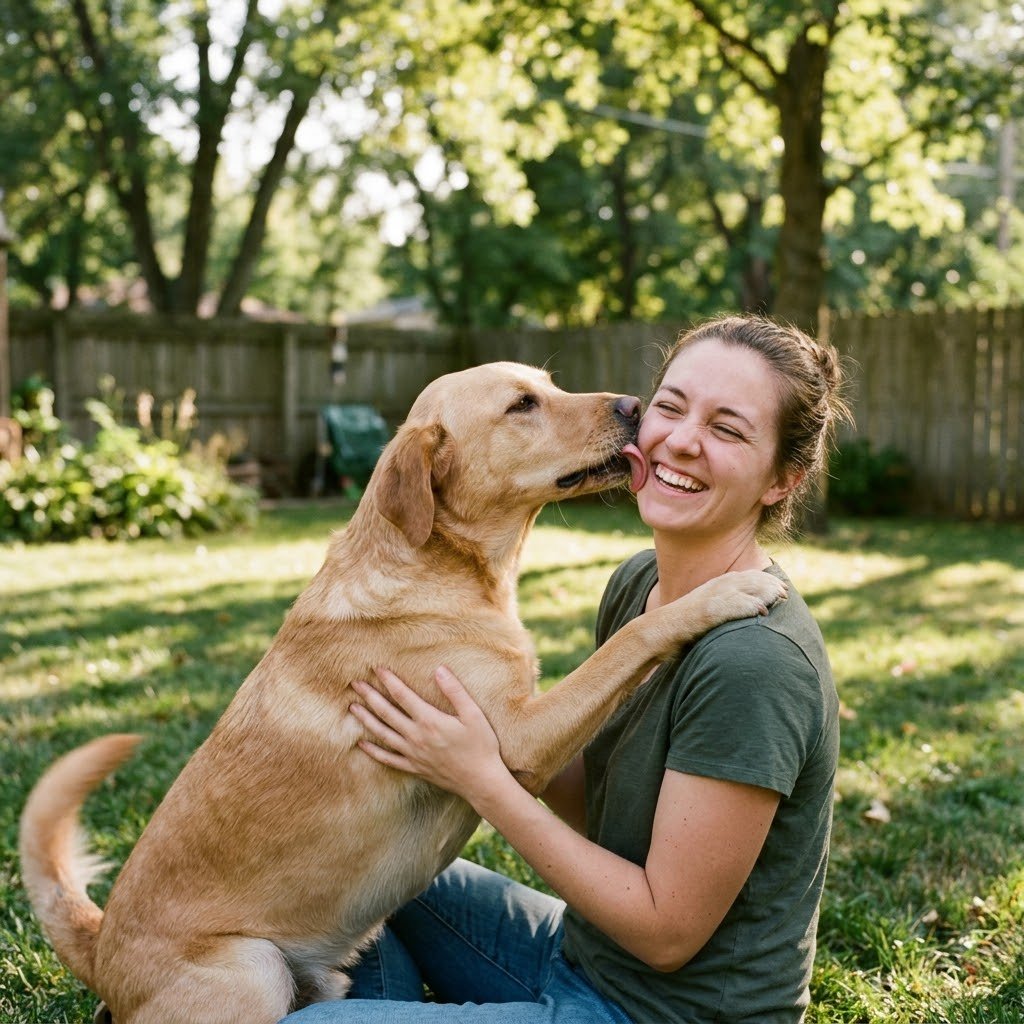
Not necessarily. If you enjoy the occasional lick and your dog is healthy and relaxed, there is no need to get rid of the behavior. Many owners simply set limits, such as “no face licks”, and redirect when it goes too far. The aim is a balance that works for both of you, not a dog that never shows affection this way.
For more on reading your dog’s signals, the UK Kennel Club has a helpful article on why dogs lick, and our guide to common dog behavior problems covers other habits that can become too much.
Frequently Asked Questions
Why does my dog lick me more than anyone else?
Dogs usually lick the person they are most attached to, the person who responds most to the licking, or the person who spends the most time with them. It can also come down to taste: lotions, sweat or food smells on one person may be more interesting than on another.
Does licking mean my dog loves me?
Often, yes. Licking is closely linked to bonding and comfort in dogs. But it is not the only meaning, so look at the context and body language. A relaxed, wiggly dog licking you is very different from a tense dog licking with its ears pinned back.
Why does my dog lick me when I cry or feel upset?
Dogs are sensitive to changes in our voice, posture and scent. Many dogs respond to an upset owner by coming close and licking, which may be a way of comforting you, calming themselves, or simply checking what has changed.
Why does my dog lick my feet?
Feet are salty and carry a lot of scent, which makes them very interesting to dogs. Foot licking is usually harmless, but if it becomes obsessive it can be redirected in the same way as other licking.
Why does my dog lick me in the morning?
Morning licking is often a greeting, a request for breakfast or a walk, or a response to the salty skin you have after sleeping. If it happens right as you wake up, your dog has probably learned it gets you out of bed.
Why does my dog lick me so much at night?
Evenings are usually when the house gets quiet and dogs settle down. Licking at night is often a way to relax before sleep, a bonding ritual, or a sign your dog still has energy left over from the day. A short walk or a chew before bed can help.
Is excessive licking a sign of anxiety?
It can be. Licking releases calming chemicals, so anxious dogs often lick more. If the licking happens mostly in stressful situations or when you are about to leave, anxiety is worth considering, and a vet can help rule out medical causes.
Final Thoughts
So, why does my dog lick me so much? In most cases it is a mix of love, habit, curiosity and a learned way to get your attention. Pay attention to when it happens and what the rest of your dog’s body is saying. If the licking is new, frantic or comes with other changes, let your vet take a look. If it is just a bit too much, calm redirection and plenty of exercise will usually bring it down to a level you are both happy with.

Discussion 0 comments
Share your thoughts — every perspective adds value.