

Here’s a confession that most trainers will make if you buy them a coffee: nearly every dog owner makes the same mistakes. Not because they’re lazy or clueless, but because dog training is full of things that feel logical and quietly backfire.
You repeat a command louder. You scold your dog when you find the mess. You let them pull “just this once” because you’re running late. And then you wonder why your dog seems stubborn.
The good news is that most common dog training mistakes are easy to fix once you spot them. Here are the big ones, why they happen and what to do instead.
Mistake 1: Punishing After the Fact
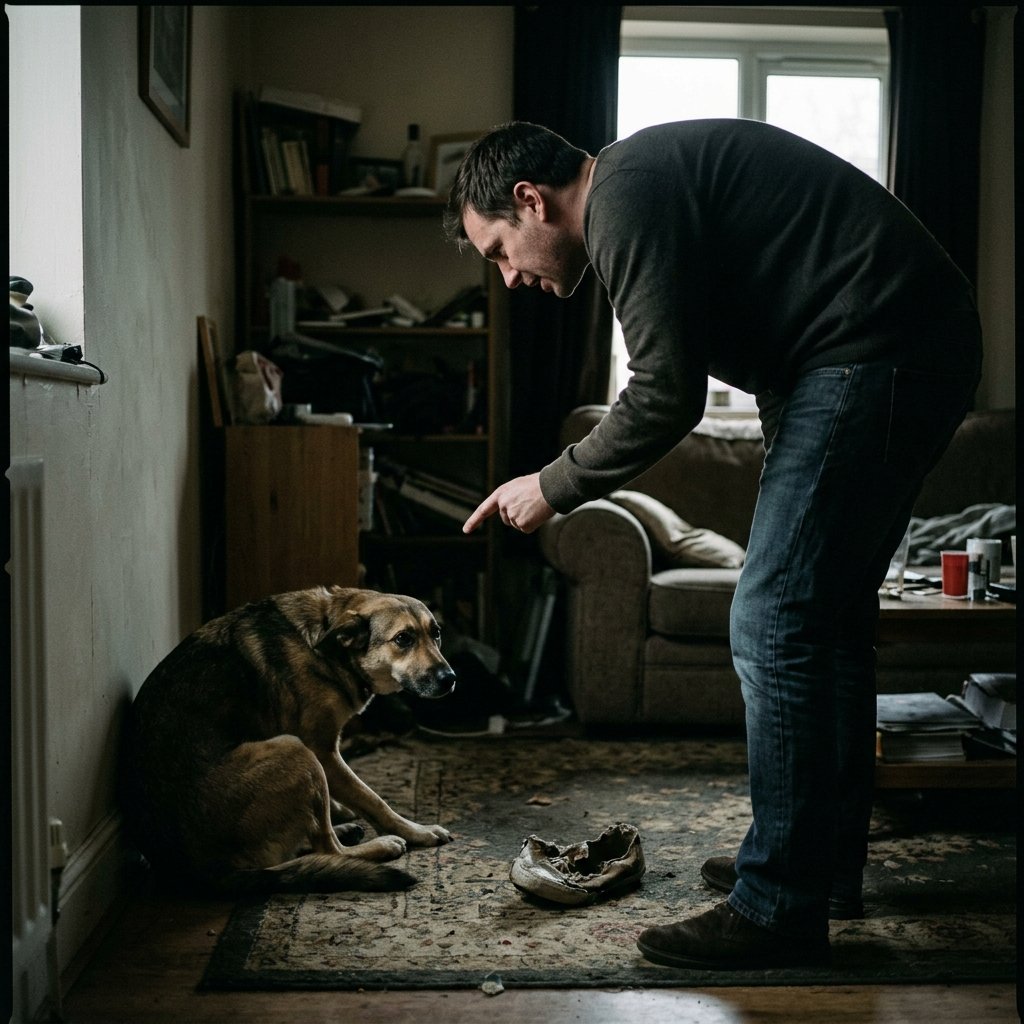
You walk in and find a chewed shoe. You hold it up and tell your dog off, and they look guilty. Surely that proves they understand, right?
Not quite. That “guilty look” is usually a dog reacting to your tone and body language, not remembering what they did two hours ago. Dogs link consequences to what’s happening in the last few seconds. A scolding long after the event just teaches them that you’re unpredictable and a little bit scary.
Do this instead: Clean up calmly and focus on prevention. Put tempting things out of reach, give your dog something better to chew and reward them when they pick the right option. If chewing is a regular problem, our post on why your dog chews everything explains how to find the cause.
Mistake 2: Being Inconsistent
If “off” means “get off the sofa” on Monday, “stop jumping on me” on Tuesday and nothing at all when you’re tired on Friday, your dog has no way to learn it. Dogs thrive on clear, repeatable patterns.
The same goes for household rules. If one person lets the dog on the couch and another doesn’t, your dog will just try their luck with whoever’s more likely to say yes.
Do this instead: Hold a quick family meeting. Agree on cue words, rules and rewards, and write them on the fridge if you need to.
Mistake 3: Repeating Commands Over and Over
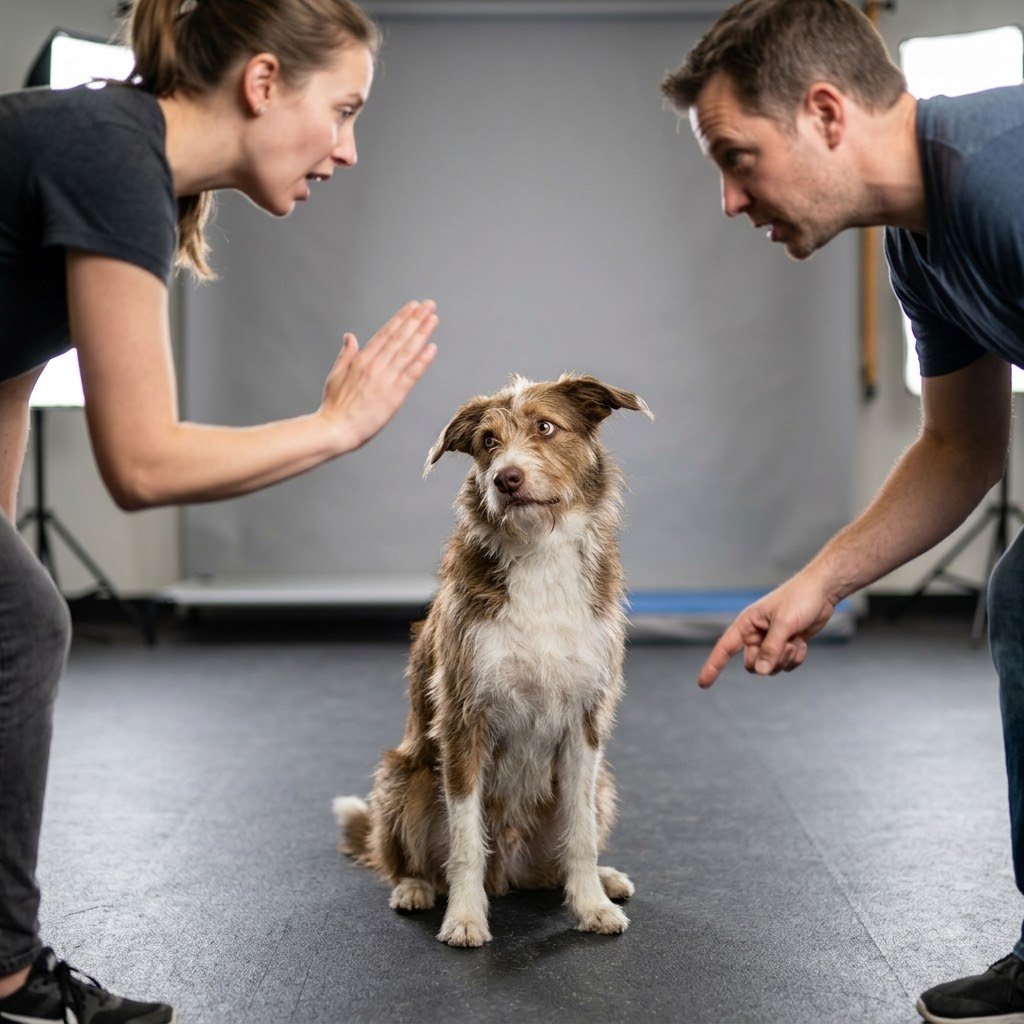
“Sit. Sit. SIT. Sit down. I said sit!” By the fifth time, your dog has learned that “sit” really means “wait until the human gets loud.” You’ve accidentally taught them that the first few requests are optional.
Do this instead: Say the cue once, calmly. Count to three in your head. If nothing happens, make it easier (use a lure, get closer, reduce distractions) rather than repeating it. Our basic dog commands training plan shows a gentle way to build each skill.
Mistake 4: Training Sessions That Are Too Long
Dogs, and especially puppies, have a short attention span. A 45-minute session usually ends with a frustrated owner and a bored, wriggly dog.
Do this instead: Keep sessions to about five minutes, a few times a day. End while your dog is still enjoying it, ideally with something easy they can succeed at.
Mistake 5: Poor Reward Timing
A treat delivered five seconds late rewards whatever your dog was doing five seconds ago. If your dog sits, then gets up, and then gets the treat, you’ve just rewarded getting up. It sounds picky, but timing is the single biggest difference between training that works and training that drags on.
Do this instead: Use a marker word like “yes” the instant your dog does the right thing, then deliver the treat. Practice your timing with a friend or a stuffed toy so your hands are quick.
Mistake 6: Letting Pulling Pay Off
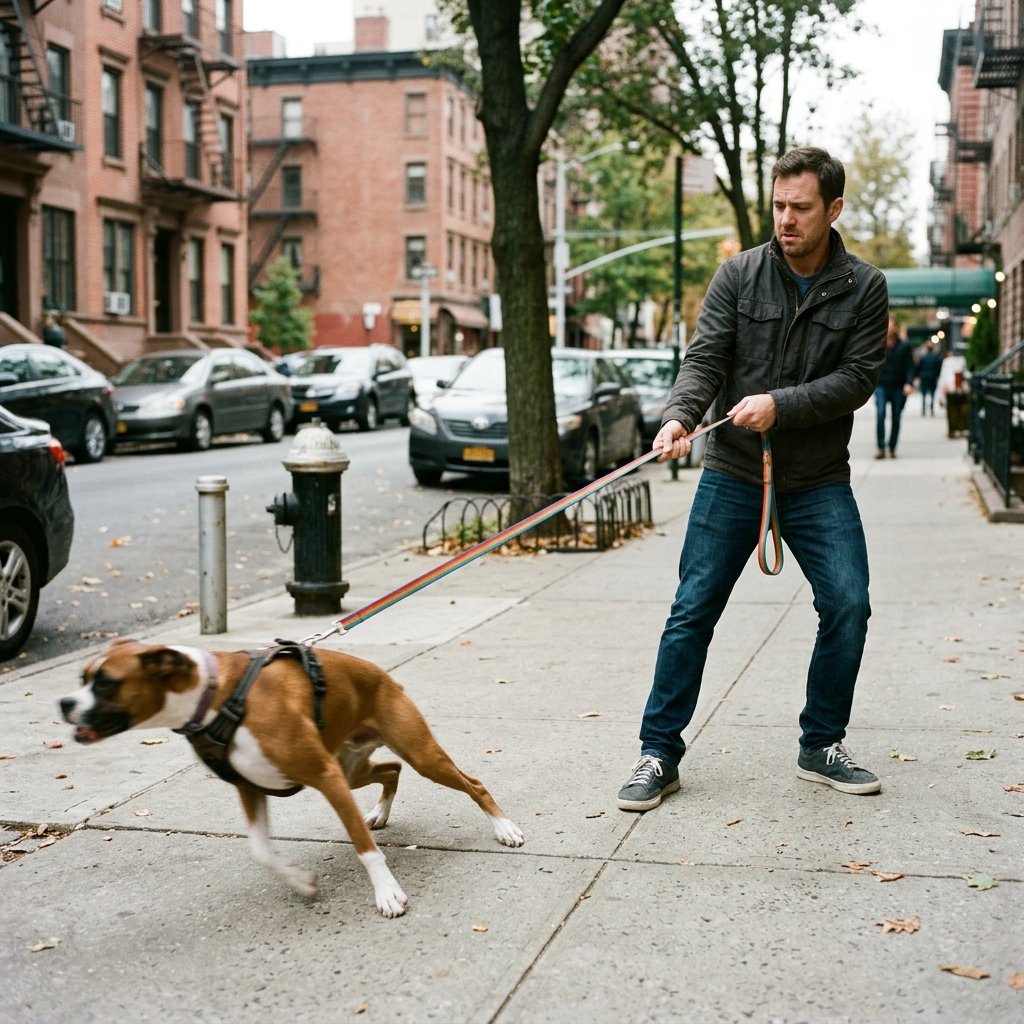
It happens to everyone. You’re late, the dog pulls toward the park, and you let them drag you along. Every time that works, you’re teaching your dog that tension equals progress.
Do this instead: Stop when the leash goes tight, and move only when it’s slack. Reward your dog for staying near you. Our full guide to how to leash train a dog has the step-by-step method, and it’s worth the effort.
Mistake 7: Accidentally Rewarding Unwanted Behavior
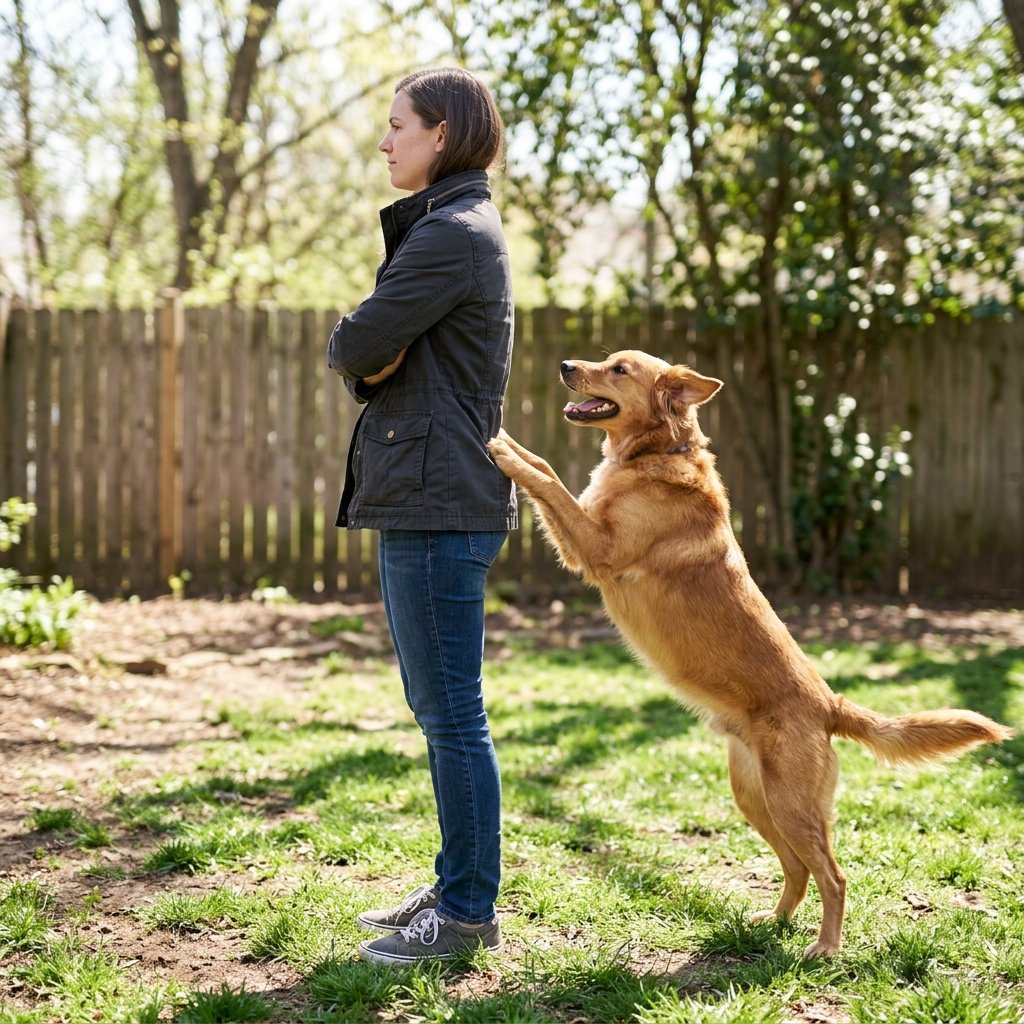
This is the sneakiest mistake on the list. Your dog barks at you at dinner, so you give them a bit of chicken to make them stop. Your dog jumps up, and you push them away and say “no,” which, for some dogs, is the attention they were after. The behavior works, so it keeps coming back.
Do this instead: Ask yourself what your dog is getting out of the behavior. Then take that away, and reward a better alternative. For barking in particular, our guide to how to stop a dog from barking walks through this in detail.
Mistake 8: Expecting Too Much, Too Soon
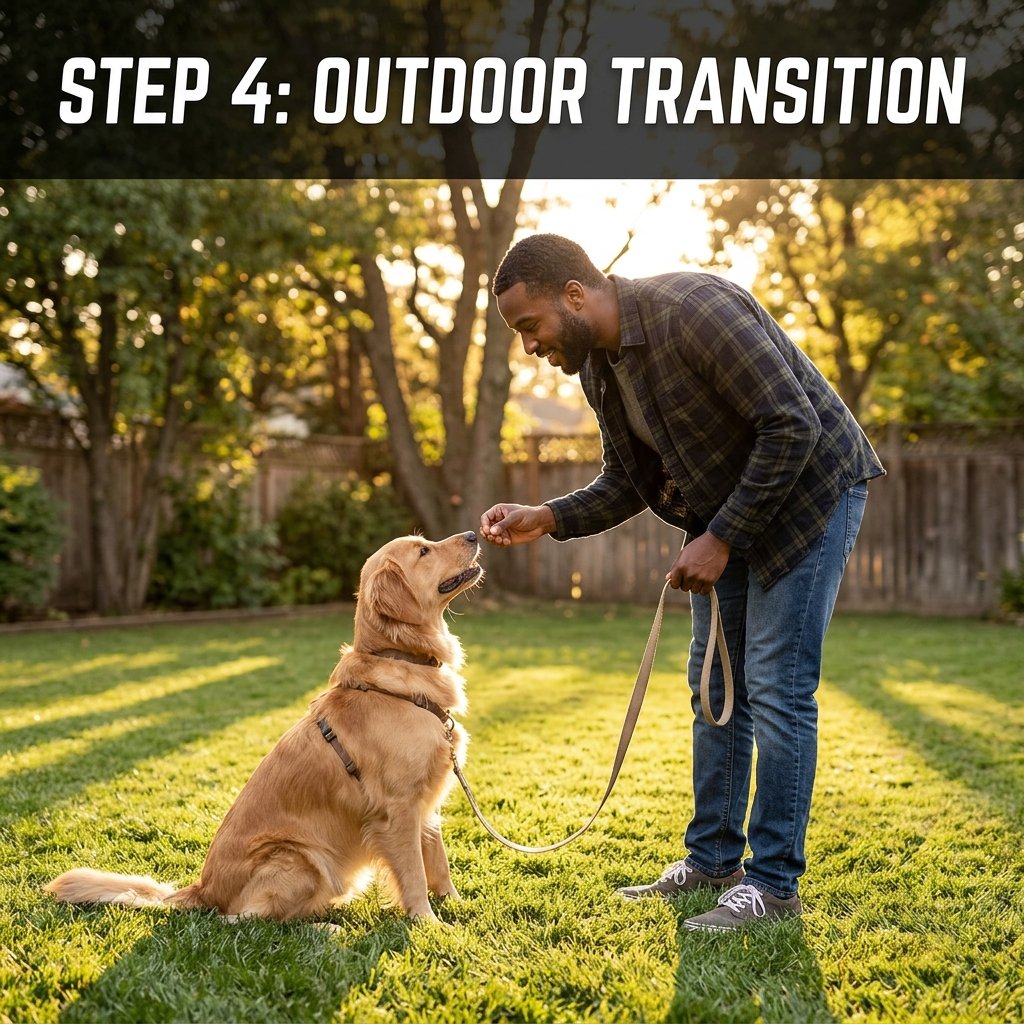
Your dog sits perfectly in the living room, so you expect it at the busy park, too. When they don’t, you assume they’re being stubborn. In reality, dogs don’t automatically transfer skills to new places. A “sit” in the kitchen and a “sit” next to a squirrel are two very different challenges.
Do this instead: Build difficulty gradually. Change only one thing at a time, whether that’s the place, the distance, the time or the distractions. If your dog struggles, go back a step. For example, our guide on how to teach a dog to stay breaks this down into duration, distance and distraction.

Mistake 9: Using “Come” to End the Fun or Deliver Bad News
If your dog only hears “come” before a bath, a nail trim or the end of playtime at the park, they’ll quickly learn to ignore it, or to run the other way.
Do this instead: Make coming to you the best thing that happens. Call your dog, give a treat or a quick game, and often let them go back to what they were doing. Occasionally clip the leash on and then release them again. That way, “come” doesn’t always mean the fun is over.
Mistake 10: Skipping Exercise and Mental Stimulation
A dog with a mountain of unspent energy isn’t going to focus on a down-stay. Many “training problems” are really exercise problems. A bored, under-exercised dog will invent their own entertainment, usually in ways you won’t like.
Do this instead: Give your dog a walk, a sniff session or a game of fetch before training. And think about the whole day, not just training time. Our guide to healthy habits for pets has easy routines to build in.
Mistake 11: Skipping Socialization
Puppies go through a sensitive period for learning about the world during their first few months. Dogs who miss out on positive experiences with people, other dogs, noises and places can grow up fearful or reactive.
Do this instead: Introduce new things slowly and positively, with treats and plenty of space. Don’t force interactions or flood a nervous dog. Ask your vet when and where it’s safe to take your puppy out while vaccinations are being completed. For early steps, see our puppy training guide.
Mistake 12: Ignoring Your Dog’s Body Language
Dogs communicate constantly. Yawning, lip licking, turning away, a tucked tail or a stiff, frozen posture can all signal stress. When we miss these signals and push on, we can create fear or trigger a bite.
Do this instead: Watch your dog as much as you watch the clock. If they look stressed, make things easier, increase distance or end the session. Training should feel safe and fun.
Mistake 13: Relying on Aversive Tools
Choke chains, prong collars, shock collars and spray devices can stop behavior in the moment, but they don’t teach a dog what to do instead. They can also create fear and anxiety, and they can make existing problems worse. The American Veterinary Society of Animal Behavior discourages aversive methods and explains the evidence in its position statements.
Do this instead: Use reward-based methods: treats, praise, play and clear communication. They’re effective, and they strengthen your bond instead of straining it.
Mistake 14: Never Fading the Treats (or Never Using Them at All)
Some owners feed treats constantly, and their dog only listens when food is visible. Others refuse to use treats on principle, and wonder why their dog doesn’t seem motivated. Both extremes cause trouble.
Do this instead: Start with frequent rewards, then gradually reduce them and mix in praise, toys and real-life rewards, like going through a door. Keep a few treats on hand for new or tough situations.
Mistake 15: Giving Up Too Early (or Too Late Asking for Help)
Training isn’t a straight line. Dogs have good days and bad days, and it’s normal for progress to stall. The mistake is quitting before the habit is solid, or struggling for months with a serious problem like aggression, severe anxiety or intense fear before getting help.
Do this instead: Track your progress, celebrate small wins and ask for help if something isn’t improving after a few weeks. A certified positive-reinforcement trainer or a vet behaviorist can often spot what’s holding you back in one session. Our overview of common dog behavior problems is a good place to figure out when it’s time to call for backup.
A Quick Mistake-Proofing Checklist
- Reward within a second or two of the right behavior
- Say cues once and keep them consistent across the household
- Keep sessions short and end on a success
- Exercise your dog first
- Prevent mistakes by managing the environment
- Build difficulty slowly, one change at a time
- Watch your dog’s body language
For more on getting started, our guides on basic dog commands and how to potty train a puppy cover two of the most common early challenges. The AKC’s training library, the ASPCA’s dog care pages and the AVMA’s pet owner resources are also handy for further reading.
Quick Answers
What is the biggest dog training mistake?
Probably inconsistency, closely followed by punishing after the fact. Dogs need clear, predictable rules and rewards that arrive at the right time.
Is it too late to train my adult dog?
No. Dogs of any age can learn new things. Older dogs may need more repetitions to replace old habits, but they can absolutely improve.
How often should I train my dog?
A few short sessions a day, about five minutes each, works better than one long session.
Do I always need treats?
Not forever. Use them heavily when teaching, then gradually mix in praise, toys and life rewards.
Why does my dog ignore me outside?
Because the world outside is more exciting, and the skill hasn’t been practiced there yet. Go back to easier steps, use better treats and increase difficulty slowly.
When should I hire a trainer?
If you see fear, aggression or severe anxiety, or if you’ve been consistent for a few weeks and still aren’t making progress. Look for someone who uses reward-based methods.
The Bottom Line
You’ll make mistakes. Everyone does, including professionals. What matters is noticing them, adjusting and staying kind and consistent. Dogs are remarkably forgiving. Fix the timing, drop the scolding, keep sessions short, and reward the behavior you want. In a few weeks, you’ll likely wonder why training ever felt so hard.
If your dog shows signs of fear, aggression or pain, speak with your veterinarian or a qualified behavior professional.


Discussion 0 comments
Share your thoughts — every perspective adds value.