

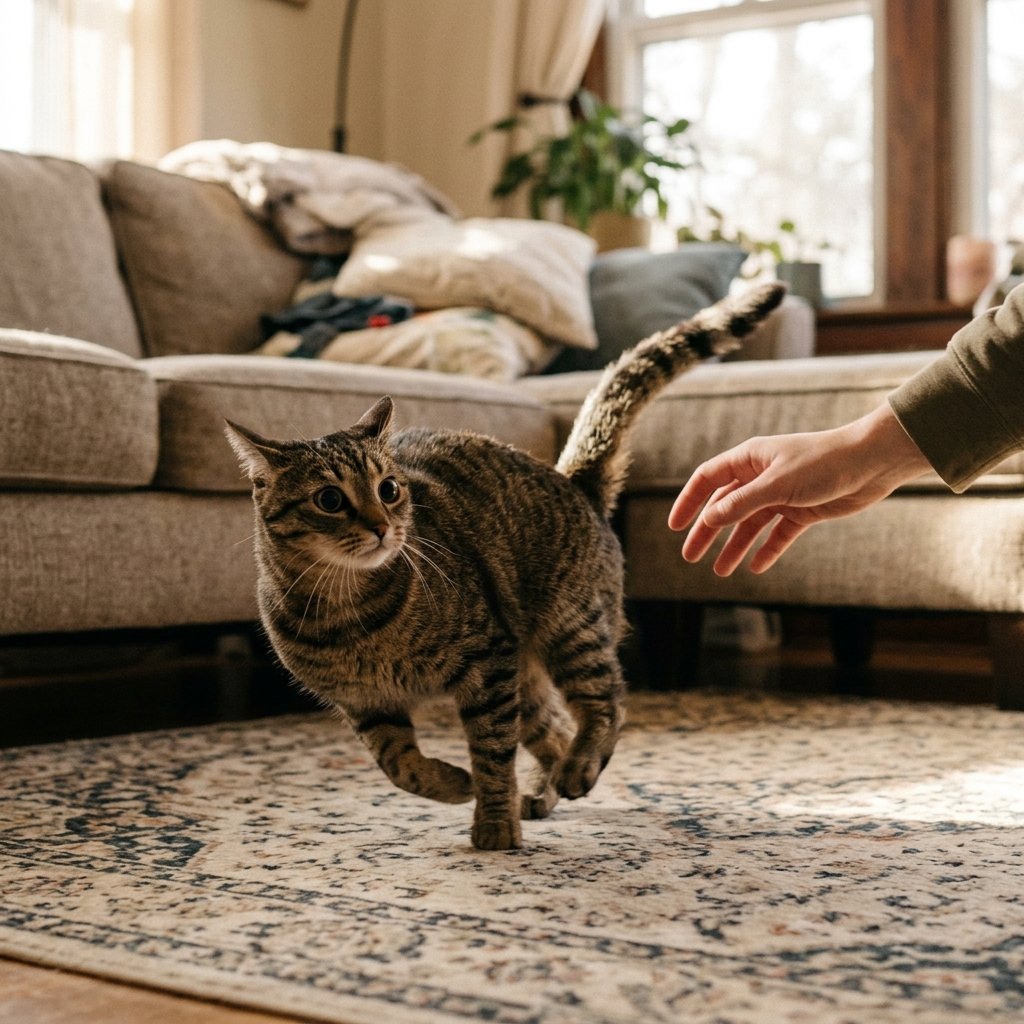
You walk into the room with the warmest intentions. Maybe a cuddle, maybe just a hello. And your cat bolts like you’ve just announced a vet appointment. It’s one of the most baffling and, let’s face it, slightly hurtful things a cat can do.
But before you take it personally, take a breath. When you ask why does my cat run away from me, the answer is almost never “because she doesn’t love you.” Cats communicate in a completely different language from ours, and what looks like rejection is usually fear, overstimulation, play or habit. Let’s work out what’s going on and how to fix it.
Why Does My Cat Run Away From Me? Start With How Cats See the World
To a cat, you’re a giant. You’re loud, you move fast, you reach for them from above and you sometimes pick them up without asking. Cats are also small enough to be prey for other animals, so their first instinct when something feels risky is to leave.
Running away is a very normal way to say “I’m not sure about this.” Understanding why your cat does it is the first step to making them feel safe around you.
9 Reasons Your Cat May Be Running Away From You
1. They’re scared or not used to people
Cats who weren’t handled much as kittens, or who’ve had rough experiences, can be wary of people even in a loving home. This is especially common in rescue cats and strays. Trust takes time, sometimes weeks or even months.
2. You approach too fast or too directly
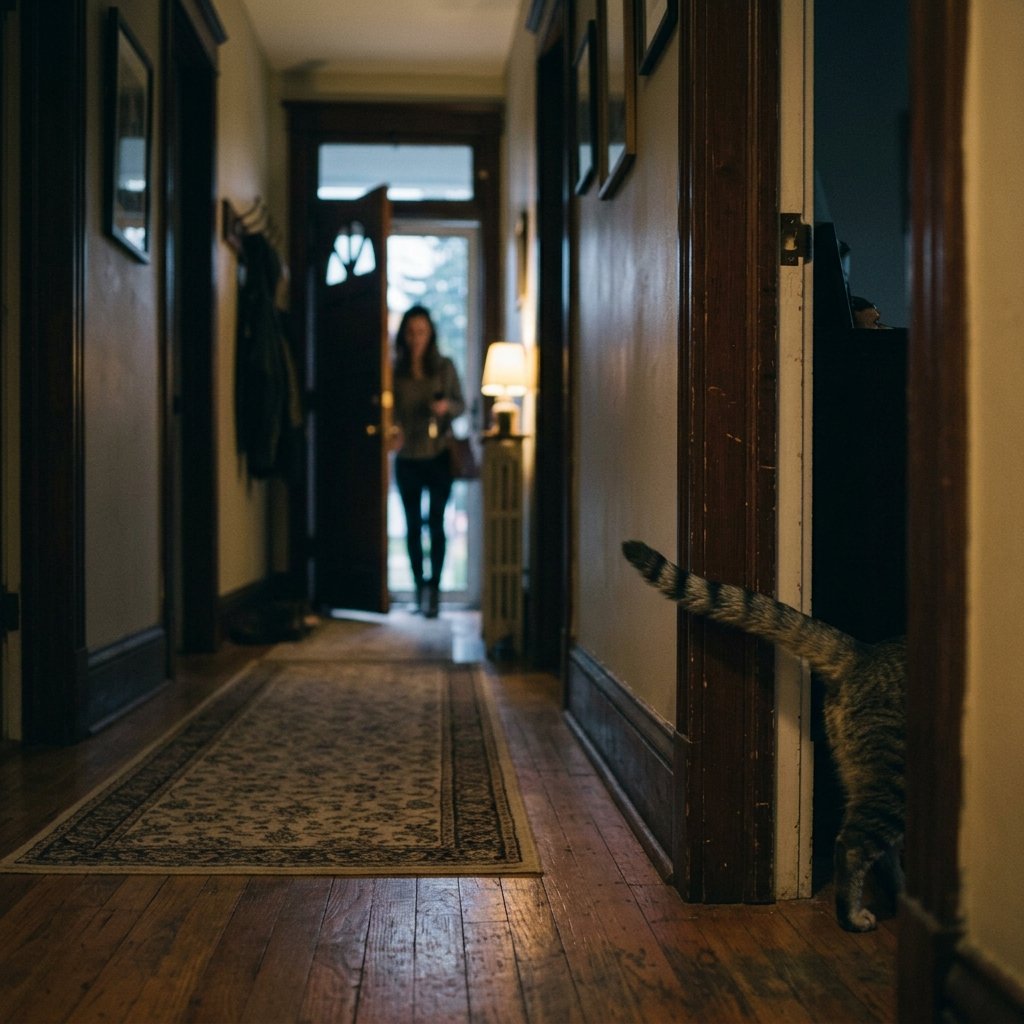
Walking straight at a cat, staring, looming over them or rushing in with a loud voice can feel confrontational. In cat language, direct approaches are a bit rude. A slower, sideways approach with soft eye contact is much more polite.
3. They don’t like being picked up or held
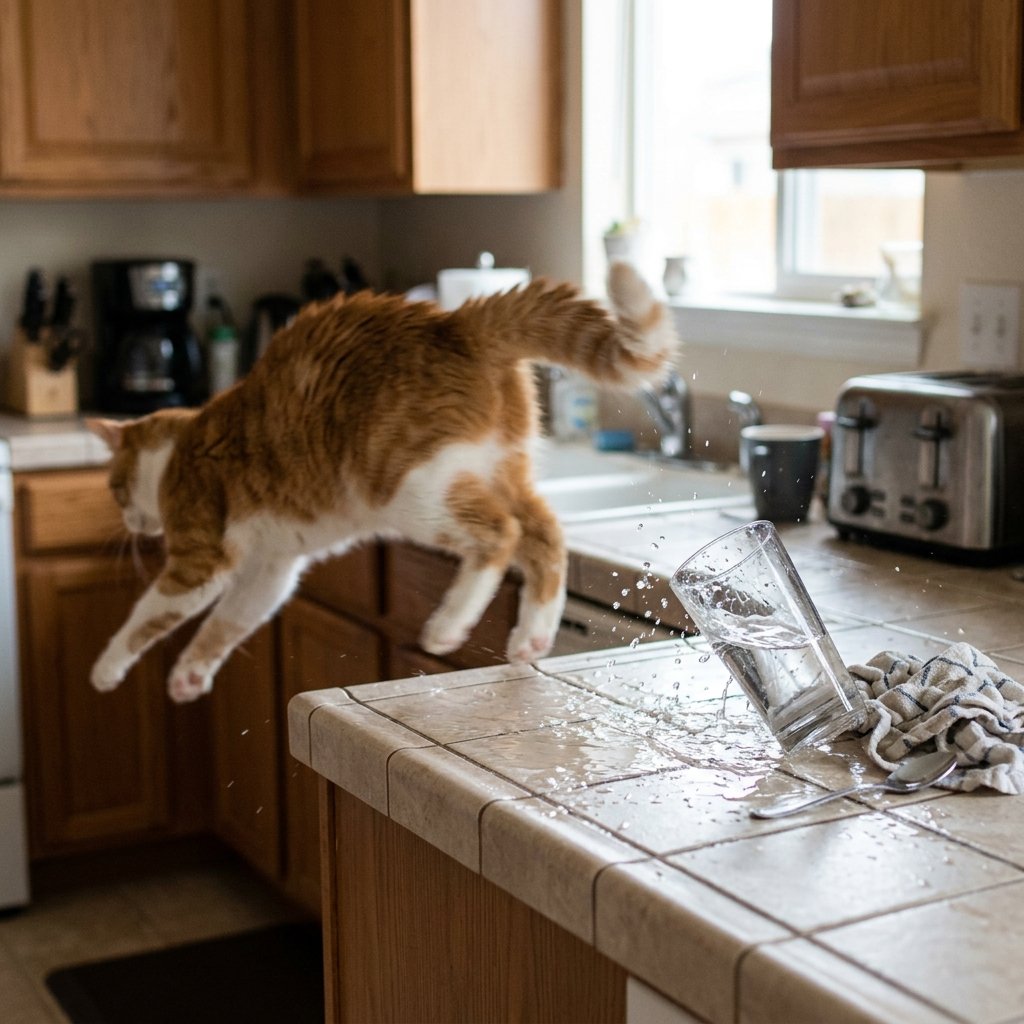
Lots of cats tolerate being picked up but don’t really enjoy it. Being lifted means losing control and feeling restrained. If your cat runs away when you reach down to scoop them up, that may be why.
4. Petting overload
Some cats love petting for a minute, then suddenly have had enough. This is known as overstimulation. Warning signs include a twitching or thumping tail, flattened ears, skin rippling on the back and a sudden stare. Ignore these signals and your cat may nip or dash away. If your cat runs off after a few strokes, it’s probably telling you “that’s plenty.”
5. They’re playing
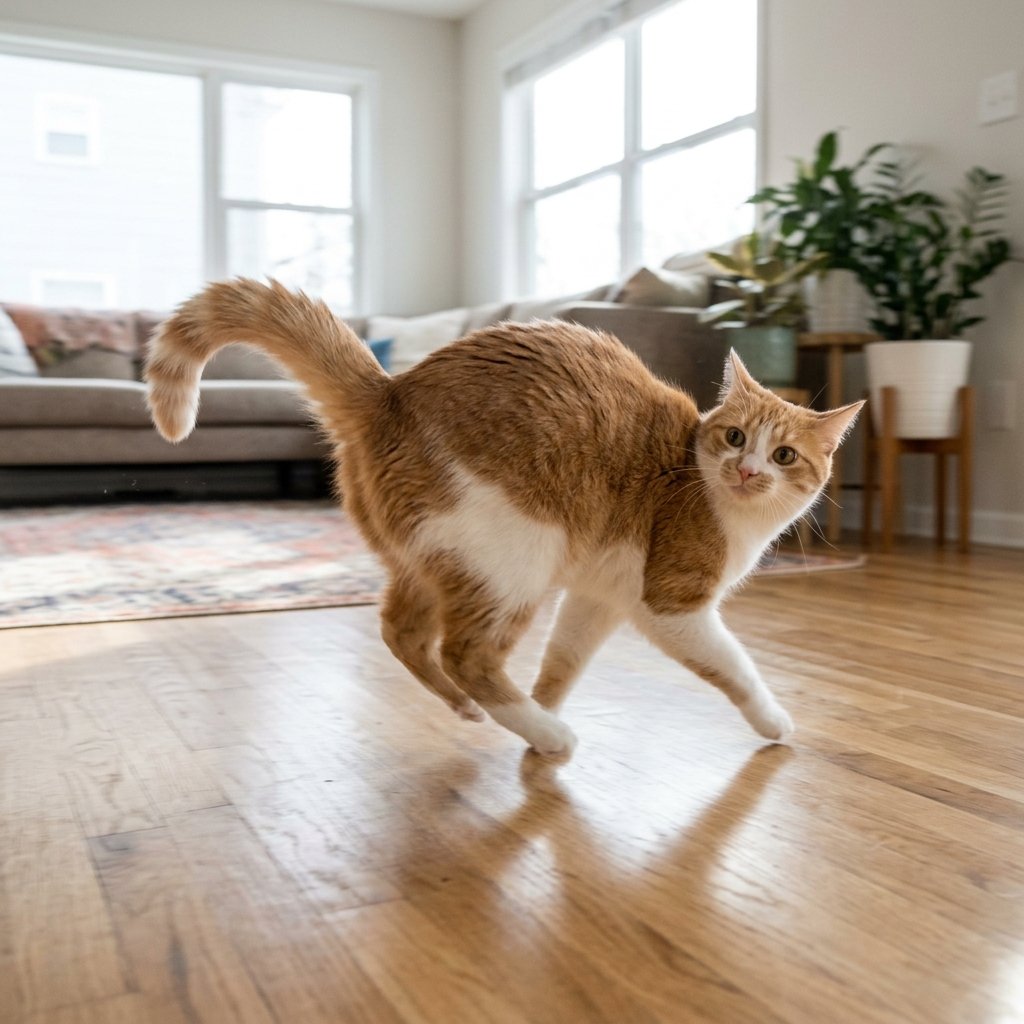
Not all running away is fear. Cats love chase games, and a cat who bolts, then pauses to look back at you, is often inviting you to play. Look for relaxed body language: an upright tail, bright eyes and a bouncy gait. Sudden bursts of speed, especially in the evening, are often called “zoomies” and are just excess energy.
6. They associate you with something unpleasant
If you’re the person who gives meds, trims nails, closes them into the carrier or brings them to the vet, your cat may learn to avoid you when they sense a scary event coming. Cats are smart and pick up on cues like the sound of the carrier or the way you move.
7. Pain or illness
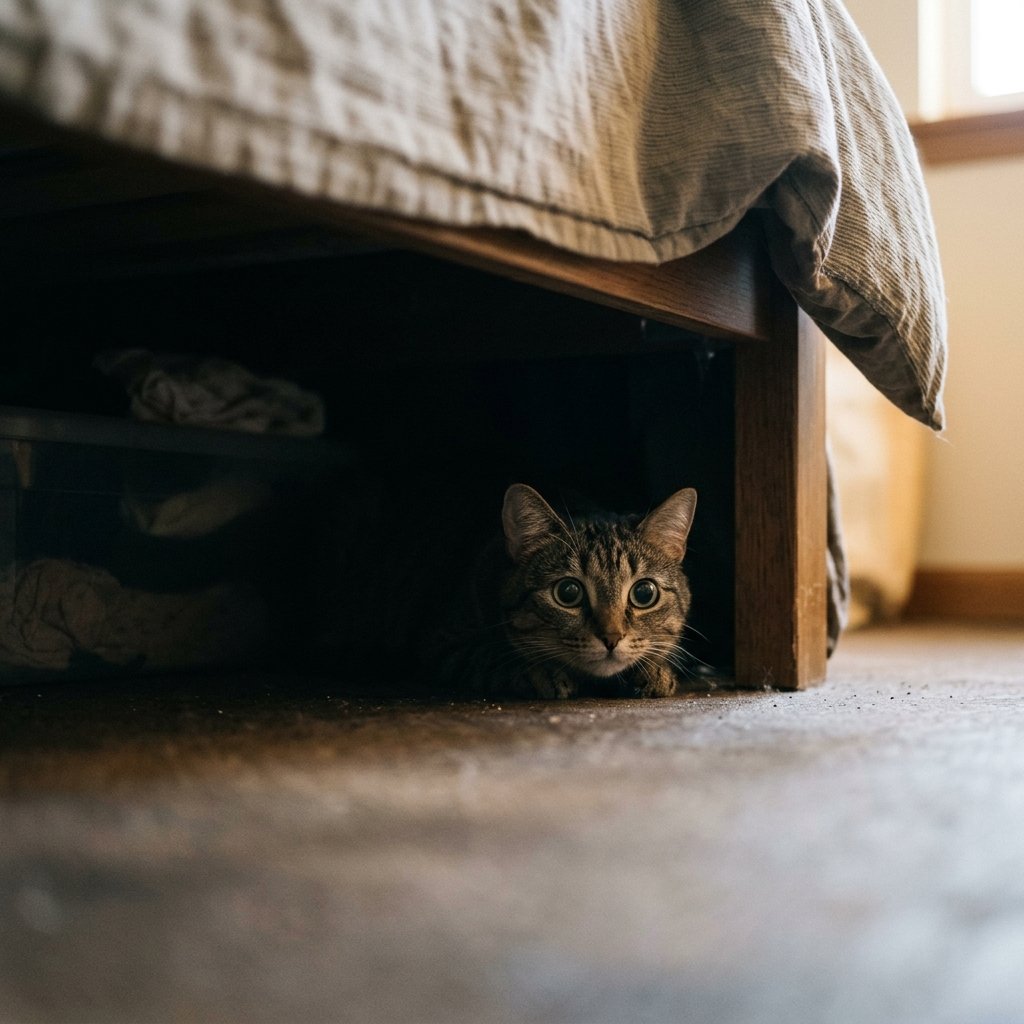
If your normally affectionate cat suddenly starts avoiding you or running away when you touch them, they may be hurting. Arthritis, dental pain, injuries and other health problems can make touch uncomfortable. This is especially important to rule out if the change is sudden. Our post on why your cat hides covers the signs that suggest illness.
8. You smell different or have been around other animals
Cats rely heavily on scent. If you’ve been at the vet, around another animal or wearing a strong perfume or cleaning product, your cat may be unsettled by the smell. Usually, once the scent fades, they relax again.
9. A stressful household
Loud noises, noisy kids, other pets, a new baby or a recent move can make a cat jumpy overall. When they’re on edge, even you can seem like part of the chaos. Reducing stress in the home often helps them relax around you.
Reading Your Cat’s Body Language
Learning what your cat’s body is saying makes it easier to know whether they’re afraid or just playing.
Signs of fear or stress
- Ears flattened or turned sideways
- Pupils wide open
- Tail tucked or puffed up
- Crouched, low body posture
- Hissing, growling or freezing before running
Signs of play or confidence
- Tail held up, perhaps with a curl at the tip
- Ears forward
- Bouncy movements and play bows
- Looking back at you or pausing to see if you follow
For more on understanding cat communication, you might enjoy our guides on why your cat purrs and why your cat meows so much.
How to Stop Your Cat From Running Away From You
The goal is to make you the safest, most rewarding thing in your cat’s world. Here’s how.
Let your cat come to you
Instead of chasing, sit or lie on the floor, look away and let your cat approach in their own time. Offering a finger at nose height for a sniff is a polite cat greeting. If they rub against it, you’ve been invited in.
Try slow blinks
A slow blink is like a kiss in cat language. Look at your cat softly and slowly close and open your eyes. Many cats will return the gesture, which signals trust and calm.
Respect their space
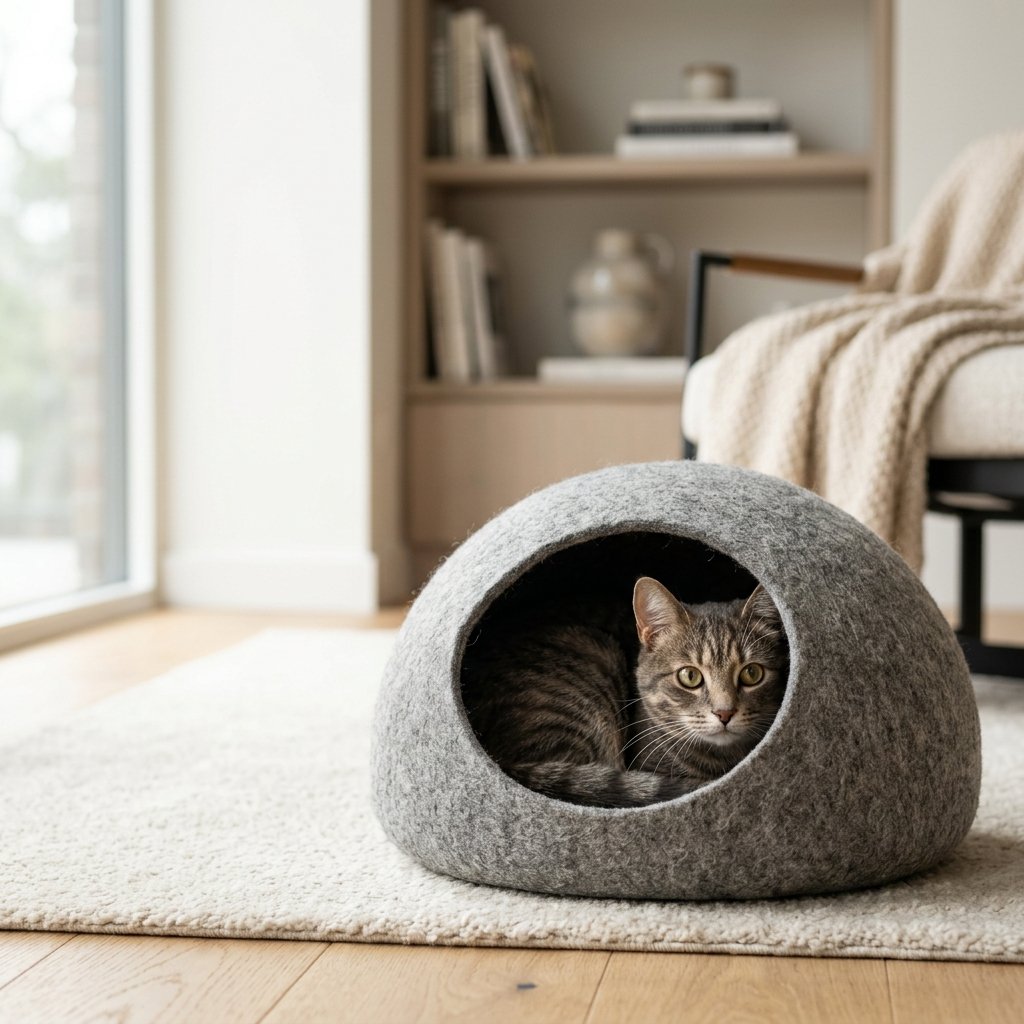
If your cat retreats, don’t follow them. Chasing teaches them that you’re a threat. Give them room, and let them know where they can go for a break, like a quiet shelf, a cat tree or a covered bed.
Keep petting short and sweet
Stroke the places most cats like: cheeks, chin and the base of the ears. Avoid the belly and tail unless your cat clearly enjoys it. Stop before your cat gets tired of it, so they stay relaxed and keep wanting more.
Make yourself rewarding with treats and play
Use tasty treats or a favorite meal to build good associations with your presence. Short play sessions with a wand toy are great for bonding. Quality food helps too, and our guide to the best food for cats can help you pick something your cat loves.
Avoid picking them up unless necessary
Many cats prefer to keep four paws on the ground. If you do need to lift your cat, support their body fully and put them down before they struggle. Pair necessary handling with treats afterward.
Keep your voice and movements calm
Soft talking, slow movements and avoiding sudden noises make you less startling. Teach children to approach calmly too and never chase or grab.
Offer plenty of safe spaces
Cats feel more confident when they know they have a place to retreat. Cat trees, shelves, boxes and quiet corners all help reduce stress. Our post on cat hiding behavior explains how hiding spots help cats feel secure.
Stick to a routine
Regular feeding, play and quiet times help your cat feel safe. Predictability builds trust.
What If My Cat Used to Love Me but Now Runs Away?
A sudden change in behavior is a signal. Think about what’s changed recently: a move, a new pet, new products, a change in your schedule. And ask whether your cat could be in pain. If the behavior is new, lasts more than a day or two, or comes with changes in eating, litter box habits or energy, book a check-up. The Cornell Feline Health Center has reliable information on feline health.
Helping a Rescue or Shy Cat Trust You
With rescue cats, patience is everything. Give them a small, quiet room to start with, and let them settle in. Sit quietly nearby, read aloud or just exist in the room. Offer treats from your hand, and let your cat decide when they’re ready for contact. Many shy cats blossom with time and gentle handling. Our pet care tips for beginners includes advice on settling a new pet in.
Mistakes That Make Cats Run Away More
- Chasing or cornering your cat
- Picking them up when they don’t want it
- Ignoring warning signs of overstimulation
- Punishing or yelling, which teaches your cat to fear you
- Forcing cuddles or hugs
- Staring directly at a nervous cat
Where to Learn More
For further reading, International Cat Care, the Cat Friendly Homes pages and the ASPCA’s cat care pages have trustworthy, practical advice. And for everyday routines that keep cats calm and healthy, see our guide to healthy habits for pets.
Quick Answers
Why does my cat run away from me when I try to pet her?
She may be scared, overstimulated or simply not in the mood. Keep petting short, let her approach and stop before she gets irritated.
Why does my cat run away and then come back?
It could be a game, or a way of testing the situation. Cats often retreat to a safe distance, then check if the coast is clear.
Why does my cat run away when I pick her up?
Many cats dislike being restrained. Try offering lap time on their terms instead of lifting them.
Does my cat hate me if she runs away?
Almost certainly not. Running away is usually about fear, overstimulation or play, not dislike.
How long does it take for a scared cat to trust you?
It varies from days to months, depending on the cat’s history and personality. Be patient and consistent.
When should I see a vet?
If the behavior is sudden, your cat seems in pain or you notice changes in appetite, litter box use or energy, schedule a vet visit.
The Bottom Line
When you wonder why does my cat run away from me, remember that it’s rarely personal. Most cats run because they feel uneasy, overstimulated or simply playful. Slow down, let your cat set the pace, respect their warning signals and make every interaction a good one. Over time, the cat who used to dash for cover might just be the one curled up on your lap.
If your cat’s behavior changes suddenly or they seem to be in pain, speak with your veterinarian.

Discussion 0 comments
Share your thoughts — every perspective adds value.