

Let’s be honest. Brushing a dog’s teeth is probably not on the list of things you were looking forward to when you adopted your best friend. Between the wriggling, the slobber and the dog who treats the toothbrush like a very suspicious stick, it can feel like a chore that’s not worth the fight.
But here’s the thing: dental problems are among the most common health issues in dogs, and most of them are preventable. Learning how to brush a dog’s teeth is one of the simplest things you can do to protect your dog’s comfort, health and wallet. And once you’ve got the hang of it, it takes about two minutes.
Why It’s Worth Learning How to Brush a Dog’s Teeth
Just like in people, plaque builds up on a dog’s teeth every day. If it isn’t removed, it hardens into tartar, which irritates the gums and leads to gingivitis. Over time, this can turn into periodontal disease, which damages the tissue and bone that hold teeth in place. Veterinary dental specialists say that most dogs show some signs of dental disease by the age of three.
The consequences go beyond bad breath:
- Painful gums and loose teeth
- Tooth loss
- Infections and abscesses
- Difficulty eating
- Possible effects on other organs, since bacteria can enter the bloodstream
Dogs rarely complain about dental pain. They just quietly stop chewing, or eat more slowly. Prevention is far easier than treatment, and regular brushing is the gold standard. The American Veterinary Dental College offers useful information for pet owners.
What You Need to Brush Your Dog’s Teeth
You don’t need much to get started, but the right tools matter.
- A dog toothbrush. Soft-bristled, in a size that suits your dog. A finger brush, a rubber-tipped brush or a small child’s toothbrush can all work. Try a few and see what your dog tolerates.
- Dog toothpaste. Choose one made specifically for dogs, often in flavors like poultry or peanut butter. Never use human toothpaste. It can contain fluoride or xylitol, both harmful to dogs, and dogs can’t spit.
- Treats. To reward your dog and keep the experience positive.
- A bit of patience. Don’t skip this one.
How to Brush a Dog’s Teeth Step by Step
The secret to success is going slowly. Don’t try to brush the whole mouth on day one. Teach your dog to accept each step before moving to the next. Here’s a gentle plan that works for most dogs, spread over a couple of weeks.
Step 1: Pick a calm time and place
Choose a quiet moment when your dog is relaxed, perhaps after a walk. Sit beside them or in a comfortable spot where they feel secure. Keep your voice soft and cheerful.
Step 2: Introduce the toothpaste
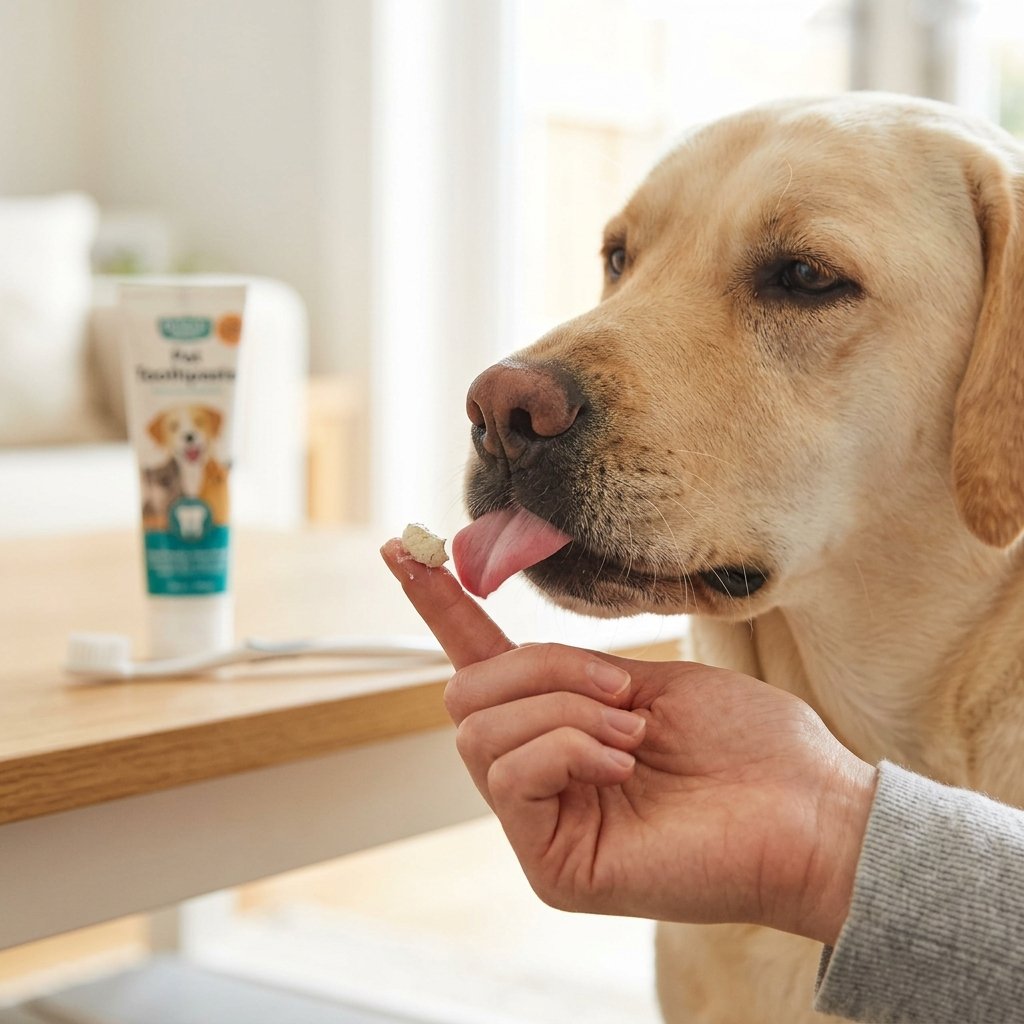
Put a small dab of dog toothpaste on your finger and let your dog lick it. If they like the flavor, great. Repeat for a few days, and give a treat afterward. The goal is to get them excited about it.
Step 3: Touch the lips and gums
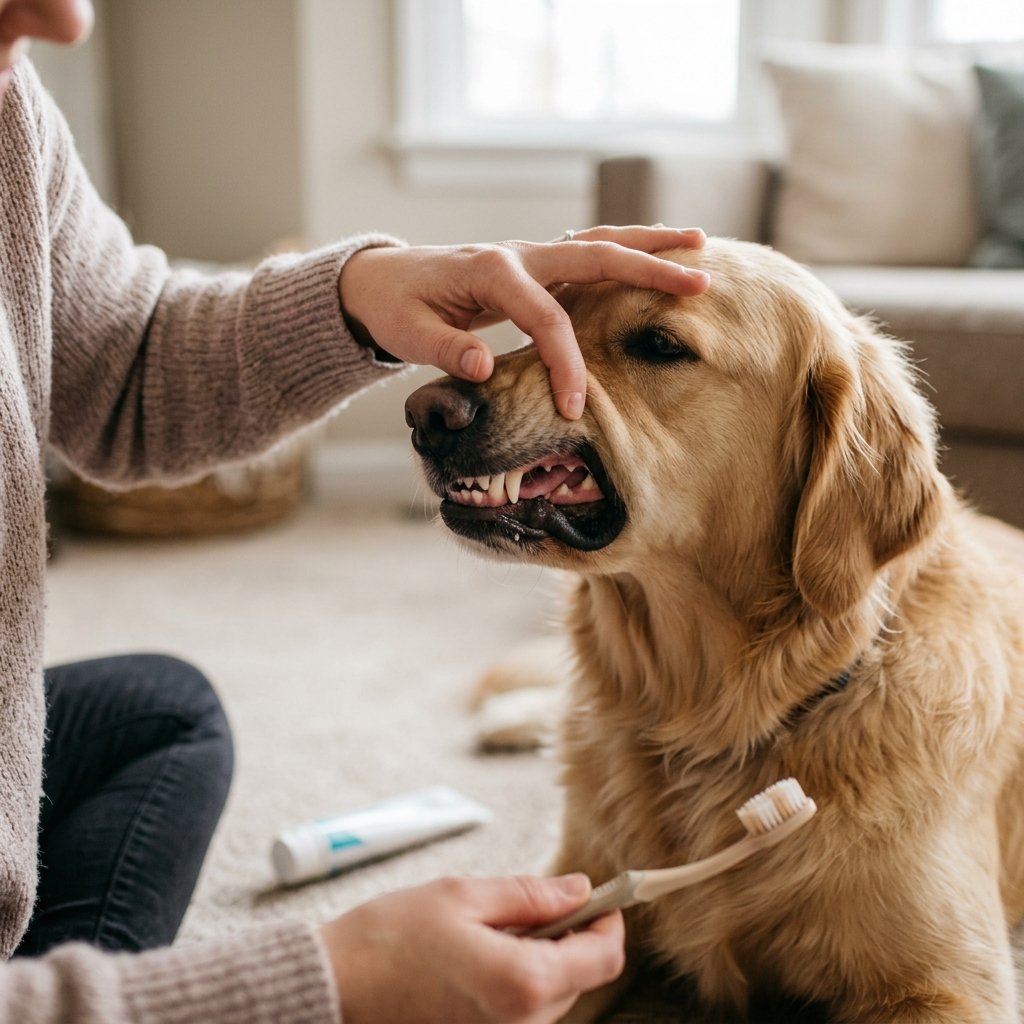
Next, gently rub your finger along their lips, then lift a lip and touch the gums for a few seconds. Mark and reward calm behavior. Go slowly. If your dog pulls away, take a step back.
Step 4: Introduce the brush or finger brush
Let your dog sniff the toothbrush and lick the toothpaste from it. Then touch the bristles to a few teeth, mark and reward. Repeat over several sessions.
Step 5: Start brushing a few teeth
Place the brush at about a 45-degree angle to the gumline, and brush in small circles or gentle back-and-forth motions. Start with the upper teeth at the back of the mouth, where tartar builds up the most. A few teeth is plenty at first.
Step 6: Build up to the whole mouth
Over time, brush more teeth, then both sides. Focus on the outer surfaces, since the tongue naturally cleans the insides a bit. Aim for around 30 seconds per side, but it’s fine to work up gradually.
Step 7: End with a reward
Finish with praise, a treat or a game. You want your dog to think, “tooth brushing means great things happen.”
How Often Should You Brush Your Dog’s Teeth?
Daily is ideal, since plaque starts turning into tartar within a couple of days. But if that feels like too much, aim for at least three times a week. Even a short brush a few times a week is much better than none. Consistency matters more than perfection.
If you want help building the habit, tie it to something you already do, like brushing your own teeth in the evening. Our guide to healthy habits for pets shows how to build easy routines like this.
Tips for Dogs Who Don’t Like It
Many dogs aren’t thrilled at first. A few tricks can make brushing easier:
- Use positive training. Reward every small step. Our guide to positive reinforcement dog training explains how to build good associations.
- Keep sessions short. A few seconds at first is fine. End before your dog gets stressed.
- Try different flavors or brushes. Some dogs prefer a finger brush to bristles.
- Don’t restrain your dog tightly. Forcing can make the fear worse.
- Be extra patient with rescues and anxious dogs. They may need more time to trust the process.
If your dog growls, snaps or seems in pain when you touch their mouth, stop and call your vet. Pain may be the reason they don’t want to be touched.
Start Early: How to Brush a Puppy’s Teeth
The best time to teach a dog to accept tooth brushing is when they’re young. Puppies have baby teeth that fall out, usually between about three and six months, but getting them used to having their mouths handled makes life easier later on. Use the same gentle steps, keep it playful and reward heavily. Our puppy training guide and pet care tips for beginners cover other handling habits worth starting early.
What If You Can’t Brush Your Dog’s Teeth?
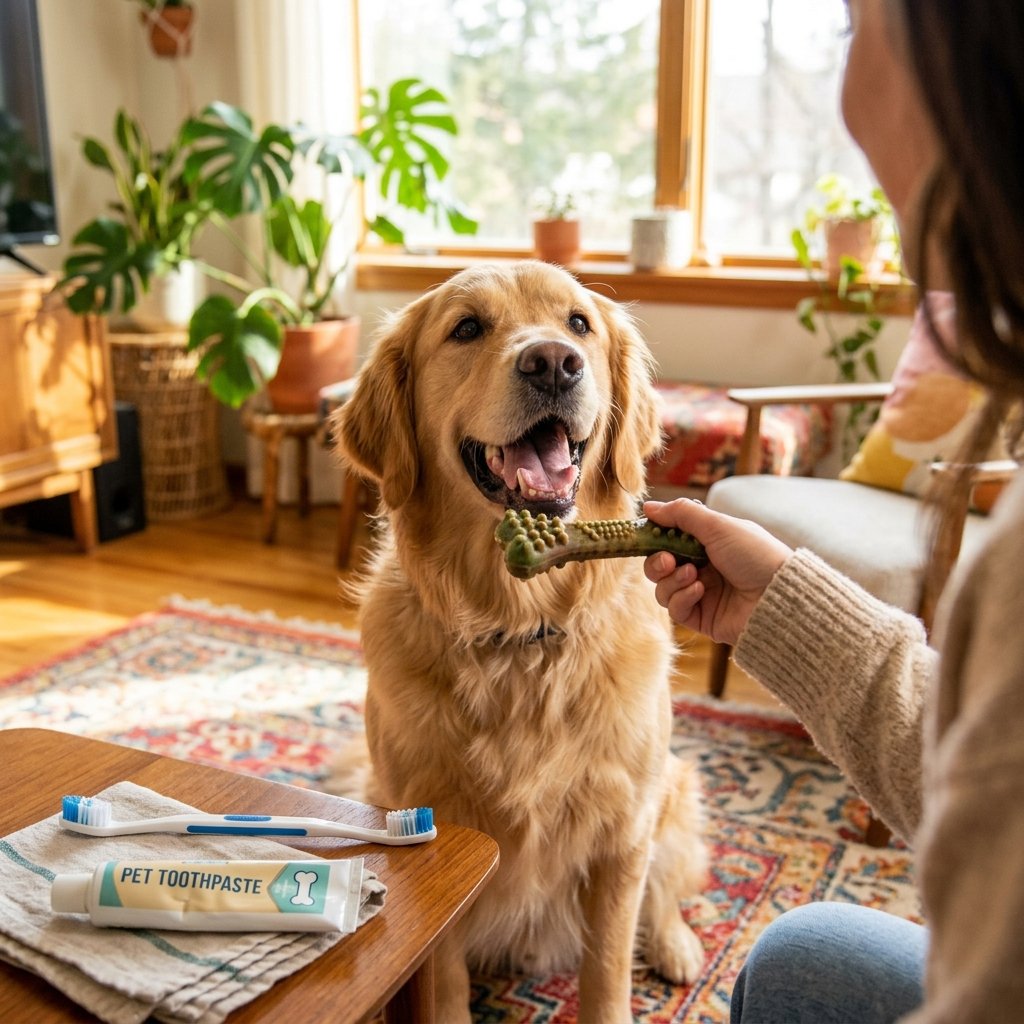
Some dogs just won’t tolerate it, and that’s okay. While brushing is the best option, there are other things that can help:
- Dental chews and toys. Look for products that carry the seal of the Veterinary Oral Health Council. The VOHC maintains a list of accepted dental products that have shown they reduce plaque or tartar.
- Dental diets. Some prescription and over-the-counter foods are designed to scrub teeth as your dog chews.
- Water additives or oral gels. These may help some dogs, although they’re not a substitute for brushing.
- Regular vet checks. Your vet can examine the mouth and recommend professional cleaning when needed.
Be careful with very hard chews like cooked bones, antlers, hooves and hard nylon toys. They can crack teeth. A good rule is that if you can’t press a fingernail into the chew, it may be too hard. Our post on why your dog chews everything has more on choosing safe things to chew.
Professional Dental Cleanings
Even with great home care, many dogs need a professional cleaning at some point. A veterinary dental cleaning is done under general anesthesia, which allows the vet to clean below the gumline, take dental X-rays and treat problem teeth safely. Veterinary dental experts do not recommend “anesthesia-free” cleanings, because they can’t properly clean under the gums and may give a false sense of security.
Ask your vet how often your dog should have a dental exam. Small breeds, flat-faced breeds and older dogs are often more prone to dental trouble.
Signs of Dental Problems to Watch For
See your vet if you notice:
- Persistent bad breath, which is not normal
- Red, swollen or bleeding gums
- Yellow or brown tartar on the teeth
- Drooling more than usual
- Dropping food, chewing on one side or refusing hard food
- Pawing at the mouth or face
- Loose, broken or missing teeth
- Swelling under the eye
Common Mistakes When Brushing a Dog’s Teeth
- Using human toothpaste. Always use dog toothpaste.
- Going too fast. Slow, positive steps build trust.
- Brushing too hard. Gentle pressure is enough.
- Skipping the back teeth. That’s where tartar builds up the most.
- Giving up after a few tries. Many dogs need a few weeks to get comfortable.
- Relying only on chews. They help, but they don’t replace brushing.
For more reading on pet dental care and general health, the AVMA’s pet owner resources and the ASPCA’s dog care pages are good places to start. And since teeth care is part of overall grooming, you may also like our guide to how often you should bathe a dog.
Quick Answers
How often should I brush my dog’s teeth?
Daily is ideal. At least three times a week is a good minimum.
Can I use baking soda or human toothpaste?
No. Human toothpaste can contain ingredients that are toxic to dogs, and baking soda has a high sodium content and an unpleasant taste. Use toothpaste made for dogs.
What’s the best way to brush a dog’s teeth if they hate it?
Go slowly, use plenty of rewards and break the process into tiny steps. Start with letting them lick the toothpaste, then add touching the mouth, then the brush.
Are dental chews enough?
They can help reduce plaque, especially VOHC-accepted ones, but they’re not as effective as brushing. Think of them as a helpful extra.
At what age should I start brushing my dog’s teeth?
As early as possible. Even young puppies can get used to having their mouths handled. For adult dogs, start slowly and be patient.
How do I know if my dog has dental disease?
Look for bad breath, red gums, tartar, drooling, difficulty eating or pawing at the mouth. Ask your vet for a dental check if you notice any of these.
The Bottom Line
Learning how to brush a dog’s teeth might feel awkward at first, but it’s one of the most valuable things you can do for your dog’s health. Use dog toothpaste, go slowly, reward every step and aim for a few brushes a week. Pair it with regular vet checkups, and you’ll help your dog avoid pain, expensive dental work and the dreaded dog breath for years to come.
If your dog has persistent bad breath, bleeding gums, difficulty eating or pain around the mouth, speak with your veterinarian.



Discussion 0 comments
Share your thoughts — every perspective adds value.