

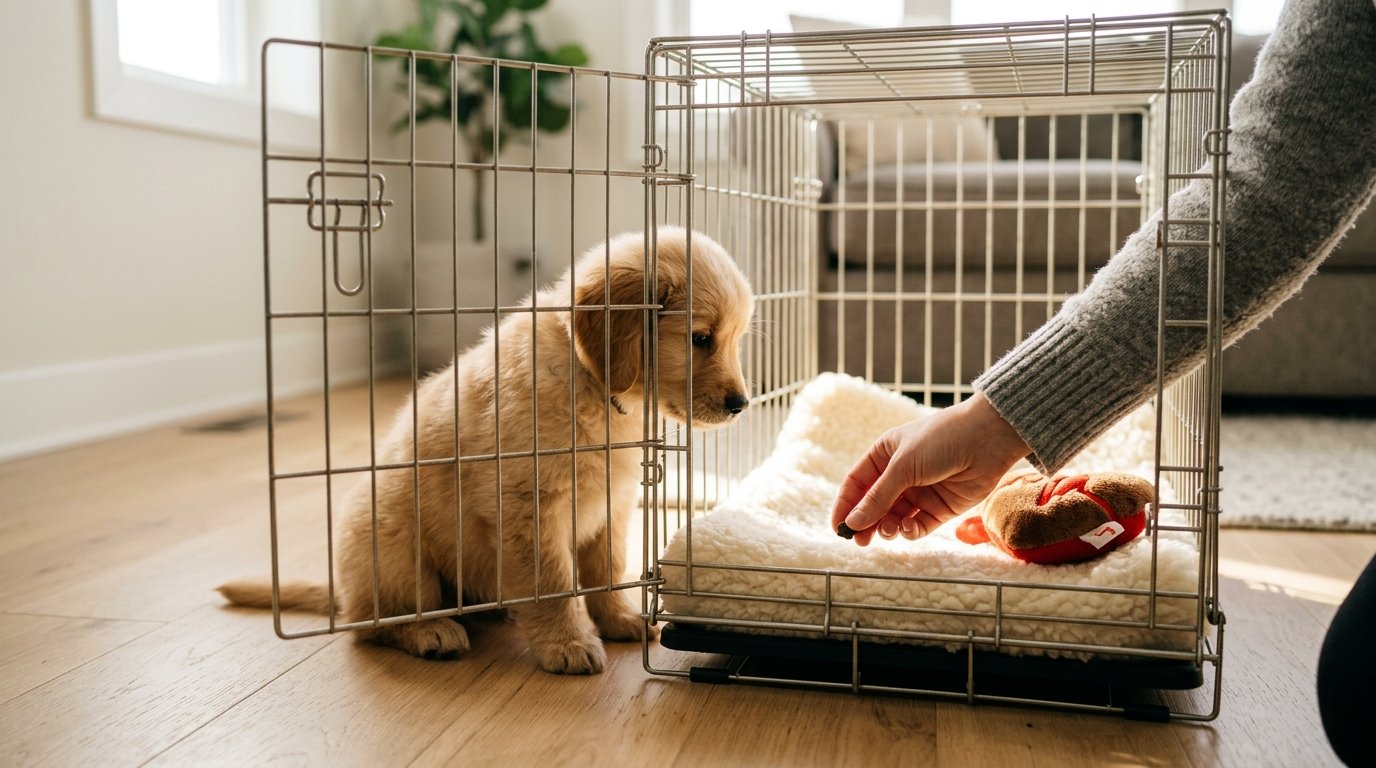
Picture this: you’ve just brought your puppy home, you’ve set up a brand-new crate, and he sniffs it once, wanders off, and falls asleep on your shoe. That’s a perfectly normal start. Crate training an 8-week-old puppy isn’t a single event. It’s a couple of weeks of small, calm steps that teach him the crate is where good, sleepy things happen.
We already have posts on crate training games and on crating a puppy the first night. This guide covers the part in between: how long your puppy can really stay in there, what an ordinary day looks like, and a simple two-week plan you can follow without overthinking it.
Why 8 Weeks Is a Special Case
At eight weeks old, your puppy has only just left his mom and littermates. Everything in your home is new, from the slippery kitchen floor to the sound of the dishwasher. He also has a tiny bladder and almost no impulse control.
The upside is that puppies this age sleep a lot. Petful’s crate training schedule guide puts it at around 18 to 20 hours of rest a day, and says most 8-week-olds can only stay happily awake for 60 to 90 minutes before they tip into overtired. A crate gives a worn-out puppy a safe place to crash instead of a living room full of cables and shoes.
The downside is that you can’t treat him like an older dog. He can’t wait long between bathroom trips, he gets cranky when he’s tired, and he’ll tell you about it loudly. Plan around that and most of the so-called problems turn out to be normal puppy behavior.
Getting the Crate Ready
A few small choices make the first week much easier.
Size matters. Pick a crate your puppy can stand up in, turn around in, and stretch out in, but not much bigger. If it’s too roomy, a puppy may pee in one corner and sleep in the other. If you’re buying for the adult size of a Lab or a Golden, get a crate with a divider so you can block off the extra space for now.
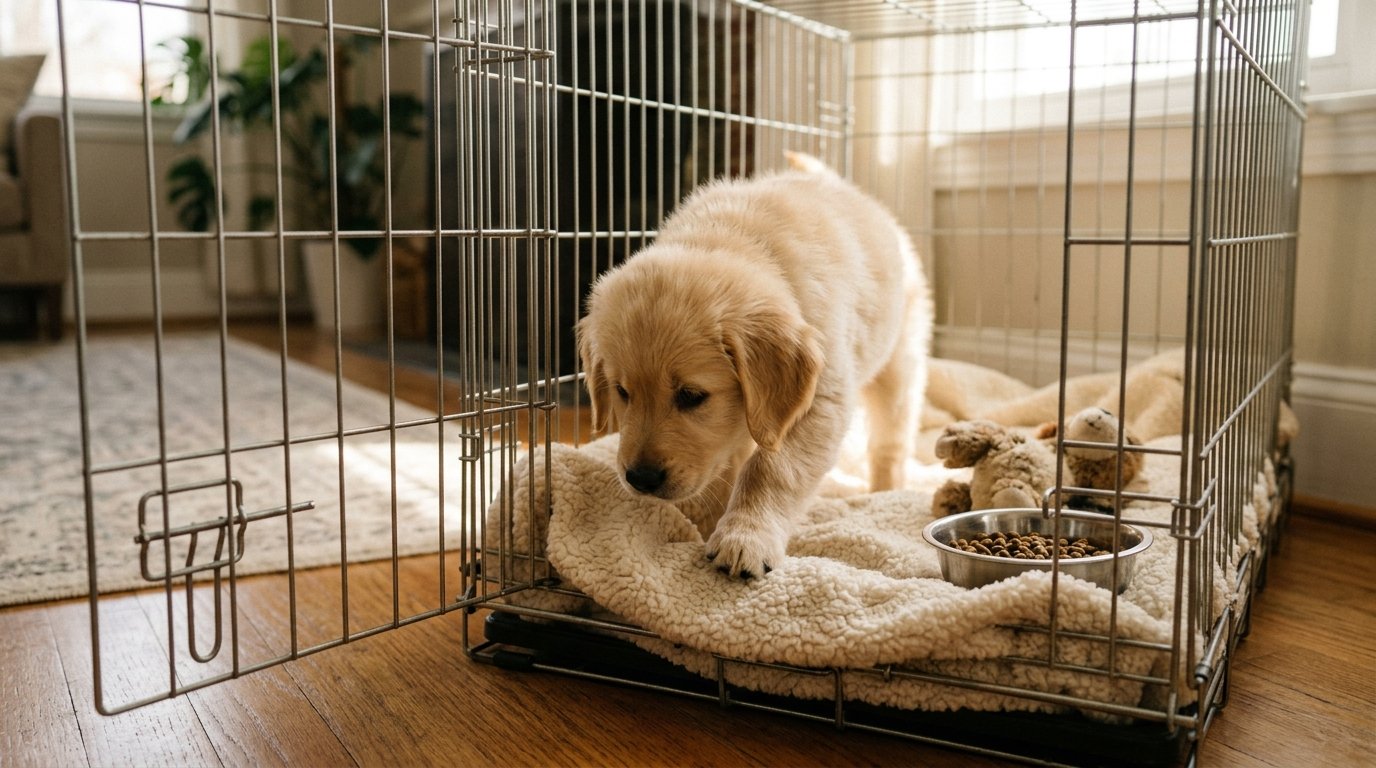
Keep the bedding simple. A thin, washable mat beats a fluffy pile he can shred and swallow. A t-shirt you’ve worn can help too, since it smells like you.
Take the collar off. Collars and tags can catch on the bars. The AKC’s guide to crate training a puppy lists keeping the crate collar-free as a basic safety step.
Put it where you are. A corner of the living room or kitchen works better than a quiet back bedroom. At this age, a puppy who can see and hear you settles faster than one who feels left behind.
How Long Can an 8-Week-Old Puppy Stay in a Crate?
Ask a few trainers and you’ll get a few different answers. A common rule is that a puppy can hold his bladder for about one hour per month of age, and Rover’s guide to how long a puppy can hold it suggests 30 to 60 minutes of crate time for puppies between 8 and 10 weeks. Other sources use “age in months plus one,” which stretches an 8-week-old to about three hours between potty breaks.
When the experts disagree, go with the cautious number. Nobody ever regretted taking a puppy out a little too soon. During the day, aim for crate stretches of an hour or less while he’s awake, and carry him straight outside when you open the door. A puppy who’s sound asleep can often go a bit longer, but check on him well before the two-hour mark.
One more thing worth saying plainly: the crate isn’t a place to park him while you’re at work. If you’ll be gone for hours, an 8-week-old puppy needs someone to let him out. A neighbor, a family member, a puppy sitter, or a few days off work will do far more good than a longer crate stretch.
A Sample Day With an 8-Week-Old Puppy
Every puppy is different, so treat this as a rough rhythm and not a rulebook. The pattern is simple: potty, play, eat, potty, nap in the crate. Then repeat all day.
- 7:00 a.m. Straight outside to potty, then breakfast
- 7:30 Potty again, then play
- 8:30 Crate nap (about an hour)
- 9:30 Out of the crate and outside right away, then playtime with you
- 11:00 Potty, then another crate nap
- 12:00 p.m. Lunch, potty, short play
- 1:30 Crate nap
- 3:00 Potty, play, a little gentle training
- 4:30 Crate nap
- 6:00 Dinner, then potty
- 7:00 to 9:30 Family time, short play, and a nap or two when he gets droopy
- 10:30 Last potty trip, then bed in the crate
You’ll notice that he’s rarely awake for long. That’s the point. A puppy who plays hard for an hour and then goes into the crate tired will settle far better than one who’s wound up and bored.
Your First Two Weeks, Step by Step
Days 1 to 3: Make it a nice place
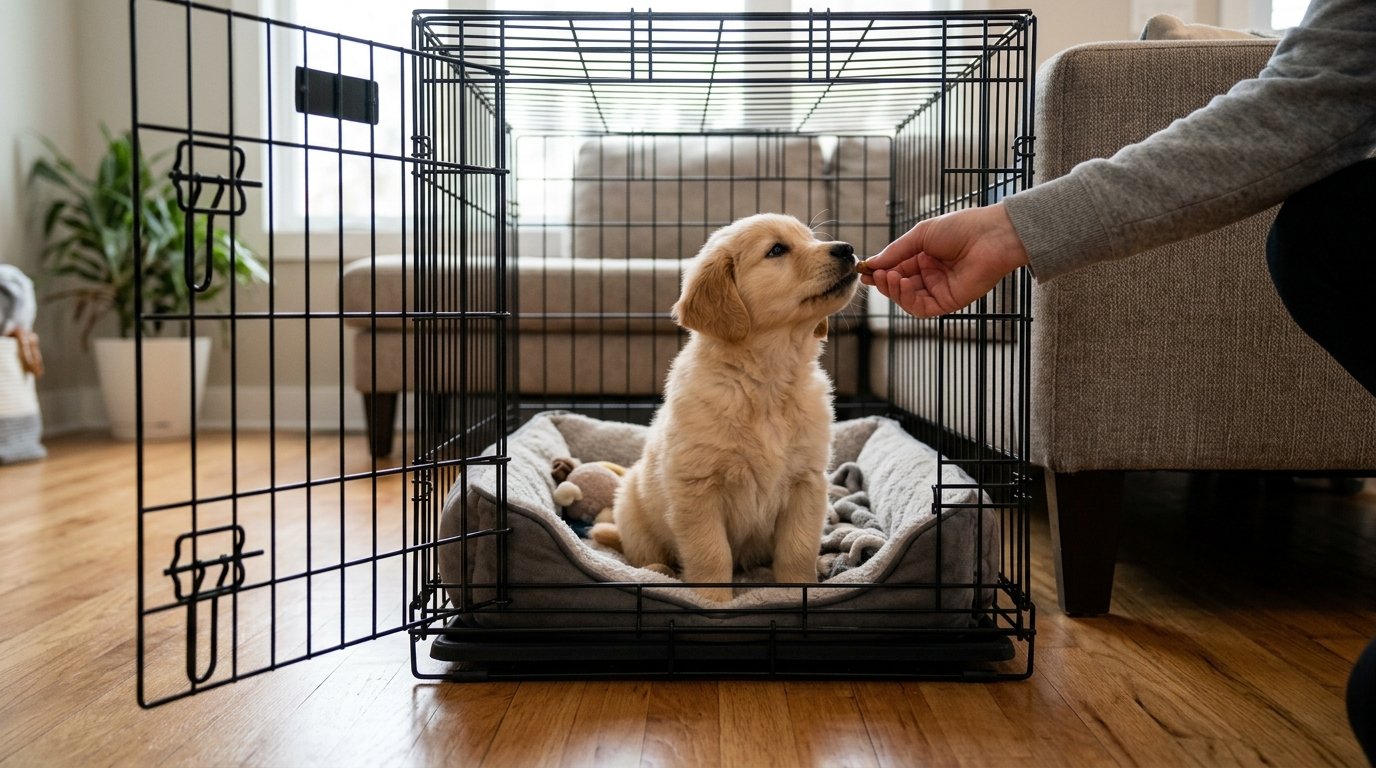
Leave the door open and let him investigate on his own. Toss a few treats inside, feed his meals near the crate (then just inside it), and praise him when he walks in. Don’t close the door yet, or only for a second or two while he’s eating. If you want ideas for keeping this fun, our list of dog crate training games has plenty.
Days 4 to 7: Start closing the door
Now you can shut the door for short stretches while he’s busy with a stuffed chew toy or his dinner. Sit next to the crate, stay calm, and open the door before he starts to fuss. Five to ten minutes is plenty at first. Never push him in. The UC Davis veterinary guide to crate training a puppy is firm on this: going in should always be a positive experience.
The AKC’s step-by-step crate training guide also makes a smart point: change only one thing at a time. If you add distance, don’t add duration in the same session.
Week 2: Stretch it out, a little
Once he’s relaxed with the door closed while you’re sitting beside him, start moving away. Walk to the other side of the room, then out of sight for a minute, then back. Come back before he gets upset and reward him when he’s calm. Keep everything within the age limits above, and keep the daily routine the same. Puppies learn faster when the day makes sense to them.
If he’s ready for it, you can also start adding a simple cue like “crate” as he walks in. It pairs nicely with the basic dog commands you’ll be teaching anyway.
What About Nights?
If you can, keep the crate in your bedroom for the first few nights. Your puppy will feel better knowing you’re close, and you’ll hear him when he really needs to go out. Expect at least one trip outside overnight, and don’t be shocked if it’s two. Keep those trips quiet and boring: no play, no chatting, straight back into the crate.
We go deeper on this in our posts about crate training at night and your dog sleeping in a crate at night, so it’s worth a read if nights are your biggest worry.
What to Do When Your Puppy Cries
Some crying is normal. The trick is working out what he’s actually saying.
If he was quiet and then suddenly starts whining, it’s often a potty request. Carry him outside (an 8-week-old may not make it to the door on his own), keep it calm, and put him back. If he just went and is complaining because he wants out, wait for a short pause before you open the door. Otherwise he learns that whining is the key. The UC Davis guide mentioned above recommends ignoring whining and barking in the crate for exactly this reason.
If the crying is frantic, he’s panting, drooling, or trying to injure himself escaping, stop and talk to your vet or a professional trainer. That’s more than ordinary puppy complaining. And if barking turns into a habit, our guide on how to stop dog barking can help.
Accidents in the Crate
They happen. A puppy this young simply can’t hold it for long, and it isn’t a behavior problem or a sign you’ve failed. Clean it up with an enzyme cleaner, don’t scold him, and check the basics: is the crate too big, did he go too long between breaks, and did he drink a lot of water right before bed? Most of the time, a small tweak to the schedule fixes it.
Common Mistakes to Avoid
- Leaving him in the crate too long because “he’ll get used to it”
- Using the crate as a punishment or time-out
- Letting him out the moment he cries, so he learns crying works
- Skipping the potty trip right after a crate nap
- Rushing the steps because it seems to be going well on day two
Quick Answers to Common Questions
Is it cruel to crate train an 8-week-old puppy? Not when it’s done gently. A properly sized crate, short stretches, lots of potty breaks, and positive experiences make it a safe resting spot. Problems come from leaving a puppy in there too long or using it as punishment.
How long does crate training take? It varies a lot. The AKC notes it can take as little as a day or as long as several months, depending on the dog. For most 8-week-old puppies, you’ll see real progress within the first two weeks.
Can I crate my puppy while I’m at work? Not for a full workday. At this age, he needs a bathroom break far more often than that. Arrange for someone to come by, or set up a small puppy-proofed area with supervision instead.
Final Thoughts
Crate training an 8-week-old puppy feels like a lot at first, mostly because the schedule is so tight. The good news is that it gets easier fast. Keep the crate a happy place, keep the stretches short, and keep your routine predictable. Within a couple of weeks, you’ll likely find him wandering in on his own for a nap.
When you’re ready for the next step, our guide on how to train a puppy covers potty training, socialization, and more.

Discussion 0 comments
Share your thoughts — every perspective adds value.