

A crate should feel like a cozy den, not a punishment. Games are one of the fastest ways to build that positive association, because dogs repeat what feels rewarding. Here are five simple crate training games you can start today. If you want even more ideas, check out our list of 10 fun dog crate training games for happy puppies.
Before You Start
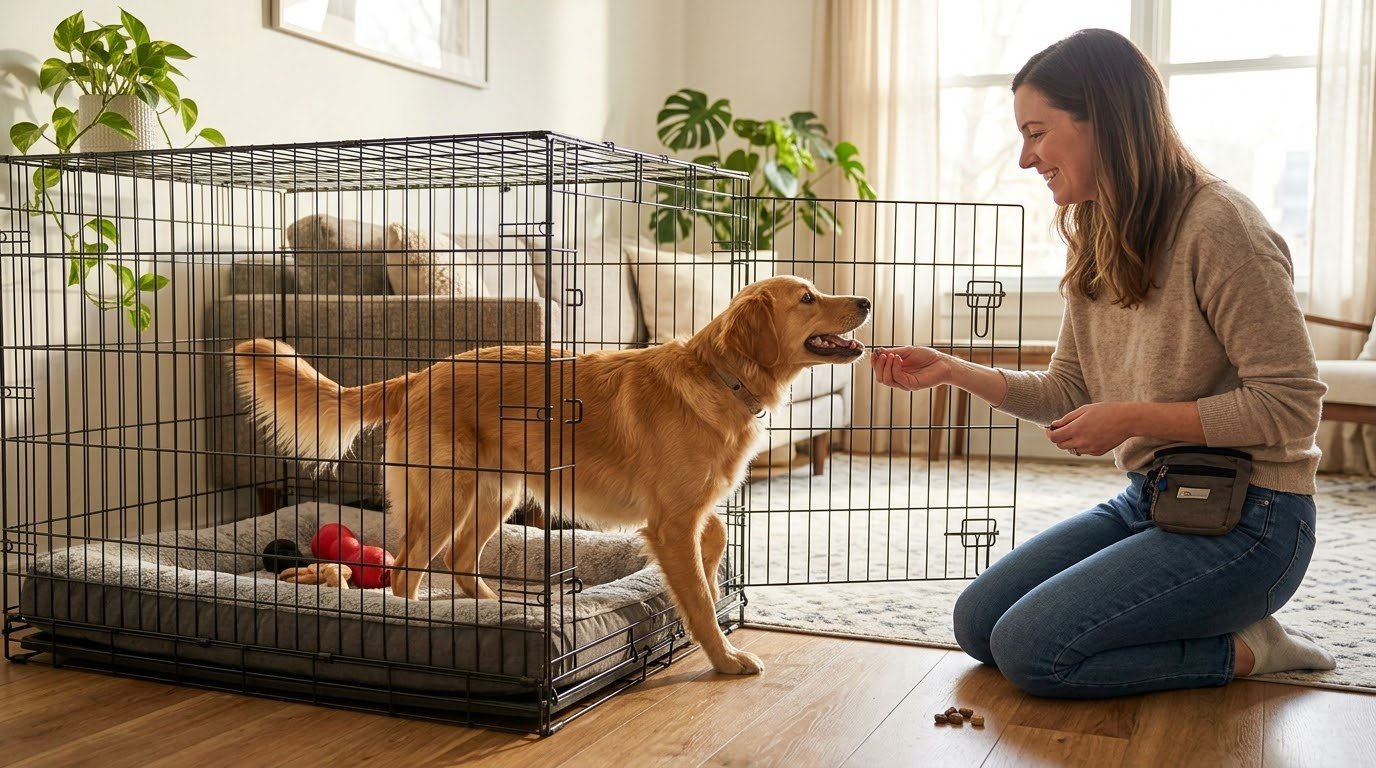
- Pick a crate just large enough for your dog to stand, turn around, and lie down.
- Make it comfortable with a blanket or mat.
- Keep the door open at first, and never use the crate as punishment.
- Use small, high-value treats and keep sessions short (3–5 minutes).
Game 1: The Treat Toss
Toss a treat to the back of the crate and let your dog walk in to get it. Say “yes!” as they step in, and let them walk out freely. Repeat 5–10 times.
Why it works: Your dog learns that going in means good things happen, and that they’re free to leave.
Game 2: Crate Hide-and-Seek Treasure
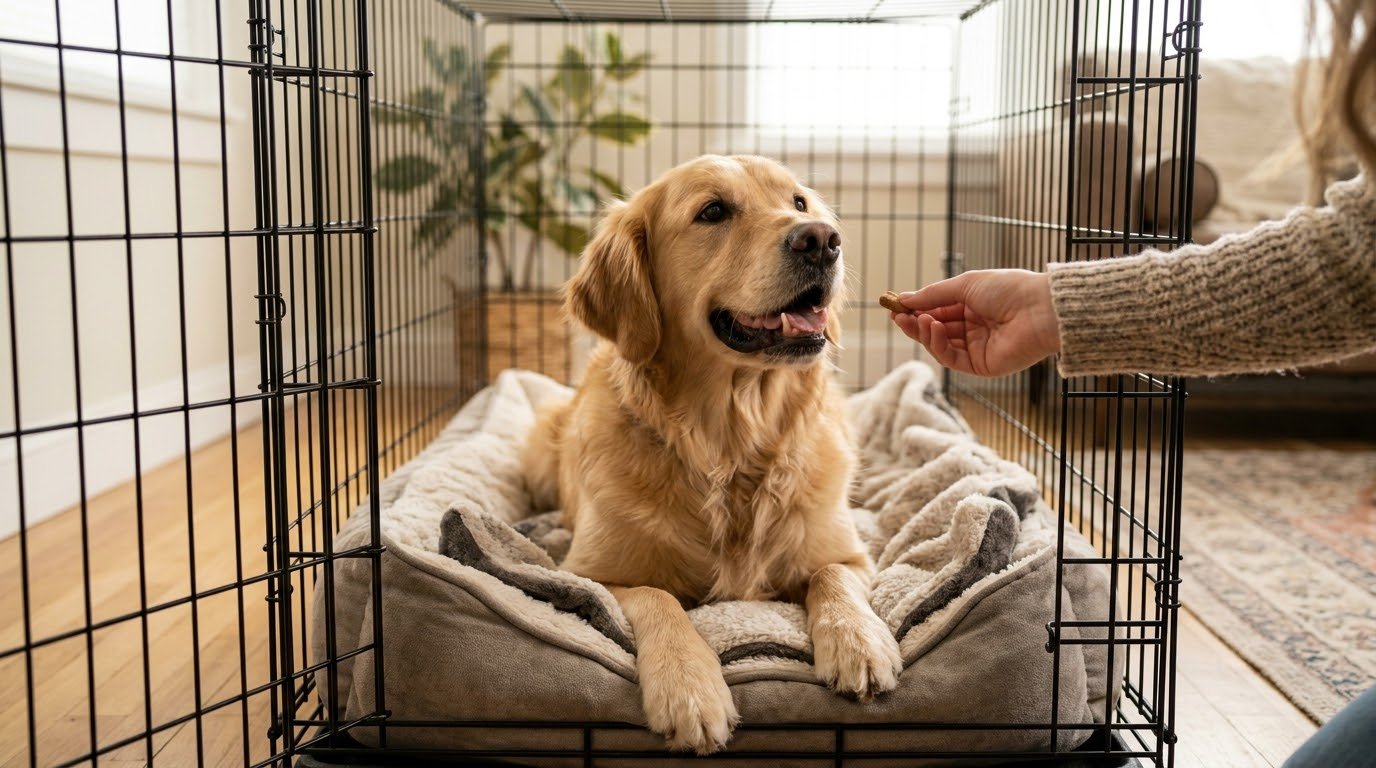
While your dog watches, hide a few treats or a favorite toy around the crate’s bedding. Let them explore and “find the treasure.” Gradually place the treats deeper so your dog spends more time inside.
Why it works: Sniffing and searching are naturally calming and rewarding for dogs.
Game 3: “Crate!” Cue Game
Once your dog goes in happily, add a cue, just like you would when teaching basic dog commands. Say “Crate!” just before they enter, then reward them with a treat inside. Practice from different spots in the room and increase the distance slowly.
Why it works: The cue turns the crate into a fun, predictable game of “your turn, my turn.”
Game 4: Door Closing Game
Once your dog is comfortable going in, close the door for one second, treat, and open. Then two seconds, then five. Build up slowly, and reward calm behavior only.
Why it works: It teaches your dog that a closed door isn’t scary, and that waiting calmly gets rewarded.
Game 5: Stuffed Toy Time
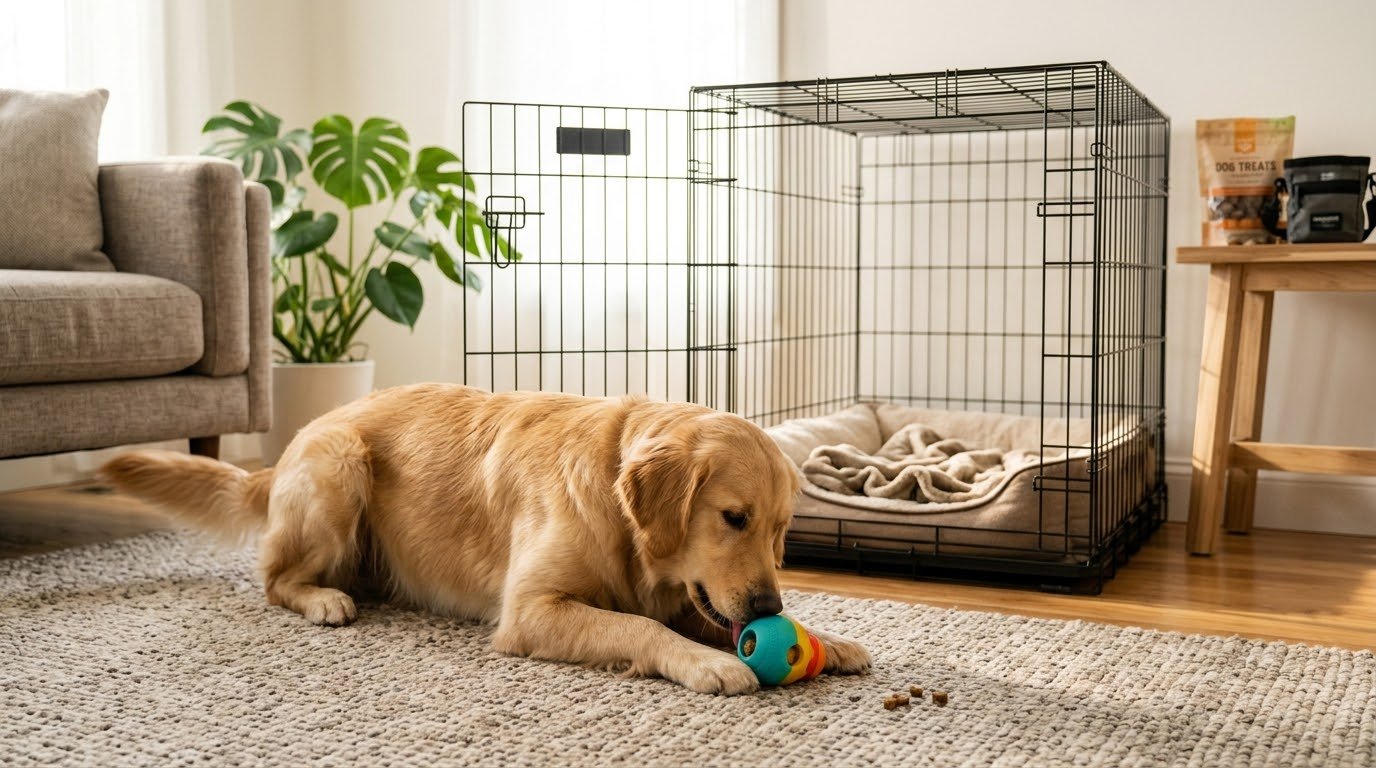
Give your dog a stuffed food toy (such as a frozen, filled Kong) only when they’re in the crate. Close the door while they enjoy it, and open it before they finish.
Why it works: The crate becomes the place where the best things happen.
Common Mistakes to Avoid
- Rushing the process, closing the door too long, too soon, or forcing your dog inside (going in should always feel positive, as this UC Davis veterinary guide explains)
- Letting your dog out while they’re whining (wait for a brief pause first)
- Leaving your dog crated for too long. Puppies especially need frequent breaks.
- Using the crate when you’re angry or as a time-out. The American Kennel Club’s step-by-step crate training guide is clear that a crate should never be used for punishment
Final Thoughts
Crate training takes patience, but with consistent, positive games, most dogs learn to see their crate as a safe retreat. Go at your dog’s pace, celebrate small wins, and keep it fun. If your dog seems panicked in the crate, stop and ask your vet or a professional trainer for help.
Ready for the next step? Read our guide to crating a puppy the first night, see whether your dog sleeping in a crate at night is right for you, or explore our full guide on how to train a puppy.


Discussion 0 comments
Share your thoughts — every perspective adds value.