

There’s a very particular kind of dread that comes with a doorbell. You know the scene. Your friend steps in with a nice outfit, your dog launches into the air like a furry rocket, and suddenly everyone’s saying “oh, it’s fine, I love dogs” in the tone of someone who is absolutely not fine.
Jumping up is one of the most common dog behaviors, and one of the most frustrating. The good news is that learning how to train a dog not to jump is very doable. It doesn’t take harsh methods or special equipment. It takes a clear understanding of why dogs jump, a couple of simple rules and a bit of consistency.
Why Do Dogs Jump Up?
Before you fix it, it helps to know the reason. Dogs usually jump for one of these reasons:
- To say hello. Puppies lick and greet adult dogs near the face. Jumping is how they try to get closer to ours.
- To get attention. Even a shove or a “no!” is attention. If your dog finds that jumping makes people look at them, they’ll keep doing it.
- Excitement. Coming home, guests arriving, a walk about to start. Big feelings, small impulse control.
- It has worked before. Somebody petted them, laughed or picked them up. That’s all the reward they needed.
Understanding this matters, because jumping isn’t dominance or rudeness. It’s an enthusiastic dog who never learned a better way to say hello. Once you see that, learning how to train a dog not to jump feels a lot less like a battle.
Why It’s Worth Fixing
A jumping puppy is cute. A jumping 70-pound adult dog can knock over a child, scratch an older relative or bruise someone’s arm. It also tends to get worse as dogs grow stronger, so the best time to start learning how to train a dog not to jump is now, whatever your dog’s age.
How to Train a Dog Not to Jump: The Golden Rule of Four Paws on the Floor
If you remember one thing, make it this. Your dog gets what they want (attention, petting, treats) only when all four paws are on the ground. Jumping makes the good stuff disappear. That’s it. Everything else in this guide on how to train a dog not to jump is just ways of making that rule clear.
Step 1: Stop Rewarding the Jump
This is the hardest part, because we reward jumping without noticing. Pushing the dog away, saying “off!” or even making eye contact is a prize for many dogs. Instead:
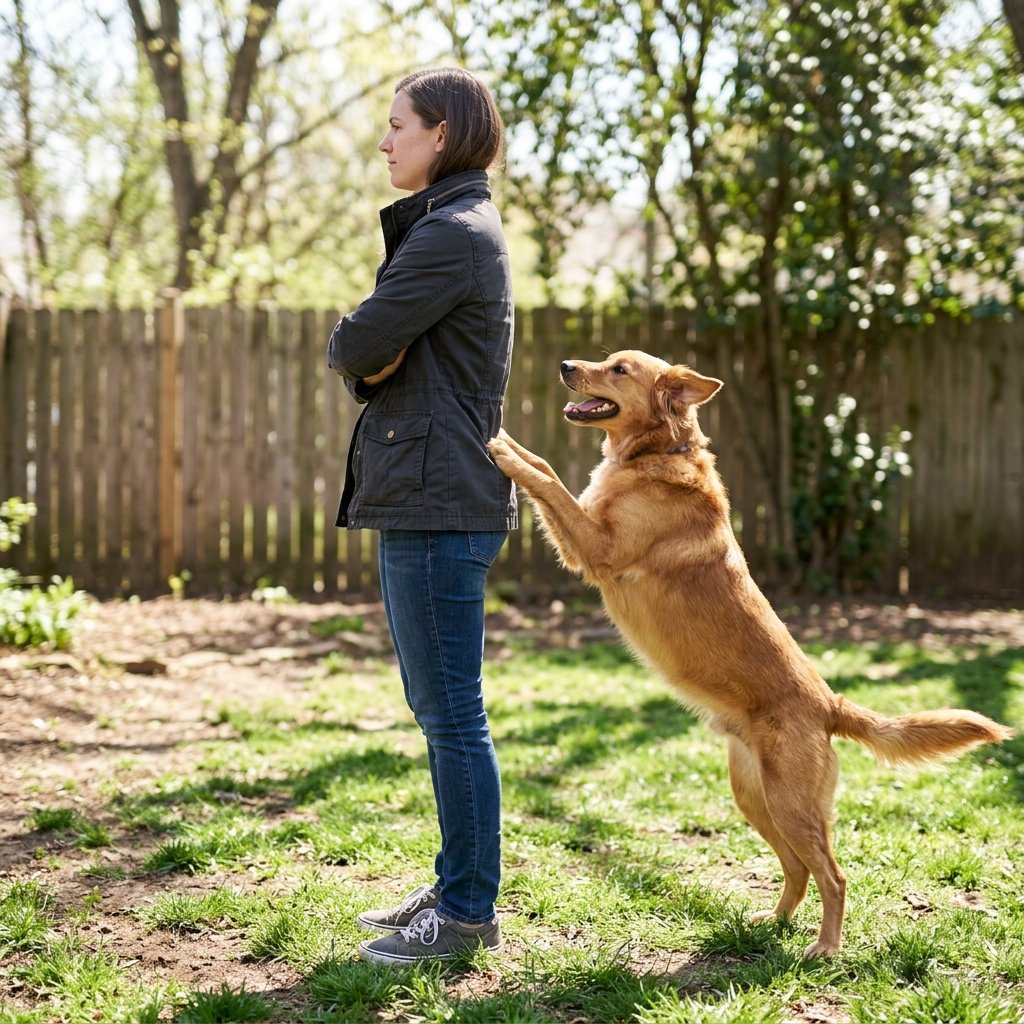
- Stand still and turn away. Cross your arms, look at the ceiling, and don’t say a word.
- Wait for four paws on the floor. The second your dog’s feet land, calmly turn back.
- Reward calmly. Praise in a quiet voice, give a treat or a brief pat.
- If they jump again, repeat. Turn away again.
Do not push, knee, step on their paws or grab them. Those old tricks can hurt your dog, damage trust and often get read as a fun game. The American Veterinary Society of Animal Behavior explains why force-based methods aren’t recommended in its position statements.
Step 2: Teach a Better Way to Say Hello
To train a dog not to jump, it’s not enough to tell them what not to do. Give them a job. The most useful alternative is a sit. A sitting dog can’t jump, and sitting earns attention. Practice like this:
- Ask for a sit before petting, before meals, before doors open and before the leash goes on.
- Reward the sit with petting or a treat.
- If your dog pops up, the attention stops. Ask for a sit again.
If your dog doesn’t know “sit” reliably yet, start with our plan for basic dog commands, or the earlier guide on basic dog commands every owner should teach. For dogs who get overexcited, the impulse-control skills in how to teach a dog to stay help a lot too.
Step 3: Reward Calm Four-Paws-Down Moments
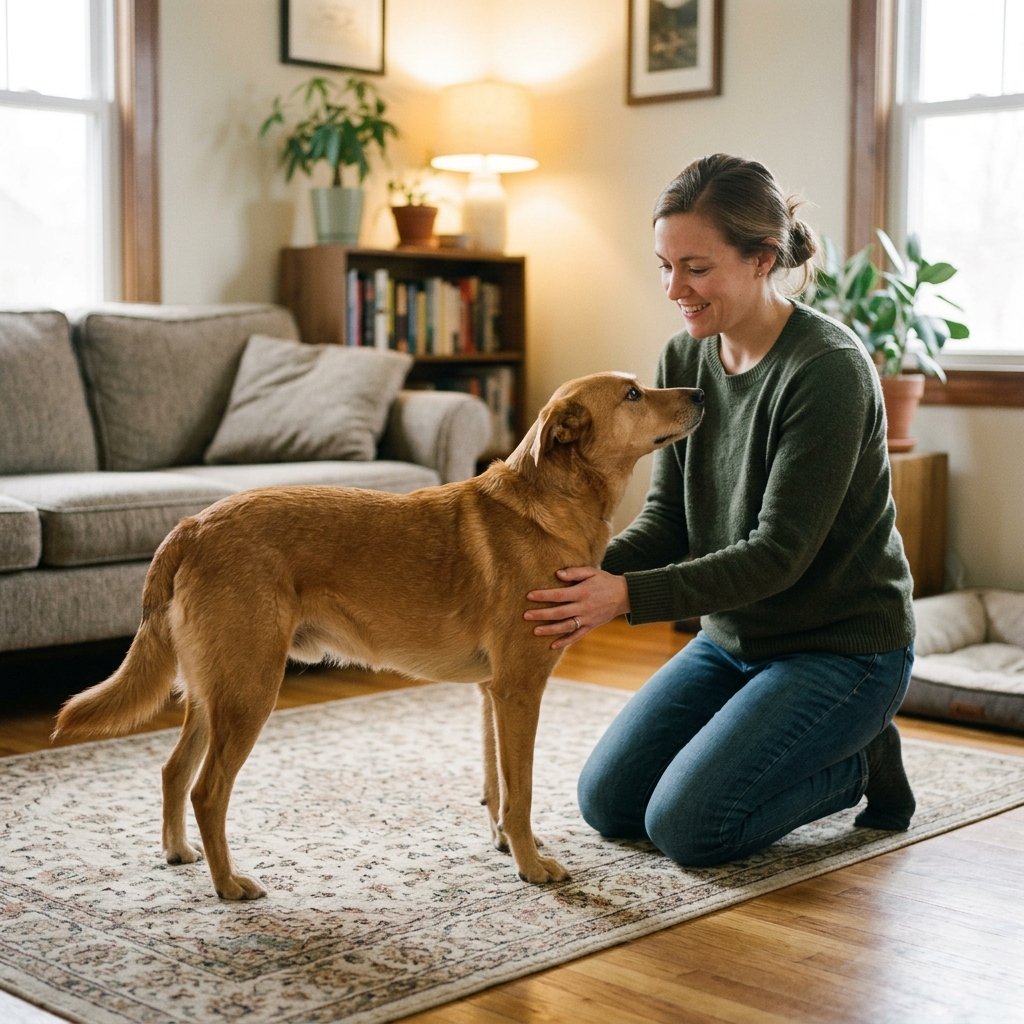
Catch your dog being good. When they’re standing or sitting calmly, even before anyone arrives, give quiet praise and a treat. When they do it themselves, mark it: “yes, good.” Dogs learn faster when they understand what you do want, not just what you don’t.
Step 4: Practice Greetings on Purpose
Real greetings are chaotic, so practice how to train a dog not to jump in controlled settings first:
- Use a leash or baby gate. Keep your dog from rehearsing the jump while guests come in.
- Brief your visitors. Ask them to ignore the dog until all four paws are down, then pet calmly. Give them a small cup of treats if it helps.
- Start with someone your dog knows well. Then increase difficulty with new people.
- Keep it short. Several quick greetings beat one long, chaotic one.
Some people find it helpful to scatter a handful of treats on the floor as guests enter. A dog sniffing the floor can’t be jumping, and it gives you a few seconds to get everyone settled. Doorbell excitement often overlaps with barking, so you may also like our guide on how to stop a dog from barking.
Step 5: Add a Cue If You Like
“Off” is commonly used to tell a dog to get their paws off a person or furniture. Say it calmly, once, and reward the moment they put their paws down. But don’t rely only on the cue. The real work is making jumping unrewarding and sitting rewarding.
Step 6: Meet Their Energy Needs
A dog with too much energy will have a hard time controlling their body. Make sure your dog gets enough exercise and mental stimulation, especially before visitors arrive. A walk, a sniff session or a game of fetch can make a noticeable difference. For routines that fit into daily life, see our guide to healthy habits for pets.
A Simple Two-Week Plan to Train a Dog Not to Jump
- Days 1 to 3: Practice “turn away, reward four paws” with just you at home. Ask for a sit before every meal and before going out.
- Days 4 to 7: Add family members. Everyone follows the same rule.
- Days 8 to 10: Practice greetings with a helper your dog knows, using a leash for control.
- Days 11 to 14: Try short greetings with new people in easy settings. Gradually add excitement, like doorbells or outdoor greetings.
Every dog is different, and learning how to train a dog not to jump takes time, so don’t rush. If your dog is struggling, go back a step.
Common Problems (and Fixes)
My dog jumps even more when I ignore them
This is normal and has a name: an extinction burst. When a behavior that used to work suddenly doesn’t, dogs often try harder before giving up. Stay consistent. If you give in even once, you teach them that persistence pays off.
My guests keep encouraging the dog
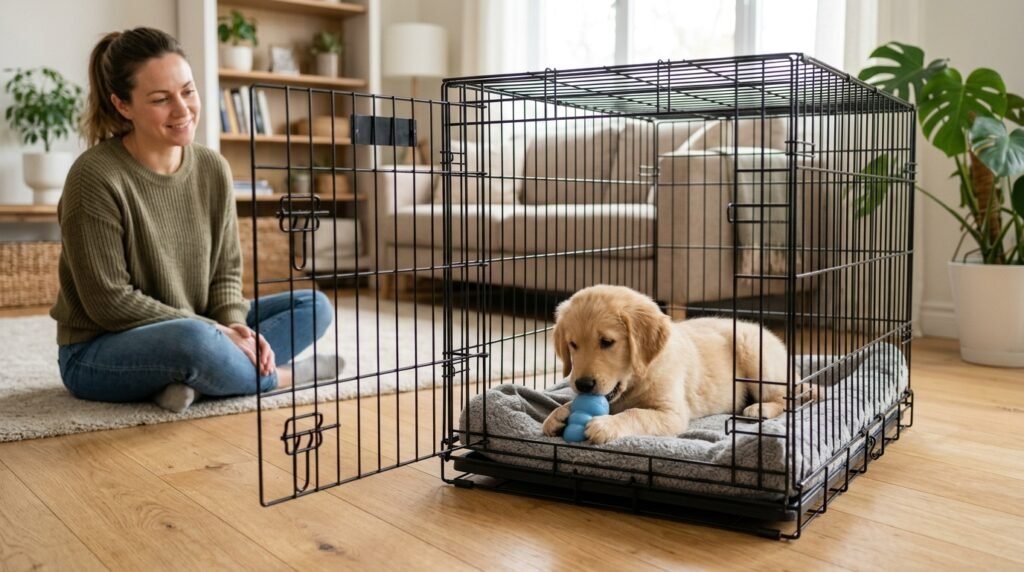
Very common. Be kind but firm: “He’s in training, could you wait until he sits?” If guests can’t cooperate, use a gate, leash or crate until things settle. Make it easy for them to succeed.
My dog jumps on me when I come home
Keep arrivals low-key. Walk in, ignore your dog for a minute until they calm down, then say hello. Reward four paws on the floor. Dogs who get a big, loud reunion often learn to expect and escalate.
My dog jumps on strangers during walks
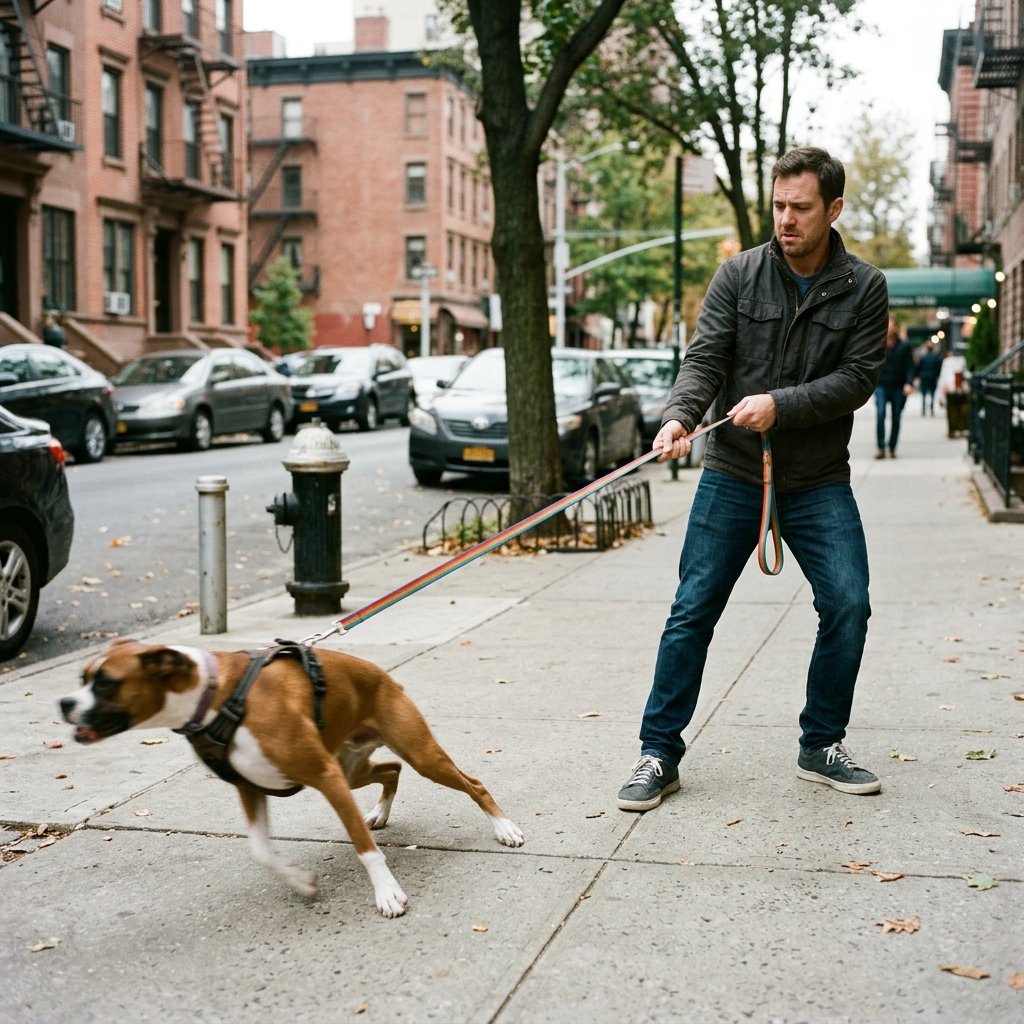
Keep your dog on a short leash, step back and ask for a sit. Ask passers-by not to engage until your dog is calm. For better control on walks, see our guide to how to leash train a dog.
My dog jumps and mouths me
This is often a puppy or adolescent dog looking for play. Redirect to a toy and give plenty of exercise. If the biting hurts or seems aggressive, speak with a trainer or your vet.
My dog is big and strong and I can’t hold them back
Use management first: a front-clip harness, a baby gate, a long leash or a closed door, so your dog can’t practice jumping. Reward the calm greeting heavily. Consider working with a certified positive-reinforcement trainer who can help you set up safe practice.
What Not to Do
- Don’t knee your dog in the chest, step on their back paws or squeeze their paws
- Don’t yell or shove. It’s still attention
- Don’t let it slide sometimes. Mixed rules make the behavior stronger
- Don’t punish a dog who’s already overexcited, since it only adds stress
For more on why these mistakes happen and how to avoid them, see our overview of common dog training mistakes.
Training a Puppy vs. an Adult Dog
Puppies are easier to train not to jump early, because the habit is new and their bodies are small. Start right away, keep it gentle and tie it into the rest of their learning. Our puppy training guide shows how to build good habits in the early months.
Adult dogs can absolutely learn, too. The habit may be stronger, so give it a few extra weeks and stay patient. If jumping comes with anxiety or other behavior problems, read our overview of common dog behavior problems.
For more reading, the AKC’s training library, the ASPCA’s dog care pages and the AVMA’s pet owner resources are all helpful.
Quick Answers
How long does it take to train a dog not to jump?
Some dogs improve within a week or two of consistent practice. Strong habits or very excitable dogs can take a month or more.
Should I push my dog down?
No. Pushing counts as attention and can turn into a game. Turn away and reward when all four paws are on the floor.
What command should I use for jumping?
“Off” for paws on people or furniture, and “sit” as the polite greeting alternative. Choose clear words and use them consistently.
Is jumping a sign of dominance?
No. It’s usually excitement and a learned habit, not dominance.
Why does my dog only jump on certain people?
Probably because those people reward it. Maybe they pet the dog, laugh or say hello in an excited voice. Ask everyone to follow the same rule.
The Bottom Line on How to Train a Dog Not to Jump
Learning how to train a dog not to jump comes down to one simple deal: four paws on the floor gets attention, and jumping doesn’t. Turn away from jumping, reward calm greetings, ask for a sit, and keep everyone in the household on the same page. It may take a couple of weeks of consistent effort, but a polite dog at the door is worth every minute.
If your dog’s jumping comes with aggression, fear or sudden changes in behavior, speak with your veterinarian or a qualified behavior professional.

Discussion 0 comments
Share your thoughts — every perspective adds value.