

Cats don’t tell us when they’re having a hard time. They don’t sigh, complain or call a friend. Instead, they quietly change: they hide a bit more, eat a bit less, groom a bit too much. By the time the signs are obvious, the stress has often been building for a while.
Knowing the signs your cat is stressed helps you step in early, before it turns into a health or behavior problem. Stress isn’t just uncomfortable for cats. It can lead to litter box trouble, over-grooming, digestive upsets and even urinary disease. This guide covers the most common warning signs, what causes them and what you can do to help.
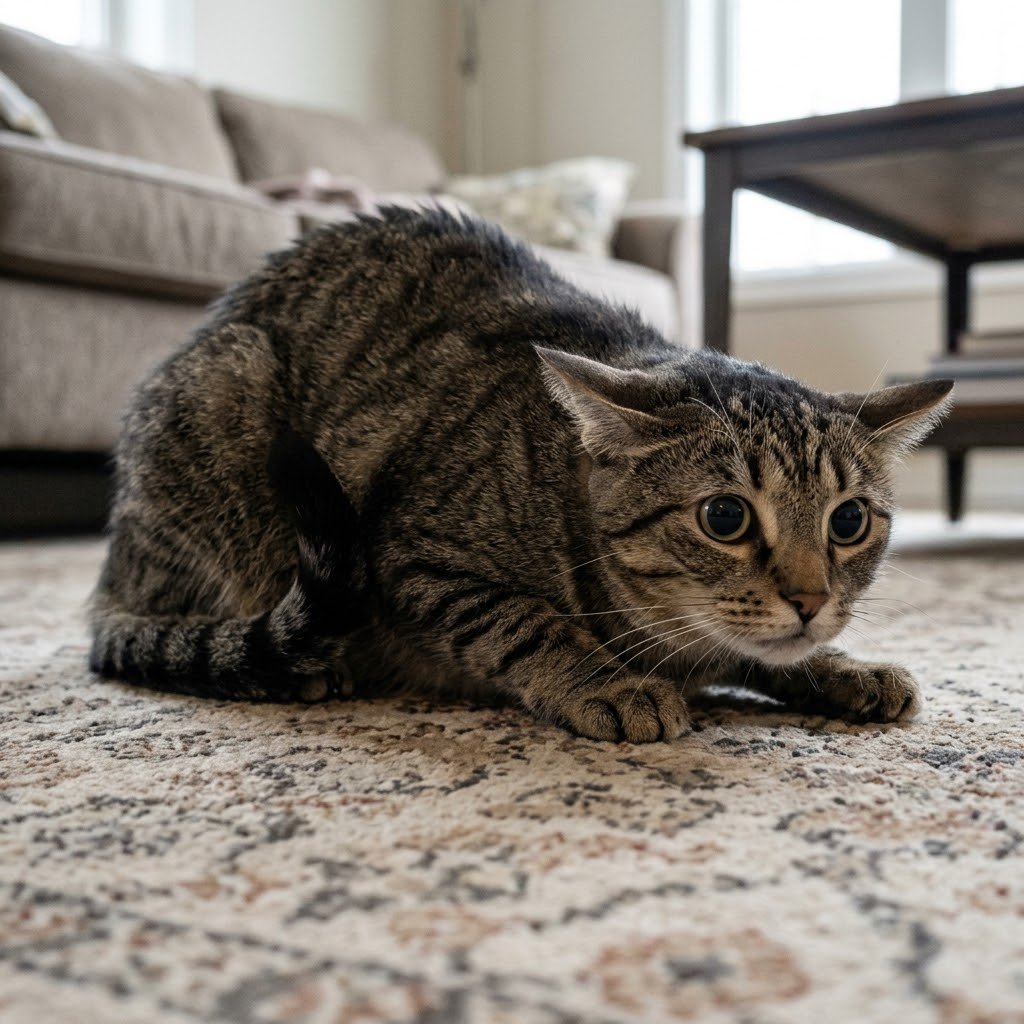
12 Signs Your Cat Is Stressed
1. Hiding more than usual
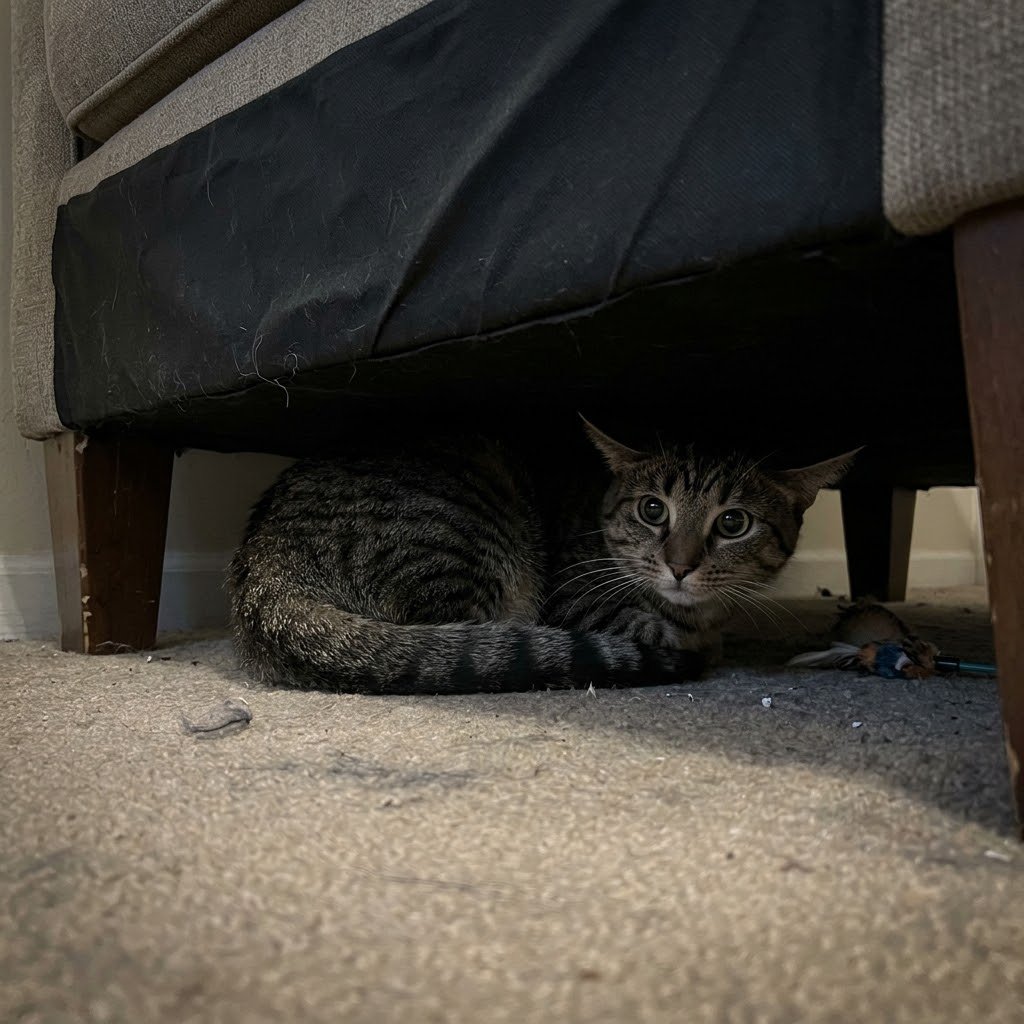
Cats naturally like cozy hiding spots, but a cat who suddenly spends much more time under the bed or behind furniture may be stressed. If the hiding goes on for a long time, see our guide on cat hiding for days for when it becomes an emergency, and why your cat hides for the more everyday reasons.
2. Changes in appetite
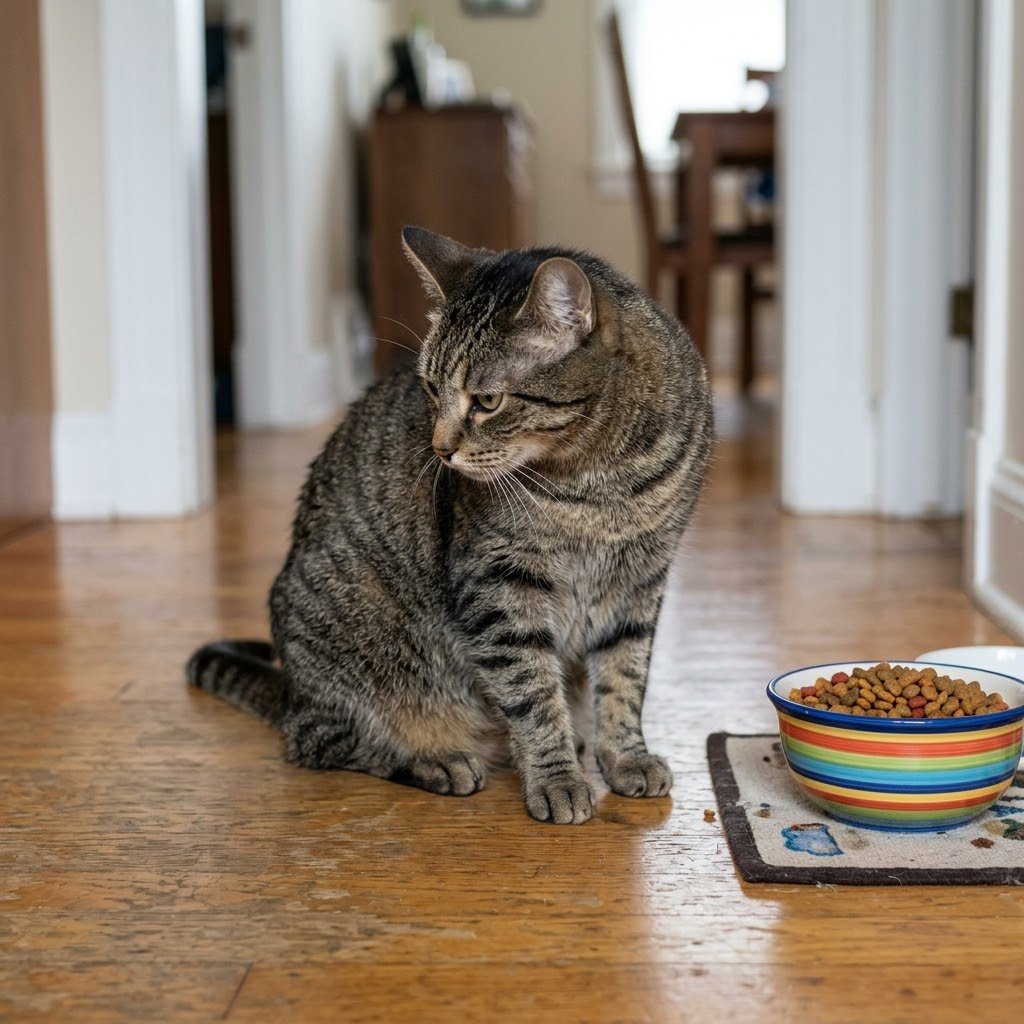
Stress can make cats lose their appetite, or in some cases eat much more. A cat who stops eating for more than a day should see a vet, since fasting can lead to serious liver problems.
3. Litter box problems
Peeing or pooping outside the box is one of the most common stress signals. It can also be a sign of medical problems, so always get a vet check. Our article on why a cat pees outside the litter box explains both medical and behavioral causes.
4. Over-grooming or bald patches
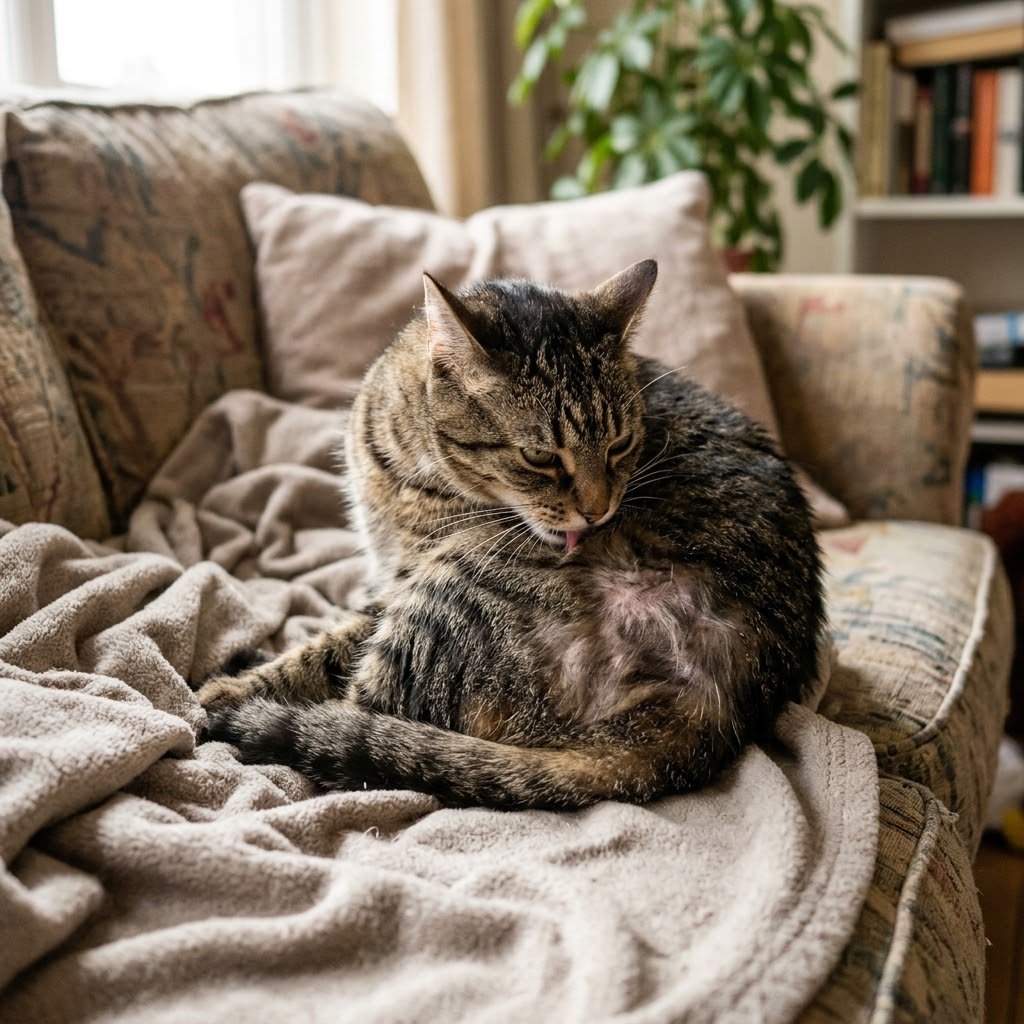
Grooming is calming for cats, but too much of it can be a sign of stress or anxiety. Look for thinning fur, bald patches, red skin or constant licking of the belly, legs or flanks. Allergies, parasites and pain can look similar, so a vet visit is important.
5. Body language changes
A stressed cat often looks tense. Watch for:
- Ears flattened or turned sideways
- Wide, dilated pupils
- Whiskers pulled back against the face
- Tail tucked or held low, or puffed up
- A crouched, low posture with the body close to the ground
- Skin rippling along the back
6. Aggression or hissing
A normally calm cat who starts hissing, swatting or biting may be feeling threatened or overwhelmed. Aggression often comes from fear, stress or pain, not meanness.
7. Changes in vocalizing
A stressed cat may meow, yowl or cry more, especially at night. Some cats become unusually quiet. Our guide to why your cat meows so much covers the causes of excessive vocalizing.
8. Sleeping too much or too little
Big changes in sleep patterns can signal stress, but also illness. A cat who’s suddenly sleeping all day, or who seems unable to settle, deserves attention.
9. Destructive scratching or marking
Scratching is normal, but a sudden increase in scratching furniture or spraying urine on walls and doors can be a sign of stress or territorial insecurity. See our guide on how to stop a cat from scratching for practical solutions.
10. Clinginess or withdrawal
Stress affects cats differently. Some become much more clingy and follow you everywhere, while others withdraw and avoid contact. If your cat has become unusually attached, see why your cat follows you everywhere. If they’re avoiding you, why your cat runs away from you may help.
11. Digestive upsets
Stress can cause vomiting, diarrhea or constipation. These are also signs of many medical problems, so they should always be checked.
12. Repetitive or compulsive behaviors
Pacing, tail chasing, constant licking or fabric chewing can be coping behaviors in a stressed cat. They need a vet’s help.
What Causes Stress in Cats?
Cats are creatures of habit, and they like predictability. Common triggers include:
- Changes at home: moving, renovations, new furniture or a change in your schedule
- New people or pets: a new baby, partner, dog or cat
- Conflict with other cats: competing for food, litter boxes, resting spots or attention
- Loud noises: fireworks, construction, thunder or the vacuum cleaner
- Boredom or lack of enrichment: especially for indoor cats
- Litter box issues: dirty boxes, poor locations or not enough of them
- Vet visits and travel
- Outdoor cats or animals visible through the window
- Pain or illness, which can cause stress-like behaviors
Stress or Illness? Why a Vet Visit Matters
Many signs of stress, such as hiding, appetite changes, litter box problems and over-grooming, are also signs of illness. A cat in pain may look anxious. That’s why a vet check should always be the first step when your cat’s behavior changes. The Cornell Feline Health Center has reliable information on feline health.
See a vet right away if your cat:
- Isn’t eating or drinking for more than 24 hours
- Is straining to urinate, crying in the litter box or passing little urine (especially male cats)
- Has trouble breathing
- Is vomiting repeatedly or is lethargic
How to Help a Stressed Cat
Identify and reduce the trigger
Think about what’s changed. If you can remove or reduce the cause, such as blocking the view of a neighborhood cat or providing a quiet room during noise, you’ll often see improvement.
Provide safe spaces
Offer cardboard boxes, covered beds, cat trees and high perches. Cats feel safer when they have places to retreat and to watch the world from above.
Keep a predictable routine
Feed, play and clean the litter box at the same times each day. Make changes gradually where possible.
Provide enough resources
The general guideline is one litter box per cat plus one extra, and multiple food bowls, water stations, scratching posts and resting spots in different places, especially in multi-cat homes.
Play and enrich
Two short play sessions a day with a wand toy, puzzle feeders and window perches can reduce boredom and stress. Our guide to healthy habits for pets has easy routines to build into your day.
Support good nutrition and hydration
A balanced diet and good hydration support overall health. Our guide to the best food for cats covers wet vs. dry food. Ask your vet before changing diets.
Introduce changes slowly
When bringing home a new pet, baby or furniture, go gradually and let your cat adjust at their own pace. Our pet care tips for beginners includes advice on settling a new pet in.
Consider calming aids
Some owners find pheromone diffusers or calming supplements helpful, though evidence varies. Always ask your vet before using supplements or medications.
Be calm and patient
Avoid punishment, shouting or forcing interaction. Let your cat come to you, and reward calm behavior with treats and gentle attention.
Get professional help if needed
If signs persist, ask your vet for a referral to a veterinary behaviorist. Cat Friendly Practices are trained to reduce stress during visits. You can find one at catfriendly.com.
For more reading, International Cat Care, the Ohio State University Indoor Pet Initiative, the AVMA’s pet owner resources and the ASPCA’s cat care pages are trustworthy resources.
Quick Answers
What are the most common signs your cat is stressed?
Hiding, changes in appetite, litter box problems, over-grooming, flattened ears, dilated pupils, aggression and changes in vocalizing or sleep.
How can I tell if my cat is stressed or sick?
It’s often hard to tell. Many signs overlap, so see your vet to rule out medical causes before assuming it’s stress.
Can stress make a cat sick?
Yes. Chronic stress can contribute to urinary problems, digestive upsets, skin issues and a weaker immune response.
How long does cat stress last?
It depends on the cause. A short scare may pass in hours, while ongoing stressors like a new pet or a move can take weeks to settle.
What’s the fastest way to calm a stressed cat?
Give them a quiet, safe space, remove the trigger, keep the environment calm and avoid forcing interaction.
Do cats get stressed by moving?
Yes. Moving is one of the biggest stressors for cats. Set up a safe room with their belongings, and let them explore the new home gradually.
The Bottom Line
Cats are subtle communicators, so learning the signs your cat is stressed is one of the best things you can do for their wellbeing. Look out for changes in hiding, appetite, litter box habits, grooming, body language and behavior. Rule out medical problems with your vet, then work to identify and reduce the cause, with safe spaces, routines, enrichment and patience. A calm cat is a healthier, happier cat, and a much easier housemate too.
If your cat stops eating, has trouble breathing or is straining to urinate, contact a veterinarian or emergency clinic immediately.


Discussion 0 comments
Share your thoughts — every perspective adds value.