

The rain is hammering the windows. Or it’s freezing, or scorching, or you’re simply not able to get out for the long walk your dog is begging for. Meanwhile, your dog is pacing, sighing dramatically and eyeing the sofa cushions with suspicious interest.
Sound familiar? The good news is that a tired dog isn’t only about miles walked. Mental work often tires dogs out even faster than physical exercise. This guide shares indoor activities for dogs that burn energy, build skills and keep boredom (and chewed furniture) at bay, no garden required.
Why Indoor Activities Matter
Dogs need both physical and mental stimulation. When they don’t get enough, they find their own entertainment, and it’s usually destructive: chewing, barking, digging at carpets or generally causing chaos. Indoor activities give your dog an outlet on days when outdoor time is limited, and they can be a great supplement even when you do get out.
Brain games are especially valuable. Sniffing, problem solving and learning new things are all tiring for dogs in a healthy, satisfying way. A 15-minute puzzle session can be more exhausting than a 15-minute walk.
15 Indoor Activities for Dogs
1. Puzzle feeders and treat balls
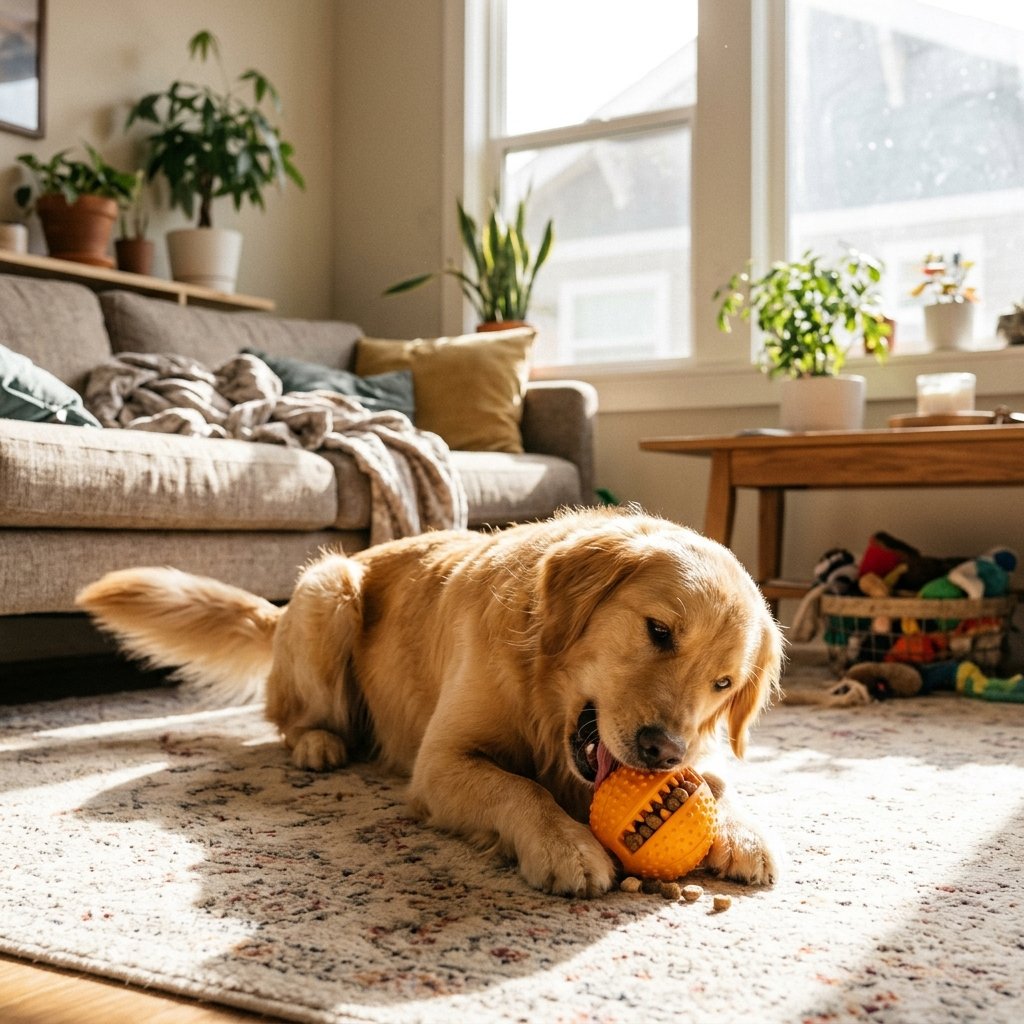
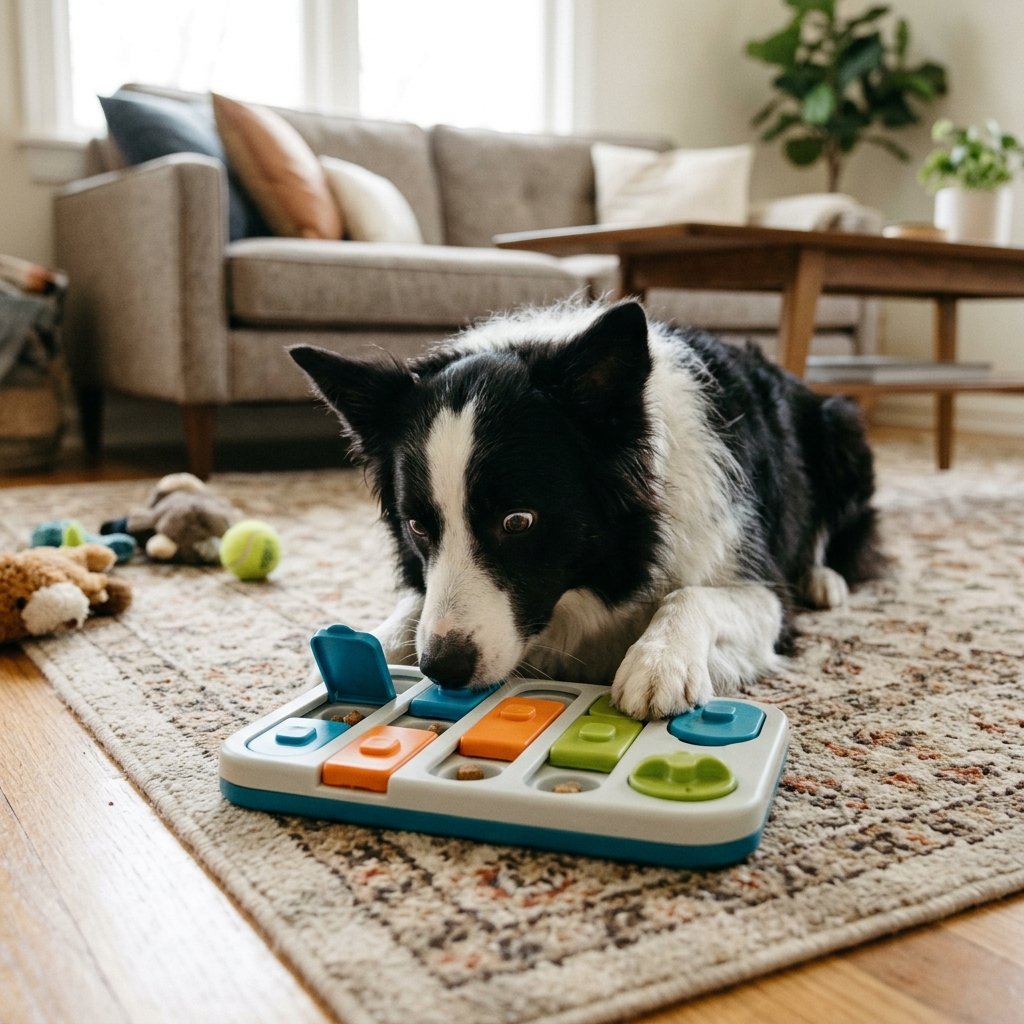
Instead of serving dinner in a bowl, put it in a puzzle toy or treat-dispensing ball. Your dog has to roll, nudge or figure out how to get the food. It slows down fast eaters and works the brain. Start with easy puzzles and gradually move to harder ones.
2. Snuffle mat or scatter feeding
Dogs love to use their noses. A snuffle mat, a rug with fabric strips, hides kibble in the folds, and your dog sniffs it out. You can also scatter a handful of kibble across a clean floor or a towel.
3. Hide and seek (with treats or toys)
Ask your dog to stay, hide a treat or toy in the room, then say “find it!” Start with easy spots and gradually make it harder. If your dog knows “stay,” this game is a perfect extension. Our guide to how to teach a dog to stay shows how to build it.
4. Hide and seek (with you)
Have a family member hold your dog while you hide, then call their name. When they find you, throw a party with praise and treats. It builds recall and fun at the same time.
5. Which hand? Or the cup game
Hide a treat under one of three cups, and let your dog sniff out which one has it. For a simple version, hold a treat in one closed fist and let your dog choose.
6. Indoor obstacle course
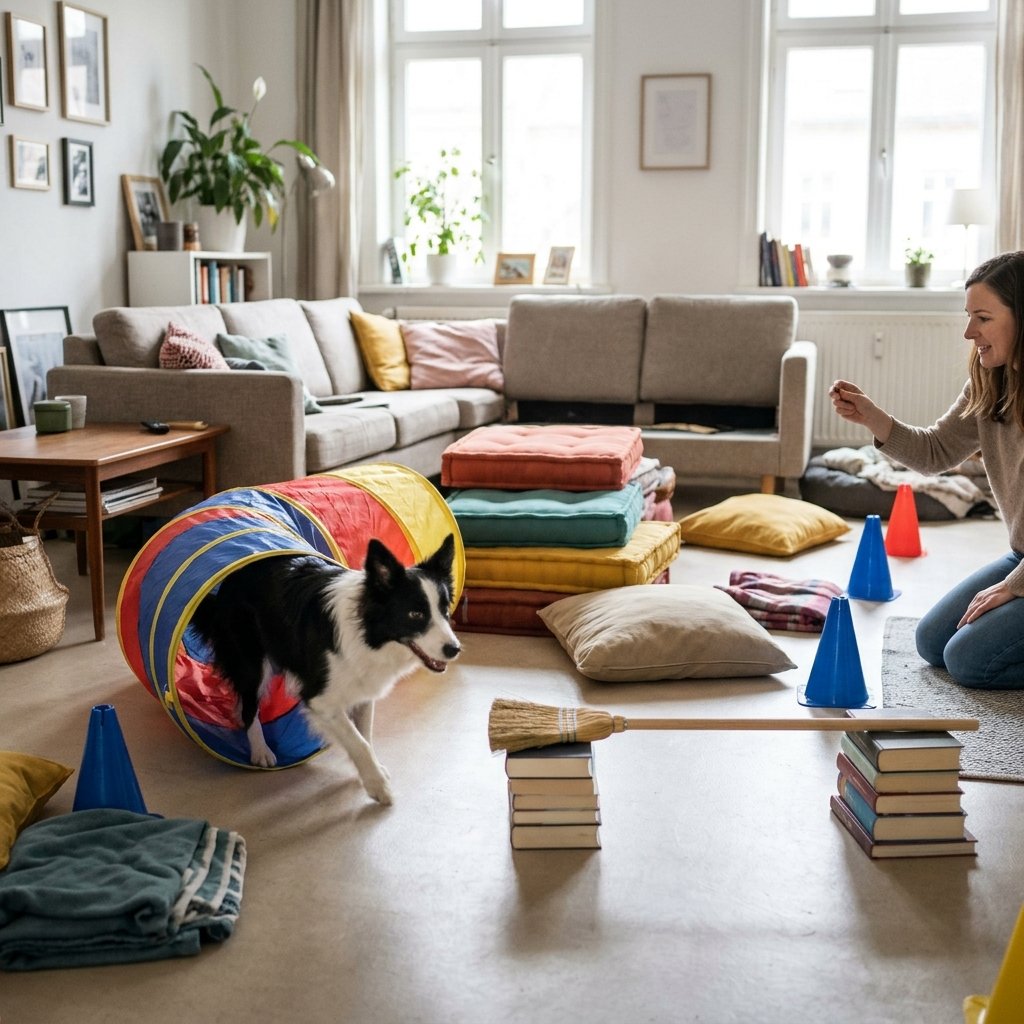
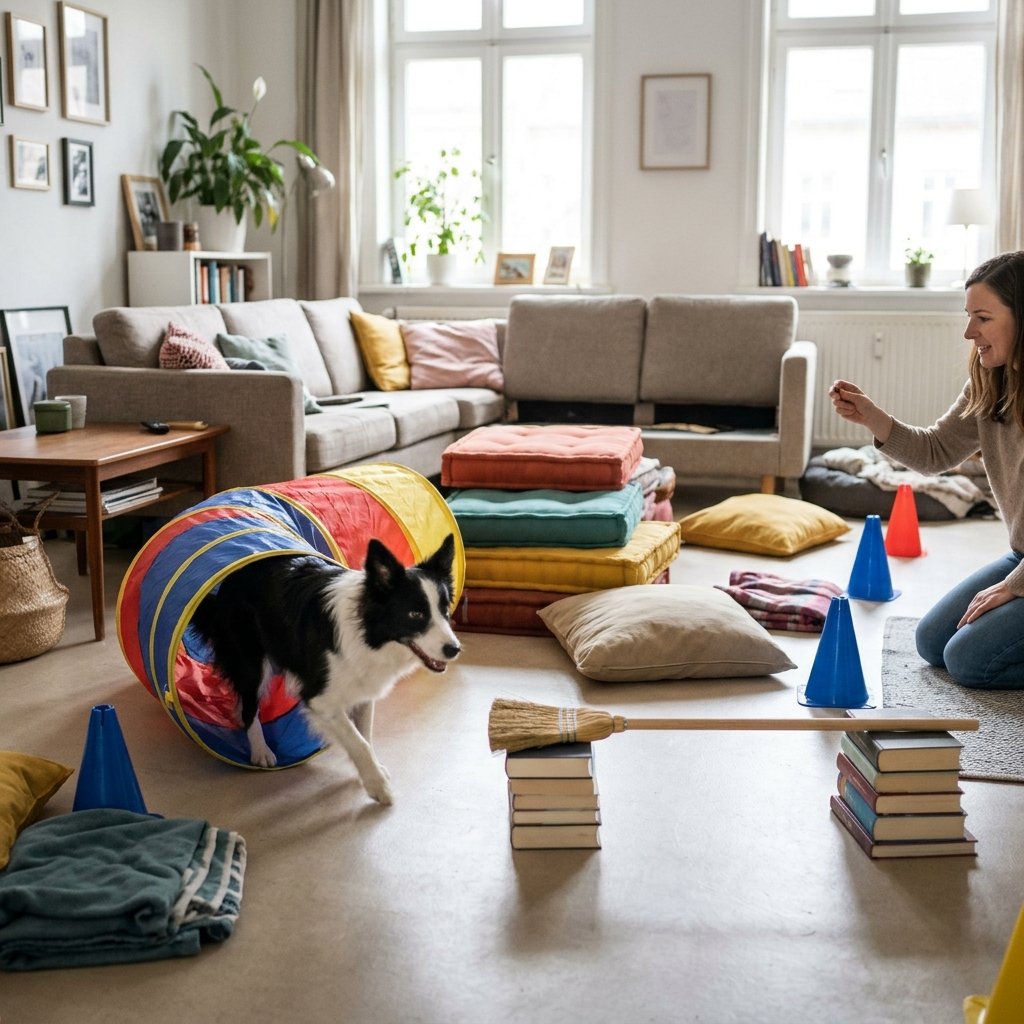
Use cushions to climb over, chairs to weave around, a broom handle across two stacks of books for a low jump and a blanket tunnel to crawl through. Guide your dog with treats and praise. Keep jumps low and supervise carefully, especially for puppies and older dogs.
7. Teach new tricks
Learning tricks is great mental exercise. Try “spin,” “shake,” “roll over,” “touch” or “bow.” The American Kennel Club even has a Trick Dog program if you’re keen to work toward a title. Our guide to positive reinforcement dog training explains how to teach tricks with rewards.
8. Practice your basic commands
Rainy days are perfect for polishing skills like sit, down, stay and come. Try them in different rooms, with mild distractions, or add new challenges. Our basic dog commands training plan offers a week-by-week approach.
9. Tug games
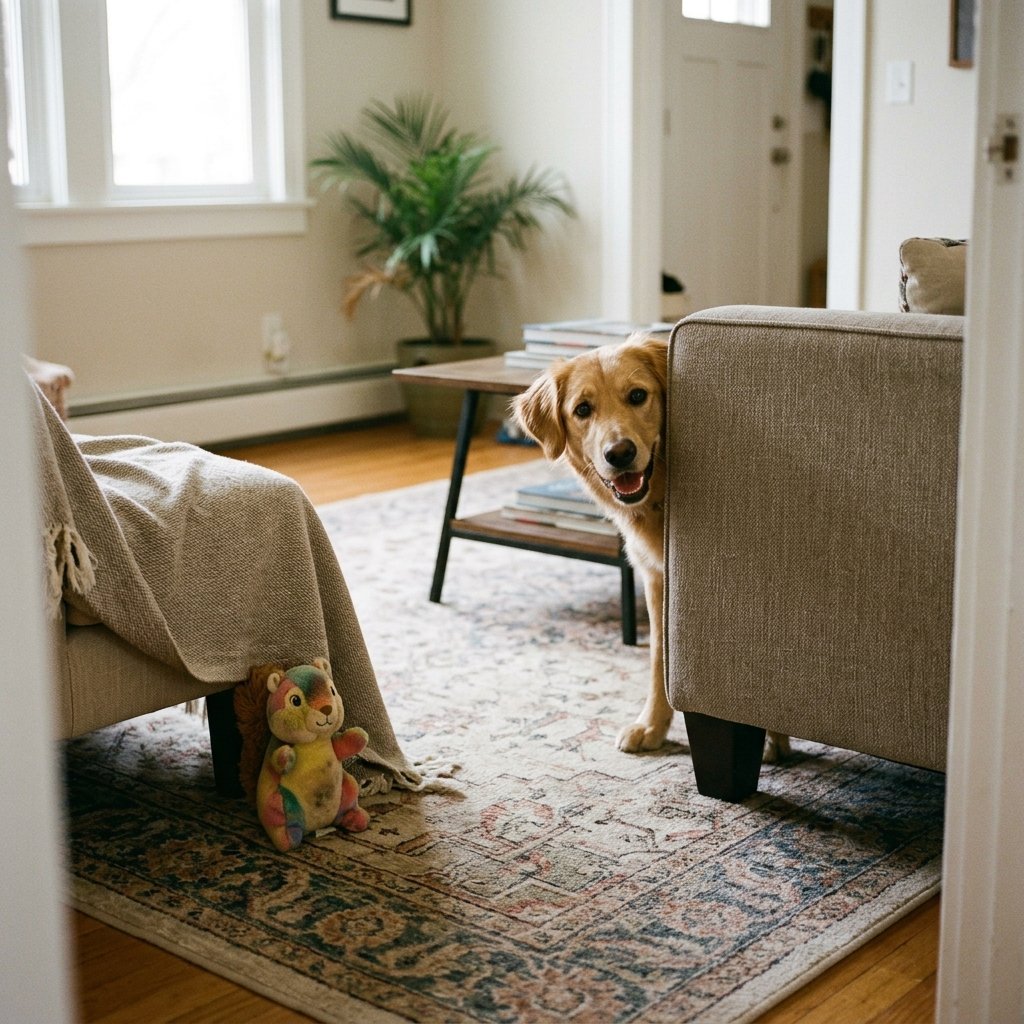
A good game of tug burns energy and builds your bond. Teach “take it” and “drop it,” keep it fair and pause if your dog gets too excited. Don’t yank, and let your dog win sometimes. Use a sturdy tug toy rather than a random item.
10. Indoor fetch
Use a soft toy in a hallway or large room. Choose a space with non-slip flooring, and keep tosses short. Avoid hard balls or small objects that could be swallowed.
11. Lick mats and frozen stuffed toys
Spread plain yogurt, canned dog food or xylitol-free peanut butter on a lick mat, or stuff a rubber toy and freeze it. Licking is calming, and frozen treats can keep a dog busy for a long time. Always check labels, because xylitol is toxic to dogs. For more on safe chewing, see why your dog chews everything.
12. Muffin tin or towel treat game
Place treats in a muffin tin and cover each cup with a tennis ball or toy, so your dog has to move them to get the prize. Or sprinkle treats on a towel, roll it up loosely and let your dog unroll it.
13. Target and “touch” training
Teach your dog to touch your hand or a small target stick with their nose. It’s easy to teach, builds focus and forms the basis for many tricks and body awareness games.
14. Dog-safe bubbles
Many dogs love chasing bubbles. Use pet-safe, non-toxic bubble solution (some are bacon-flavored), and supervise so your dog doesn’t swallow soap.
15. Sniff walks around the house
Put different safe items around the room, such as a cardboard box, a rolled-up towel or a blanket with a hidden treat, so your dog can explore new smells and textures. New experiences are very stimulating.
Indoor Activities for Puppies
Puppies have bursts of energy and short attention spans. Keep sessions short, avoid high jumps and repetitive impact on their growing joints and mix play with plenty of naps. Gentle puzzle toys, snuffle mats, simple hide-and-seek and early training games are ideal. If your puppy is bouncing off the walls, our guide to how to calm a hyper puppy has more ideas, and our puppy care tips for beginners covers daily routines.
Indoor Activities for Senior Dogs
Older dogs still need mental stimulation. Choose low-impact options: sniffing games, gentle puzzle toys, short training sessions with easy tricks and slow-paced hide and seek. Provide non-slip rugs on slick floors, and watch for signs of fatigue or soreness. Ask your vet about appropriate activity levels.
Indoor Activities for High-Energy Breeds
Border collies, retrievers, terriers and other working breeds often need more. Mix several brain games with short bursts of physical play, rotate toys and challenge them with trick training and agility-style exercises. Consider scent games and nosework, which tire dogs out wonderfully.
Safety Tips
- Check the floor. Slippery tile or wood can hurt joints. Use rugs or yoga mats.
- Supervise play. Especially with puzzle toys, chews and tug.
- Choose appropriate toys. Avoid small items that can be swallowed or toys that break into pieces.
- Watch the treats. Count them toward your dog’s daily calories. Our pet nutrition guide explains how.
- Know your dog’s limits. Stop if your dog seems tired, stressed or in pain.
- Keep the environment safe. Remove breakables, cords and anything your dog shouldn’t chew.
- Avoid intense exercise right after meals. Ask your vet about bloat risk, especially in deep-chested breeds.
A Sample Rainy-Day Routine
- Morning: breakfast in a puzzle feeder, followed by a short training session
- Late morning: a game of hide and seek or an obstacle course
- Midday: a lick mat or frozen stuffed toy while you work, then a nap
- Afternoon: a trick-training session and a short tug or fetch game
- Evening: scatter feeding or a snuffle mat, then calm time together
Mix it up, keep activities short and watch your dog’s reactions. For more everyday routines that keep dogs happy, see our guide to healthy habits for pets.
When Boredom Turns Into a Problem
If your dog barks, chews, digs or paces despite plenty of activity, there may be more going on. Anxiety, medical issues or lack of exercise can all play a role. Our posts on how to stop a dog from barking and dog crate training games can help, and your vet can rule out medical causes. The AVMA’s pet owner resources, the ASPCA’s dog care pages and Fear Free are also helpful references.
Quick Answers
What are the best indoor activities for dogs?
Puzzle feeders, snuffle mats, hide and seek, trick training, indoor obstacle courses and lick mats are all great options.
How do I tire out my dog inside?
Combine mental exercise, like sniffing games and puzzles, with short bursts of physical play like tug or indoor fetch. Mental work is surprisingly tiring.
How long should I play with my dog indoors?
Several short sessions of 10 to 15 minutes a day work well. Adjust for your dog’s age, breed and energy.
What can I do with my dog on a rainy day?
Try puzzle toys, training, hide and seek, tug and a homemade obstacle course.
Are puzzle toys good for dogs?
Yes. They provide mental stimulation and slow down eating. Supervise at first and choose the right difficulty.
Can indoor activities replace walks?
They can supplement them, but most dogs still benefit from outdoor time, sniffing and exploring.
The Bottom Line
You don’t need a huge garden or hours of free time to keep your dog happy. With a few simple indoor activities for dogs, a handful of treats and a bit of creativity, you can keep their body busy and their brain engaged on any day. Mix up the games, keep them safe and fun and enjoy the time together. Your dog (and your sofa cushions) will thank you.
If your dog shows signs of anxiety, pain or sudden behavior changes, speak with your veterinarian.

Discussion 0 comments
Share your thoughts — every perspective adds value.